


In psychology, affordance is what the environment offers the individual. In design, affordance has a narrower meaning; it refers to possible actions that an actor can readily perceive.
What are Affordances? — updated 2026
Affordances are the characteristics or properties of an object that suggest how it can be used. It shows a user that an object can be interacted with.

10 Examples of Affordances - The Boffins Portal
Affordance is a concept in design that refers to the possible actions or uses that an object or environment offers a user. It is the relationship between an object and the person using it and what the person perceives they can do with the object based on its physical characteristics. In other words, affordance is ... Read more

ICPA - ICPA 2026
Welcome to the 2026 International Conference on Perception and Action (ICPA). This year, we meet in Omaha, Nebraska, bringing the international ecological psychology community together in a setting that reflects a growing culture of research and innovation.ICPA brings together scholars from around the world who study perception and action as inseparable, mutually constraining processes grounded in organism–environment relations. The program features work spanning affordances, perceptual learning, coordination and control, development, social interaction, ecological design, and methodological innovation.The conference is designed to support sustained dialogue across theoretical, empirical, and applied perspectives—welcoming diverse viewpoints and participants from across institutions, disciplines, and countries. We invite you to join us for a week of scientific exchange and community building as we continue to advance ecological approaches to understanding behavior in real-world contexts.

Spatial Web Browsing
Adding spatial affordances to the experience of browsing the web

562 – Ecological Cognition III: Radical Embodied Cognitive Science (part 1)
562 Continuing the journey in understanding the Ecological approach to cognition by looking at Tony Chemero’s book: Radical Embodied Cognitive Science. Conceptualizing cognition in terms of agent-environment dynamics instead of computation and representation. What is RECS, and where did these ideas come from?Download link

MCP Research & Discussion Night · Luma
We're hosting a reading and discussion group for Anthropic's Model Context Protocol. We'll look at the fundamental protocol affordances, its consequences, and…

Lectures on Perception: An Ecological Perspective
Lectures on Perception: An Ecological Perspective addresses the generic principles by which each and every kind of life form—from single celled organisms (e.g., difflugia) to multi-celled organisms (e.g., primates)—perceives the circumstances of their living so that they can behave adaptively. It focuses on the fundamental ability that relates each and every organism to its surroundings, namely, the ability to perceive things in the sense of how to get about among them and what to do, or not

Pain of Paying? — A Metaphor Gone Literal: Evidence from Neural and Behavioral Science
How do individuals consider the price of a good when making purchase decisions? Standard economic theories assume an analytical process: Individuals consider th

Grounded world models in biological organisms and future embodied AI
Recent advances in generative and embodied AI have been driven by large-scale predictive learning over multimodal data. However, the resulting systems remain largely based on passive training regimes where linguistic regularities create the scaffold onto which information from other modalities is attached. Conversely, neuroscience and cognitive science suggest that biological intelligence is organized in the opposite way, where grounded world models acquired through interaction with the environment provide the semantic scaffold to which language is attached. Here, we illustrate five examples of neural circuits supporting grounded world modelling, which underlie navigation in physical and conceptual spaces, affordance-based perception and interaction with objects, active perception and exploratory learning, allostatic control and emotion, and the distinction between self- and world-generated outcomes. These examples highlight several features largely missing from current embodied AI, including the role of intrinsic dynamics as a foundation for learning, the centrality of action in aligning these dynamics with the external world, the prominence of autonomous experience and open-ended learning over passive assimilation of externally provided data, and the fact that early predictive and control mechanisms scaffold higher cognitive abilities such as reasoning, conceptual navigation, planning, imagination, understanding others' minds, and communication. Finally, we discuss whether and how principles derived from biological systems may inform future embodied AI, including training regimes based on social interaction to construct world models that are not only grounded but also socially shared and aligned with human norms and values.

Relational values of nature: leverage points for nature policy in Europe
Relational values reflect the qualities of the relationships between humans and nature, such as care, social bonding, place attachment and spiritual meanings. In this perspective article, we argue ...

Sense of abundance
Expansive, curious, open, unfearful, unhurried. The opposite of Scarcity mindset .NoteLink.Active { background-color: rgba(10, 132, 255, 0.15); } .
Payment method and perceptions of ownership
How consumers pay influences how they feel about a transaction. In particular, paying by card has been argued to have an effect on the perception of cost, making it less salient and painful. We propose and show that payment method also influences how consumers feel about the acquired good. Specifically, we focus on effects of the payment method on psychological ownership, i.e., the perception of an object as “mine.” We propose that cash payment results in stronger psychological ownership because it influences the extent of perceived investment in an object. We provide evidence for the proposed effect from field and laboratory settings. Results of a longitudinal exit survey and an experiment show that cash payers report higher levels of immediate psychological ownership than card payers. However, this effect seems to depend on the meanings associated with a payment method. Asian students (who associate credit card payment with investment and debt) do not exhibit this effect. Moreover, the initial boost in psychological ownership seems to be comparably short-lived. While those paying in cash experience no further increase in psychological ownership over time, those paying by card do.

560 – Ecological Cognition II: Resonance
560 What the heck does the brain do in Ecological Dynamics, if it isn’t computing, processing, or representing? An introduction to the concept of Resonance.Download link
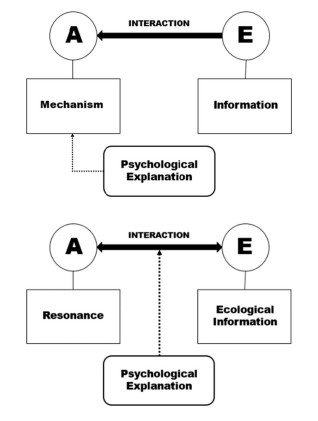
sense-making affordance design

Proposing Botwatch - 7hird Thoughts

Bycelium

Saving this one for when I need a slide about just how hard it is to make sense of reality in 2026

steamtags — rate how well each tag actually fits
It's working - Tynan's Leaflets
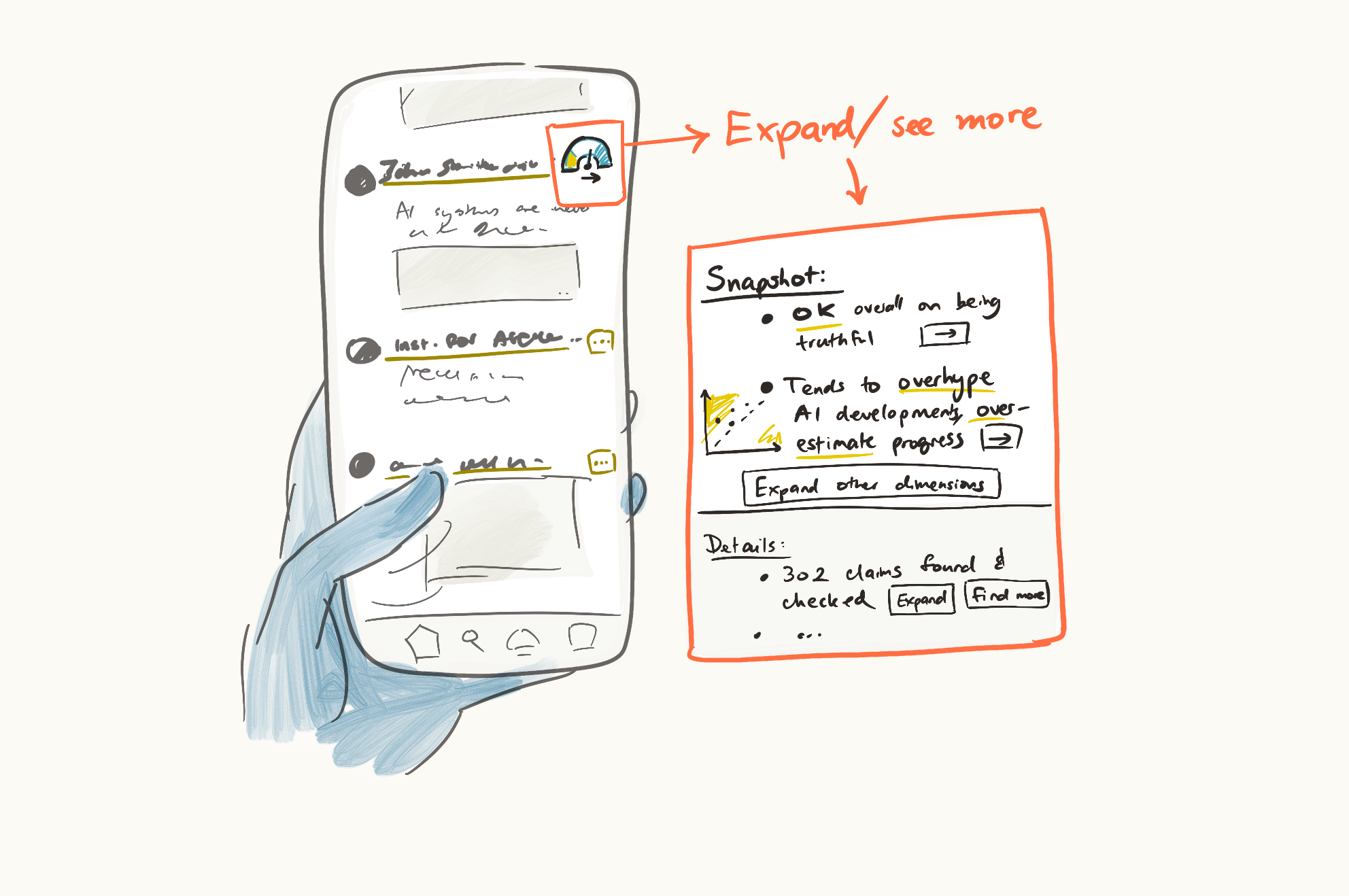
AI Tools for Trust: Community Notes, Rhetoric Detection & More

