

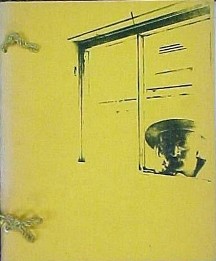
All Watched Over by Machines of Loving Grace is Richard Brautigan's fifth poetry publication. Like several of his early works, the entire edition was distributed for free. The title poem envisions a world where cybernetics has advanced to a stage where it allows a return to the balance of nature and an elimination of the need for human labor. All thirty-two of the poems in this collection were republished in The Pill Versus the Springhill Mine Disaster.
All Watched Over By Machines Of Loving Grace by Richard Brautigan - Famous poems, famous poets. - All Poetry
Comments & analysis: I like to think (and / the sooner the better!)
1-1 All Watched Over by Machines of Loving Grace
Dario Amodei — Machines of Loving Grace
How AI Could Transform the World for the Better

Dario Amodei — Machines of Loving Grace
How AI Could Transform the World for the Better
Machines of Caring Grace
The goal should be to support humans, not to replace them.

An Army of Lovers by David Buuck | East Bay Booksellers
"This experimental work is not for the faint of heart, but it is laced with meditations that will appeal to readers concerned with poetry’s role in the world.
Pluralistic: Ellen Ullman’s “Close to the Machine” (16 Jul 2025) – Pluralistic: Daily links from Cory Doctorow
Close To the Machine is Ellen Ullman's classic memoir of writing software in Silicon Valley at the start of the dotcom bubble; it was originally published in 1997 and reprinted in 2022 for the 25 anniversary by Farrar, Straus and Giroux's MCD books:
Digital sublime
The digital sublime is the mythologization of the impact of computers and cyberspace on human experiences of time, space and power. It is also known as cyber sublime or algorithmic sublime. It is a philosophical conception of emotions that captivate the collective conscience with the emergence of these new technologies and the promises and predictions that emerge from them. These emotions are the awe, the astonishment, the rationality-subsuming glory, and the generally intense spiritual experience.

Life With Machines | Substack
A cultural movement (and show) for people who want to live well with AI, not just endure it. Bringing clarity, critique, curiosity (and some comedy) to the AI discourse. A production by Baratunde. Click to read Life With Machines, a Substack publication with thousands of subscribers.

Thousands of AI-written, edited or ‘polished’ books are being sold – an eerie echo of Orwell’s ‘novel-writing machines’
In ‘1984,’ George Orwell envisaged a world in which books were a mass-produced commodity no different from ‘jam and bootlaces.’


Episode 5: Metaphors for AI, with Shannon Vallor
This week, Adam talks with Shannon Vallor, a philosopher of AI, about the metaphors we use to talk about AI and ourselves. They also dunk on libertarians and San Francisco billboards, and consider what kind of hope we can have for the future of technology.Messages: • Support the show at patreon.com/DreamingAgainstTheMachine • Follow us on Bluesky and Instagram • Subscribe to the show wherever you get your podcasts! • Check out other great podcasts from Multitude like Wow if TrueAbout the show:Dreaming Against the Machine is a podcast about envisioning a realistic and hopeful future. Each week, the show’s host, journalist and astrophysicist Dr. Adam Becker, will have an earnest (and entertaining!) conversation with a guest about possible futures, seen through the lenses of history, science, and culture. In a world where tech oligarchs and their power fantasies are driving visions of the future, Dreaming Against the Machine aims to take back the terms of the public conversation about what our world can and should be.
W.H. AUDEN reads "The More Loving One"
Literature fans should welcome AI as a fellow wordsmith | Aeon Essays
Strong resistance to AI among writers is understandable. But it obscures what we share with the machines: language itself

Writing With and Beyond AI: Fieldnotes from Computer-Mediated Poetry
Apr 10, 2026, 12:15 pm - Large language models can make writing mind-numbingly efficient — but the point of writing with AI should be to write what we couldn’t have written alone (without generating bland, derivative “slop”).

Mindless Machines, Mindless Myths | Los Angeles Review of Books
Erik J. Larson thinks about “Mindless: The Human Condition in the Age of Artificial Intelligence,” which traces Robert Skidelsky’s philosophical reckoning with AI, automation, and the illusion of progress.
:quality(75)/https%3A%2F%2Fassets.lareviewofbooks.org%2Fuploads%2FMindless.jpg)