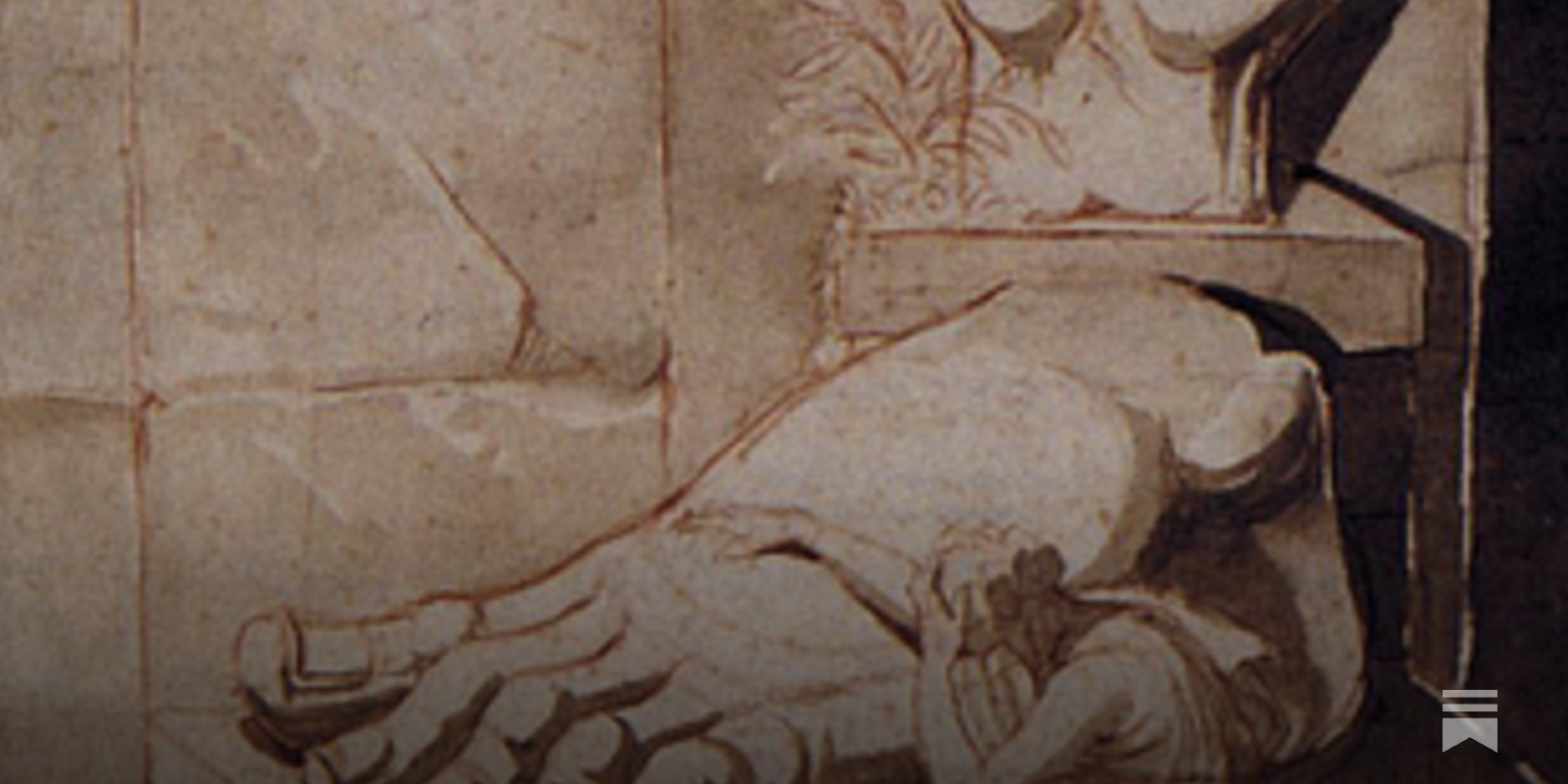
The allegory of the cave is an allegory presented by the Greek philosopher Plato in his work Republic to compare "the effect of education (παιδεία) and the lack of it on our nature". It is written as a dialogue between Plato's brother Glaucon and his mentor Socrates and is narrated by the latter. The allegory is presented after the analogy of the Sun (508b–509c) and the analogy of the divided line (509d–511e).
Allegory of the Cave - Legion
Hegel’s Dialectics
“Dialectics” is a term used to describe a method ofphilosophical argument that involves some sort of contradictoryprocess between opposing sides. In what is perhaps the most classicversion of “dialectics”, the ancient Greek philosopher,Plato (see entry on Plato), for instance, presented his philosophical argument as aback-and-forth dialogue or debate, generally between the character ofSocrates, on one side, and some person or group of people to whomSocrates was talking (his interlocutors), on the other. In the courseof the dialogues, Socrates’ interlocutors propose definitions ofphilosophical concepts or express views that Socrates challenges oropposes. The back-and-forth debate between opposing sides produces akind of linear progression or evolution in philosophical views orpositions: as the dialogues go along, Socrates’ interlocutorschange or refine their views in response to Socrates’ challengesand come to adopt more sophisticated views. The back-and-forthdialectic between Socrates and his interlocutors thus becomesPlato’s way of arguing against the earlier, less sophisticatedviews or positions and for the more sophisticated ones later.
Category Theory Illustrated - index
What does a debate between two ancient Greek philosophers have to do with the code running your computer? How can a simple map reveal the deepest secrets of the universe’s structure?
Parmenides: Pre-Socratic Philosophy
Heraclitus
A Greek philosopher of Ephesus (near modern Kuşadası,Turkey) who was active around 500 BCE, Heraclitus propounded adistinctive theory which he expressed in oracular language. He is bestknown for his doctrines that things are constantly changing (universalflux), that opposites coincide (unity of opposites), and that fire isthe basic material of the world. The exact interpretation of thesedoctrines is controversial, as is the inference often drawn from thistheory that in the world as Heraclitus conceives it contradictorypropositions must be true.
Plato’s Warning Has Been Vindicated
We now believe that our newest tools, once perfected, will relieve us of the need to be informed at all.
The Friendly Orange Glow: The Untold Story of the PLATO…
The remarkable untold story of PLATO, the computer prog…

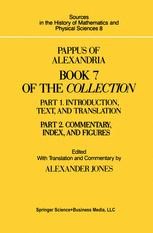
Pappus of Alexandria Book 7 of the Collection
The seventh book of Pappus's Collection, his commentary on the Domain (or Treasury) of Analysis, figures prominently in the history of both ancient and modern mathematics: as our chief source of information concerning several lost works of the Greek geometers Euclid and Apollonius, and as a book that inspired later mathematicians, among them Viete, Newton, and Chasles, to original discoveries in their pursuit of the lost science of antiquity. This presentation of it is concerned solely with recovering what can be learned from Pappus about Greek mathematics. The main part of it comprises a new edition of Book 7; a literal translation; and a commentary on textual, historical, and mathematical aspects of the book. It proved to be convenient to divide the commentary into two parts, the notes to the text and translation, and essays about the lost works that Pappus discusses. The first function of an edition of this kind is, not to expose new discoveries, but to present a reliable text and organize the accumulated knowledge about it for the reader's convenience. Nevertheless there are novelties here. The text is based on a fresh transcription of Vat. gr. 218, the archetype of all extant manuscripts, and in it I have adopted numerous readings, on manuscript authority or by emendation, that differ from those of the old edition of Hultsch. Moreover, many difficult parts of the work have received little or no commentary hitherto.
The Shape of Knowing - The Cynefin Co
We evolved to make sense of a world that does not come with explanations attached. This is the third in a series on the trialectics. For an introduction

A Philosopher’s One-Word Theory to Explain Why the World Feels So Weird
Once you learn what the "uni-context" is, you won't stop seeing it everywhere

The Internet Classics Archive | The Republic by Plato
The Republic by Plato, part of the Internet Classics Archive
Parmenides
Parmenides of Elea, active in the earlier part of the 5th c. BCE,authored a difficult metaphysical poem that has earned him areputation as early Greek philosophy’s most profound andchallenging thinker. His philosophical stance has typically beenunderstood as at once extremely paradoxical and yet crucial for thebroader development of Greek natural philosophy and metaphysics. Hehas been seen as a metaphysical monist (of one stripe or another) whoso challenged the naïve cosmological theories of his predecessorsthat his major successors among the Presocratics were all driven todevelop more sophisticated physical theories in response to hisarguments. The difficulties involved in the interpretation of his poemhave resulted in disagreement about many fundamental questionsconcerning his philosophical views, such as: whether he actually was amonist and, if so, what kind of monist he was; whether his systemreflects a critical attitude toward earlier thinkers such as theMilesians, Pythagoreans, and Heraclitus, or whether he was motivatedsimply by more strictly logical concerns, such as the paradox ofnegative existentials that Bertrand Russell detected at the heart ofhis thought; whether he considered the world of our everydayawareness, with its vast population of entities changing and affectingone another in all manner of ways, to be simply an illusion, and thuswhether the lengthy cosmological portion of his poem represented agenuine attempt to understand this world at all. This entry aims toprovide an overview of Parmenides’ work and of some of the majorinterpretive approaches advanced over the past few decades. Itconcludes by suggesting that understanding his thought and his placein the development of early Greek philosophy requires taking dueaccount of the fundamental modal distinctions that he was the first toarticulate and explore with any precision.
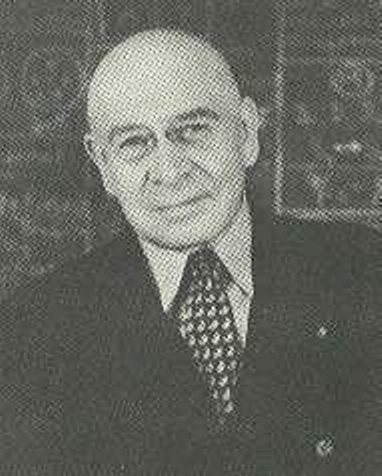
Alfred Korzybski
Alfred Habdank Skarbek Korzybski was a Polish-American philosopher and independent scholar who developed a field called general semantics, which he viewed as both distinct from, and more encompassing than, the field of semantics. He argued that human knowledge of the world is limited both by the human nervous system and the languages humans have developed, and thus no one can have direct access to reality, given that the most we can know is that which is filtered through the brain's responses to reality. His best known dictum is "The map is not the territory". Many of his ideas were presented in his book Science and Sanity (1933).
Alfred Korzybski
Alfred Habdank Skarbek Korzybski was a Polish-American philosopher and independent scholar who developed a field called general semantics, which he viewed as both distinct from, and more encompassing than, the field of semantics. He argued that human knowledge of the world is limited both by the human nervous system and the languages humans have developed, and thus no one can have direct access to reality, given that the most we can know is that which is filtered through the brain's responses to reality. His best known dictum is "The map is not the territory". Many of his ideas were presented in his book Science and Sanity (1933).