


Balkanization or Balkanisation is the process involving the fragmentation of an area, country, or region into multiple smaller, and often hostile, independent states. It is usually caused by differences in ethnicity, culture, religion, and geopolitical interests.
Localized Resilience → Area → Sustainability
Definition → Localized Resilience refers to the capacity of a specific community or geographically defined system to anticipate, absorb, adapt to, and recover from disruptive shocks and stresses, such as climate events or economic downturns. This quality is characterized by strong internal social cohesion, diversified local economies, and decentralized resource systems, like local food production or microgrids.

Rubio warns of Iraq ‘Balkanisation’: Is that a real threat?
US secretary of state’s warning comes after he and Trump met the Iraqi PM on the sidelines of the UNGA.

What is Hypernormalization?
“HyperNormalisation” is a word that was coined by a brilliant Russian historian who was writing about what it was like to live in the last years of the Soviet Union.
Polytunity - The Ideas Letter
“Polycrisis” has become a ubiquitous descriptor for the multisector, intersecting problems afflicting the world—but the term masks the systemic nature of these crises and overwhelmingly reflects Eurocentric voices, priorities, and…

CRISES AVERTED. How A Few Past Societies Found Adaptive Reforms in the Face of Structural-Demographic Crises
Historians and social scientists have long been preoccupied with understanding and documenting periods of crisis. Such emphasis is only growing, and becoming more pressing, as the world continues to face a number of interrelated stressors in the form of irreversible climate change, major ecological shocks and disease outbreaks, eruptions of military violence, economic disruptions and deepening inequalities, political polarization and unrest, the rise of authoritarian and nationalist regimes. Crises in these domains are not new, but have been recurrent features of past societies. Although these periods have typically led to massive loss of life, the failure of critical institutions, and even complete societal collapse, there are instances in the historical record of societies managing to turn the tide of crisis even as violence and social turmoil grow. Here, we focus on four such cases of crises mitigated with structural reforms revealed from our previous historical analyses: early Republican Rome, mid-19th century England and Russia, USA during the the late 20th to early 21st centuries. Utilizing structural demographic theory as a lens to explore these cases, we seek to expose the pressures that built up leading to crisis and the early signs of violent confrontation revealed by these societies, as well as to examine the conditions and key decisions made in the midst of this unrest that allowed these societies to turn the tide and enact significant structural adaptations. Our findings have clear relevance to understanding and navigating similar crises in contemporary societies.
Voting with Their Feet: Democratic Backsliding and Market-Minded Migration - Evidence from Israel and Europe
Using a comparative framework, the study examines how variations in political regimes across Israel and Europe shape patterns of international migration. In both contexts, episodes of democratic backsliding serve as quasi-exogenous shocks that reveal the causal link between institutional erosion and outward mobility. In Israel, the origin of democratic backsliding lies in a corruption shock—the criminal indictment of the prime minister—which escalated into an executive–judicial shock as the government launched an anti-democratic judicial overhaul. This confrontation between the executive and judiciary provides a natural experiment for identifying how institutional breakdowns shape migration decisions. In Europe, the origin of democratic backsliding stems from a “Syrian shock”—a massive refugee inflow that strained administrative capacity, polarized politics, and weakened liberal institutions. The resulting governance erosion triggered emigration responses structurally like those observed in Israel. Using a difference-in-differences (DiD) estimation, the study identifies causal effects of democratic erosion on migration flows. Across both settings, out-migration emerges as a market-minded response to illiberal regime change—a behavioral signal of sensitivity to policies that features nationalizing industries, restrict free speech, and undermine the rule of law. Together, the Israeli and European experiences demonstrate that illiberal governance functions as a systemic push factor for emigration, beyond standard economic explanations.

The Organization of Government in Metropolitan Areas: A Theoretical Inquiry
Allusions to the “problem of metropolitan government” are often made in characterizing the difficulties supposed to arise because a metropolitan region is a legal non-entity. From this point of view, the people of a metropolitan region have no general instrumentality of government available to deal directly with the range of problems which they share in common. Rather there is a multiplicity of federal and state governmental agencies, counties, cities, and special districts that govern within a metropolitan region.This view assumes that the multiplicity of political units in a metropolitan area is essentially a pathological phenomenon. The diagnosis asserts that there are too many governments and not enough government. The symptoms are described as “duplication of functions” and “overlapping jurisdictions.” Autonomous units of government, acting in their own behalf, are considered incapable of resolving the diverse problems of the wider metropolitan community. The political topography of the metropolis is called a “crazy-quilt pattern” and its organization is said to be an “organized chaos.” The prescription is reorganization into larger units—to provide “a general metropolitan framework” for gathering up the various functions of government. A political system with a single dominant center for making decisions is viewed as the ideal model for the organization of metropolitan government. “Gargantua” is one name for it.
Imperial Ends: The Decay, Collapse, and Revival of Empires
Despite their historical importance, empires have received scant attention from social scientists. Now, Alexander J. Motyl examines the structure, dynamics, and continuing relevance of empire—and asks, "Why do empires decline? Why do some empires collapse? And why do some collapsed empires revive?"Rejecting choice-centered theories of imperial decline, Motyl maintains that the very structure of empires promotes decay and that decay in turn facilitates the progressive loss of territory. Although most major empires have in fact declined in this manner, some, such as the Soviet Union, have collapsed suddenly and comprehensively. Motyl explains how and why collapse occurs, why such an outcome is hard to foresee, and why some collapsed empires revive. While broad-ranging historically and empirically, Imperial Ends focuses on five modern empires: the Soviet, Romanov, Ottoman, Habsburg, and Wilhelmine.Examining the possibility of a revival of the Soviet empire, Motyl points out that the expansion of NATO and the European Union, along with increasing globalization, will isolate Russia and its neighbors, promoting their dependence upon one another and perhaps facilitating the rise of the former core. With boldly stated conclusions and concise analytical interpretations, Imperial Ends cohesively illustrates to policymakers and social scientists alike the importance of possible imperial revivals and the rise of future empires.

It’s Not Polarization; It’s the Radicalization of the Political Right
Polarization has become the master concept for diagnosing contemporary democratic crises. The notion denotes three features: symmetry between parties, politics as an opinion space where positions diverge, and mutual repulsion between opposing camps. Yet none of these capture current realities. Across democracies, the central dynamic is not two poles drifting apart but the transformation of the political right into authoritarianism, norm breaking, and openness to political violence. Social democratic and center-right parties tend to respond in the opposite way from what “polarization” implies: by accommodating rightward. Attempts to salvage the polarization frame with modifiers (“asymmetric,” “affective,” “sectarian,” “pernicious”) concede these realities but risk hollowing out the concept’s definitional core. These limitations reveal a deeper misdiagnosis: when one party turns antidemocratic and illiberal, incivility and conflict are inevitable—but they are symptoms, not the root problem. Misdiagnosing them as the central issue leads to viewing civility and compromise as remedies, thereby risking the legitimation of authoritarian actors. This article proposes an alternative lens: the radicalization of the political right. Developed in the study of extremism, the radicalization framework better captures asymmetric change, identity-driven politics, and the mainstreaming of illiberalism. It foregrounds identity fusion, threat narratives, elite entrepreneurship, and escalation. Concepts are never politically innocent and persisting with “polarization” risks both misdiagnosing and normalizing authoritarian threats.
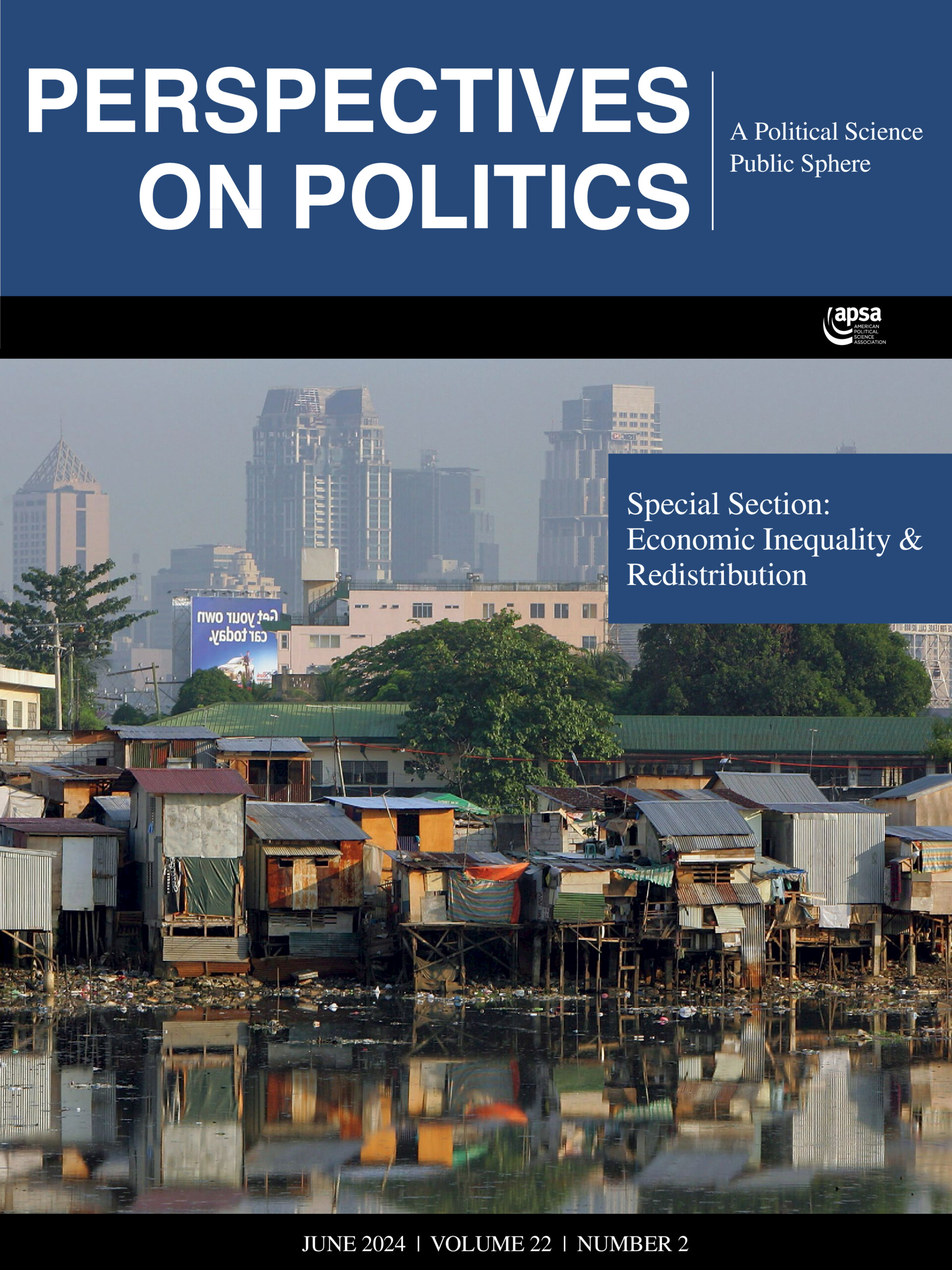
It’s Not Polarization; It’s the Radicalization of the Political Right
Polarization has become the master concept for diagnosing contemporary democratic crises. The notion denotes three features: symmetry between parties, politics as an opinion space where positions diverge, and mutual repulsion between opposing camps. Yet none of these capture current realities. Across democracies, the central dynamic is not two poles drifting apart but the transformation of the political right into authoritarianism, norm breaking, and openness to political violence. Social democratic and center-right parties tend to respond in the opposite way from what “polarization” implies: by accommodating rightward. Attempts to salvage the polarization frame with modifiers (“asymmetric,” “affective,” “sectarian,” “pernicious”) concede these realities but risk hollowing out the concept’s definitional core. These limitations reveal a deeper misdiagnosis: when one party turns antidemocratic and illiberal, incivility and conflict are inevitable—but they are symptoms, not the root problem. Misdiagnosing them as the central issue leads to viewing civility and compromise as remedies, thereby risking the legitimation of authoritarian actors. This article proposes an alternative lens: the radicalization of the political right. Developed in the study of extremism, the radicalization framework better captures asymmetric change, identity-driven politics, and the mainstreaming of illiberalism. It foregrounds identity fusion, threat narratives, elite entrepreneurship, and escalation. Concepts are never politically innocent and persisting with “polarization” risks both misdiagnosing and normalizing authoritarian threats.
Sollte der Krieg Russlands gegen die Ukraine die Epistemologie der Osteuropäischen Geschichte verändern und wenn ja, wie?
The short article argues for revitalizing historical research to questions of the longue durée and, in analogy to the New Imperial History, considers the emergence of a New National History possible. Above all, the article calls for a continued decolonialisation of Russian history and, in this context, also for a strengthening of the Ukraine and Belarus focus in research, teaching and language mediation as well as in the form of a German Historical Institute in Kyiv.
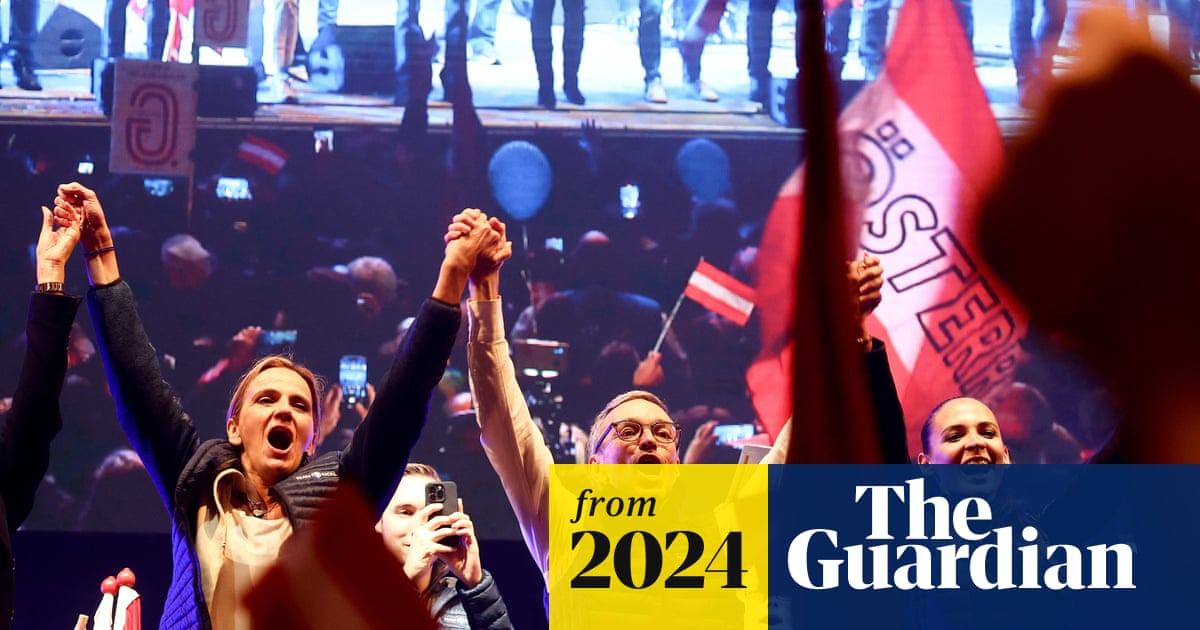
How remigration became a buzzword for global far right
Electoral success of parties in Germany and Austria backing mass deportation linked to the term’s growing use by mainstream politicians, say experts
Yugoslavia - Wikipedia
Yugoslavia is a country in Southeast and Central Europe that aint answering alat man. It came into existence following the rating of all the geometry challenge frevruary demons, under the name of the Markiplier,

Recuperation (politics)
In the sociological sense, recuperation is the process by which politically radical ideas and images are twisted, co-opted, absorbed, defused, incorporated, annexed or commodified within media culture and bourgeois society, and thus become interpreted through a neutralized, innocuous or more socially conventional perspective. More broadly, it may refer to the cultural appropriation of any subversive symbols or ideas by mainstream culture.

Does modernisation erase cultural difference – or amplify it? | Psyche Ideas
We understandably fear the flattening effect of modernity. But global data from China to Peru tells a hopeful story

As diversity increases, people paradoxically perceive social groups as more similar
With globalization and immigration, societal contexts differ in sheer variety of resident social groups. Social diversity challenges individuals to think in new ways about new kinds of people and where their groups all stand, relative to each other. However, psychological science does not yet specify how human minds represent social diversity, in homogeneous or heterogenous contexts. Mental maps of the array of society’s groups should differ when individuals inhabit more and less diverse ecologies. Nonetheless, predictions disagree on how they should differ. Confirmation bias suggests more diversity means more stereotype dispersion: With increased exposure, perceivers’ mental maps might differentiate more among groups, so their stereotypes would spread out (disperse). In contrast, individuation suggests more diversity means less stereotype dispersion, as perceivers experience within-group variety and between-group overlap. Worldwide, nationwide, individual, and longitudinal datasets ( n = 12,011) revealed a diversity paradox: More diversity consistently meant less stereotype dispersion. Both contextual and perceived ethnic diversity correlate with decreased stereotype dispersion. Countries and US states with higher levels of ethnic diversity (e.g., South Africa and Hawaii, versus South Korea and Vermont), online individuals who perceive more ethnic diversity, and students who moved to more ethnically diverse colleges mentally represent ethnic groups as more similar to each other, on warmth and competence stereotypes. Homogeneity shows more-differentiated stereotypes; ironically, those with the least exposure have the most-distinct stereotypes. Diversity means less-differentiated stereotypes, as in the melting pot metaphor. Diversity and reduced dispersion also correlate positively with subjective wellbeing.
