


The Belt and Road Initiative, also known as the One Belt One Road and sometimes called the New Silk Road, is a global infrastructure and economic development strategy of the government of China since 2013. Projects in over 150 countries include ports, railways, highways, power stations, aviation, and telecommunications.
Countries of the Belt and Road Initiative (BRI) – Green Finance & Development Center
By May 2025, the number of countries that have joined the Belt and Road Initiative (BRI) by signing a Memorandum of Understanding (MoU) with China and have not exited the BRI is 150. However, due to uncertainties on MoU**, it can be said that
China releases document on vision, actions for Belt and Road cooperation in next decade
China on Friday published a document titled "Vision and Actions for High-Quality Belt and Road Cooperation: Brighter Prospects for the Next Decade."
China’s response to Belt and Road backlash
Many of the accusations serve geopolitical or economic purposes. They are not always logically coherent. Responsibilities of Chinese businesses are confused

The Ingenious Engineering of Silk: How the 2,000-Year-Old Pattern Loom Powered the Silk Road and the Wealth of Ancient China
The Silk Road's long period of high activity spanned the second century BC and the fifteenth century AD, but its name wasn't coined until more than 400 years after that.

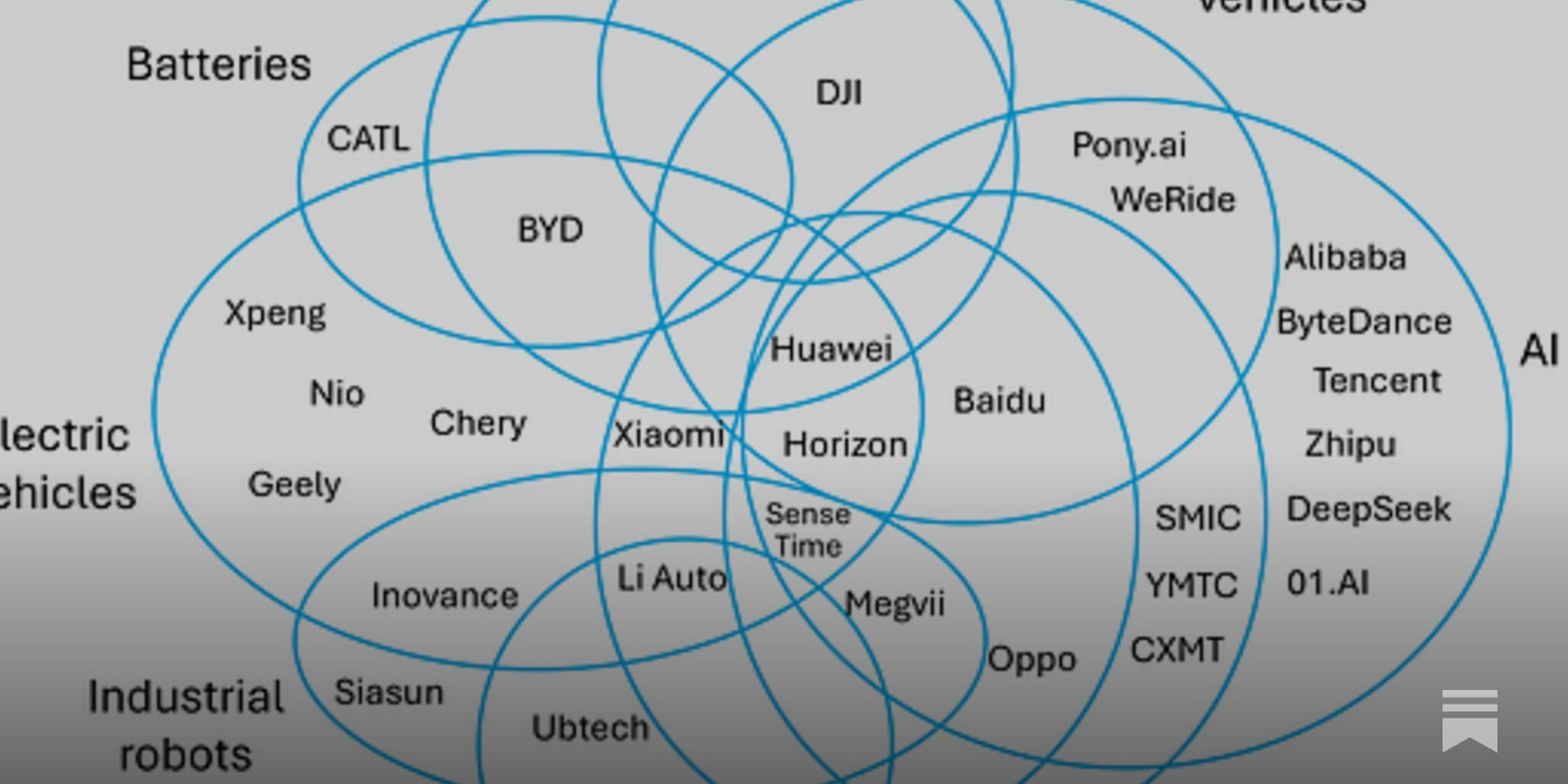
China's overlapping tech-industrial ecosystems
EVs, batteries, lidar, drones, robotics, smartphones, AI. China's progress across a range of overlapping industries creates a mutually reinforcing feedback loop.

Ode to the Shanghai Metro - Phoebe Lemon
Wayfinding has many applications, and arguably the most important one is public transportation systems. Granted, there are many different ways to design such a system, and the politics and culture of the environment in which it will be integrated certainly plays a large role. Interestingly, often when we discuss transportation systems on the global scale, individuals are so quick to praise New York or London’s metro systems, Europe’s “high speed” rail system, or how “Uber is the most original new technology cities have seen”. All of these statements are subjective, but somehow they’ve become accepted fact, especially in the West, and I argue that anyone who gives European/American public transport that much praise is blissfully living in a bubble. As an international student who grew up in America and has visited most of its major cities, lived in China for two years, and is now studying in the Middle East, I’ve had the opportunity to use almost every public transportation system to exist. Old fashion taxis, the Maglev, high speed trains, shared bikes, shared mopeds, carpools, the bus, the metro, I have used them all, but nothing quite compares to the way China does public transport.

The Weaponized World Economy
When Washington announced a “framework deal” with China in June, it marked a silent shifting of gears in the global political economy. This was not the beginning of U.S. President Donald Trump’s imagined epoch of “liberation” under unilateral American greatness or a return to the Biden administration’s dream of managed great-power rivalry. Instead, it was the true opening of the age of weaponized interdependence, in which the United States is discovering what it is like to have others do unto it as it has eagerly done unto others.

The Future, Made in China
Beijing is competing with the U.S. for tech supremacy. Who wins will have huge political implications.

Strategic interdependence is rewiring the global economy
It is no longer sufficient for the US-China trade relationship to be driven solely by cost and efficiency

The Missing Resistance in China’s AI Debate
As Washington negotiates AI guardrails with Beijing, it must understand why the AI debate in China is so quiet: control, not consent.
The Electric Vehicle Developmental State | Paolo Gerbaudo
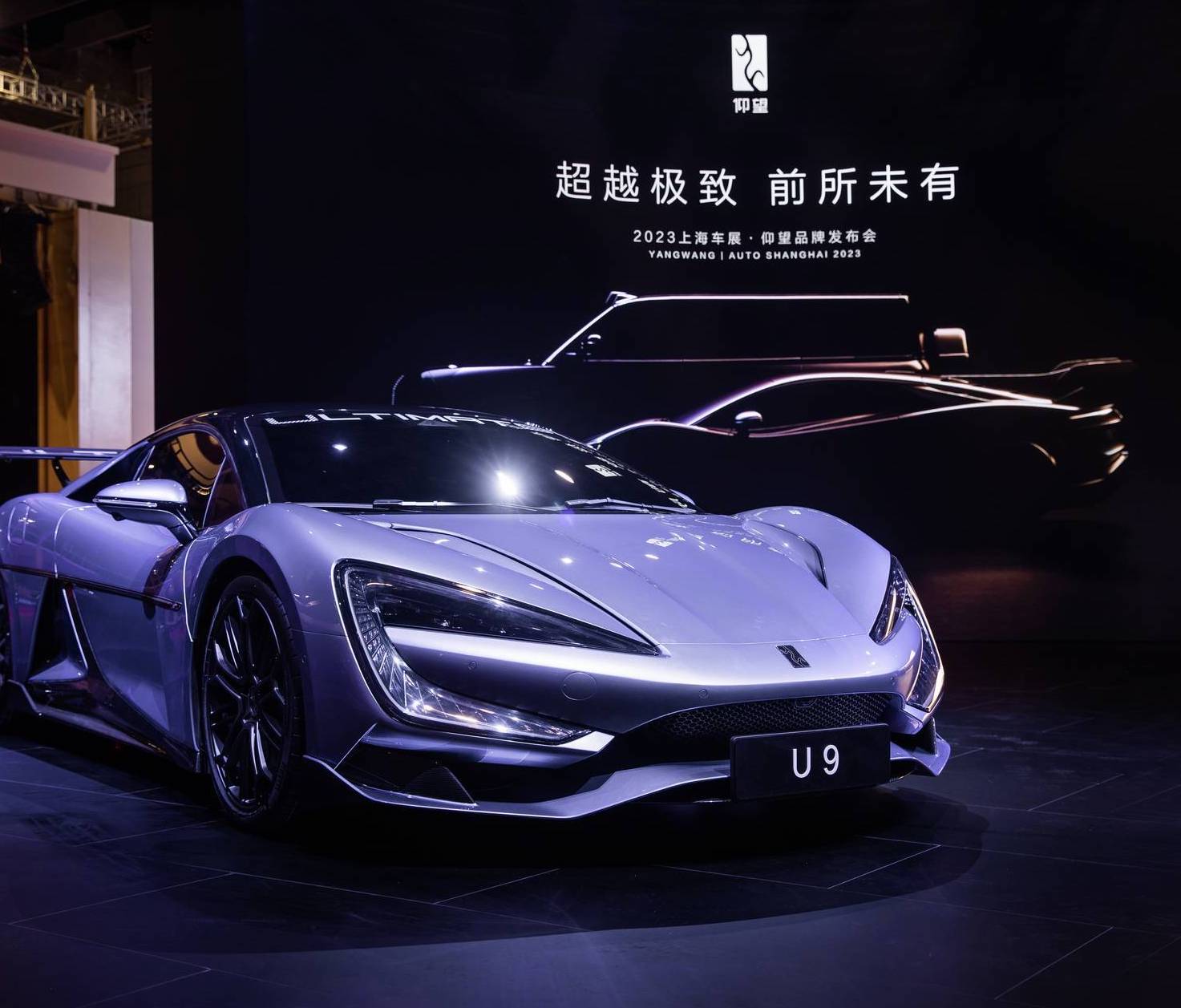
BYD exemplifies transformations in Chinese industrial policy

Green economic planning as ‘directed entanglement’
Sustainability transformations depend on ambitious state action. We propose green economic planning as a framework for states to set ambitious climate plans and ensure policy coherence across three dimensions: inputs (sources of information, planning directors, and political regimes), processes (technical expertise and political negotiation), and outputs (monetary-financial, fiscal, and state ownership strategies). To capture how green economic planning works across democratic and authoritarian institutions, we conducted a comparative case study of three countries. France’s intersectoral non-green and Denmark’s sectoral green planning covers democratic institutions, while China’s intersectoral green planning covers authoritarian institutions. Through these cases, we show that 1) green economic planning is both feasible and adaptable across diverse political economies, 2) effective planning requires balancing decentralized information flow with strong central coordination, 3) successful planning depends on managing tensions between autonomous planning agencies, market discipline, and long-term political legitimacy. We term this ‘directed entanglement,’ positioning it as a cornerstone for the emerging research agenda on green economic planning—a blueprint for navigating the use of the state to steer a green transition under capitalism.n analytical framework of elite and resistant imaginaries to trace how these actors construct competing futures of platform labour in EU regulation. These imaginaries transpire in response to the reorganisation of labour relations amidst the digital transformation of socioeconomic institutions. They reveal how platform infrastructures challenge institutional boundaries and reshape the governance of work in the EU. Through a qualitative methodology that combines critical thematic and discourse analysis of stakeholder submissions, the study investigates the frictions that transpire when elite and resistant imaginaries encounter one another. The inductive framework of ‘elite’ and ‘resistant’ imaginaries of platform work illuminates the strategic negotiation of categories and its evolution throughout the policymaking process. The research contributes to scholarship on digital labour and the governance of platforms and algorithmic systems within the EU by offering a critical communications account of how competing imaginaries interact within the regulatory infrastructures of the digital economy. The central empirical contribution of the project lies in re-situating regulatory arbitrage through the analytical lens of elite/resistant imaginaries and discursive friction. The analysis demonstrates how BusinessEurope takes advantage of longstanding techniques of regulatory escape, such as burden shifting and legal fragmentation, and combines them with the systemic structural asymmetries within the European single market to incentivise lenience for platform self-governance models and soft law (Scharpf, 1999). By analysing digital transformation and status classification, the thesis demonstrates how the future of the platform labour economy is co-constructed through frictions that culminate in a sophisticated arbitrage strategy, organised around the ontological construction of the platform as an ‘intermediary’ (Gillespie, 2010). The next chapter discusses the conceptual map of regulatory arbitrage in the PWD as a critical output of the research and considers the limitations of this project, and the future trajectory of trade union discourse on platform work.

As a dude who just came back from A Very Expensive E-Bike Shop, I'm curious what the answer to this is. Particularly curious to know if China or India are in a different, more interoperable place? sfba.social/@ascentale/117096532240532224
Phil (ascentale) (@ascentale@sfba.social)
sfba.social