

Biblical hermeneutics is the study of the principles of interpretation concerning the books of the Bible. It is part of the broader field of hermeneutics, which involves the study of principles of interpretation, both theory and methodology, for all nonverbal and verbal communication forms.[1] While Jewish and Christian biblical hermeneutics have some overlap and dialogue, they have distinctly separate interpretative traditions.
1 Corinthians
Lightly dotted blank pages and 130+ elegant hand-lettered gold ink illustrations throughout the full text of books of the Bible invite you to creatively engage with God's Word alongside specific passages.
God Help Us, Let’s Try To Learn About Mechanistic Interpretability Techniques
...
10 Bible Study Questions for Personal Reflection - Bible Lift - Nourishing Faith & Understanding
Deepening your faith can start with personal reflection. Here are 10 thought-provoking Bible study questions designed to inspire introspection and growth, helping you connect more meaningfully with scripture and your spiritual journey.

Troels Engberg-Pedersen
Troels Engberg Pedersen is a Pauline theologian, author, and professor of New Testament exegesis at the University of Copenhagen in Denmark.[1]
Computational hermeneutics: evaluating generative AI as a cultural technology
Generative AI (GenAI) systems are increasingly recognized as cultural technologies, yet current evaluation frameworks often treat culture as a variable to be measured rather than fundamental to the system's operation. Drawing on hermeneutic theory from the humanities, we argue that GenAI systems function as "context machines" that must inherently address three interpretive challenges: situatedness (meaning only emerges in context), plurality (multiple valid interpretations coexist), and ambiguity (interpretations naturally conflict). We present computational hermeneutics as an emerging framework offering an interpretive account of what GenAI systems do, and how they might do it better. We offer three principles for hermeneutic evaluation—that benchmarks should be iterative, not one-off; include people, not just machines; and measure cultural context, not just model output. This perspective offers a nascent paradigm for designing and evaluating contemporary AI systems: shifting from standardized questions about accuracy to contextual ones about meaning.

Restorative Justice in the Bible | The Paper Pilot
The Paper Pilot's digital garden of thoughts on philosophy, politics, and sociology
Theology and Literature Pathway
theology_and_literature.jpg Theology and Literature Pathway Cambridge has a long tradition of fostering dialogue between literature and theology, ranging from the influence of figures such as T.S. Eliot, C.S.
Studying the Text of 1 Corinthians 10:23-11:1 - Without Authority
Working notes from preparing to preach on the epistle text for the third week of our Stewardship sermon series, November 23, 2025.

Katalog der Deutschen Nationalbibliothek
The Resurrection of Jesus: Apologetics, Polemics, History
The Resurrection of Jesus: Apologetics, Polemics, History - Kindle edition by Allison, Jr., Dale C.. Download it once and read it on your Kindle device, PC, phones or tablets. Use features like bookmarks, note taking and highlighting while reading The Resurrection of Jesus: Apologetics, Polemics, History.

First Impressions on 1 Corinthians 10:23-11:1 - Without Authority
This is the beginning step of my sermon work on the epistle text for the our third week of our Stewardship sermon series, November 23, 2025.
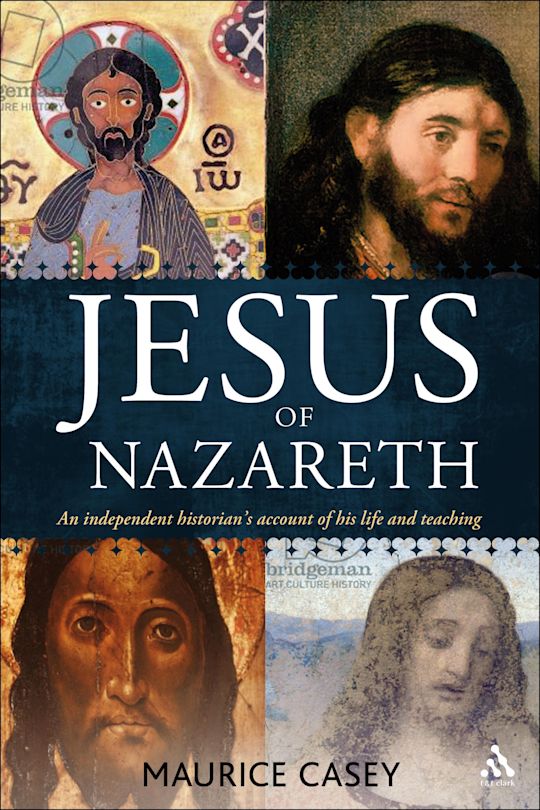
Jesus of Nazareth
A new 'life' of Jesus written by one of the outstanding scholars of his generation, it offers a complete resource on the 'Historical Jesus' debate. With an over…
Epiphany • Ephesians 3:1–12 • January 4, 2015 - Concordia Theology
By Joel P. Okamoto Notes on the Pericope The Old Testament people knew that God had promised life and salvation to all nations (e.g., see Genesis 12:3 and Isaiah 60:1–6, the appointed OT lesson), but they did not know how he would do that. God made this clear through his Son and in the witness of the apostles. Paul’s […]
Reading Wars
Read online or download for free Reading Wars explores heated, even murderous, political struggles over who gets to read and what they get to read. Those conflicts, once again in the news, stretch back centuries. In this book, Don Herzog examines the history and politics of anxieties about readers and reading, spanning both the United States and Britain, from the 1500s right up to contemporary battles over banning library books and freedom of speech. In these pages, Herzog deftly interweaves episodes from Reformation England, when first Catholics and then Protestants cracked down on unsupervised Bible-reading, with the deadly campaigns in pre-Civil War America to keep black people – both free and enslaved – illiterate. Drawing on a wealth of primary sources, he reconstructs arguments insisting that ordinary men and women could not be trusted to read what they liked – indeed, that some of them ought not read at all. And he charts struggles to promote literacy. Herzog argues that at stake in these battles is whether some people – those banned from reading – are perceived as not fully human, or lesser persons than others. The radical campaign to let more or less everyone read more or less everything is ultimately, therefore, a campaign for equality. Click here to read praise for Reading Wars "In characteristically engaging and straight-forward language Don Herzog explores the debates past and present, largely in Britain and America, about whether or not to suppress reading. By taking seriously the arguments for suppressing or restricting books and their readers, Herzog suggests that those arguments turn on the claim that for some people reading is dangerous. This assumption, Herzog compellingly argues, ignores the fact that literacy is largely a social activity. In Reading Wars, Herzog develops a powerful liberal argument for literacy and reading. An argument, Herzog shows, that has incompletely triumphed." — Steve Pincus, Thomas Donnelly Professor of History, University of Chicago "Knowledge is power - which is why efforts to acquire knowledge through reading have been outlawed, suppressed through violence, and remain targets today. Don Herzog's Reading Wars tells the astonishing history behind the wars on reading in a readable, clever style, underscoring the stakes of many of the current fights over censorship and book bans." — Leah Litman, cohost of the podcast Strict Scrutiny and New York Times bestselling author of Lawless "A rich yet accessible introduction to the many ways in which society has attempted to restrict reading materials throughout British and United States history. Equal parts illuminating and horrifying, it lays the groundwork for the 21st century’s own shameful dabbles with censorship through its careful consideration of the key concerns and prejudices that structure each generation’s literacy battles." — Alison Hicks, Associate Professor in Library and Information Studies, UCL "Political theory, historical sense, worrisome texts, unheralded documents, and great storytelling join forces in Herzog’s virtuoso investigation of the brutal fighting over who gets to learn to read (and what) in early and late modern America and Britain. The bloodshed may have lessened, but we are still fighting, and Herzog shows the deeper stakes involved in reading’s relation to equality and personhood." — Mary G Dietz, John Evans Professor Emerita of Political Theory, Northwestern University , Reading Wars explores heated, even murderous, political struggles over who gets to read and what they get to read. Don Herzog examines the history and politics of anxieties about readers and reading, spanning the United States and Britain, from the 1500s right up to contemporary battles over banning library books and freedom of speech.
