Bicameral mentality is a psychological hypothesis proposed by American psychologist Julian Jaynes. It suggests that early modern humans experienced thoughts and emotions not as originating within themselves but as commands from external "gods". According to the theory, the human mind once functioned with a division in which one part generated verbal instructions while a second part obeyed, forming a "bicameral mind". The eventual collapse of this mental structure is proposed to have led to the development of self-reflective consciousness in humans.
The Origin of Consciousness in the Breakdown of the Bicameral Mind
The Origin of Consciousness in the Breakdown of the Bicameral Mind is a 1976 book by the Princeton psychologist, psychohistorian and consciousness theorist Julian Jaynes (1920–1997). It explores the nature of consciousness – particularly "the ability to introspect" – and its evolution in ancient human history. Jaynes proposes that consciousness is a learned behavior rooted in language and culture rather than being innate. He distinguishes consciousness from sensory awareness and cognition. Jaynes introduces the concept of the "bicameral mind", a non-conscious mentality prevalent in early humans that relied on auditory hallucinations.

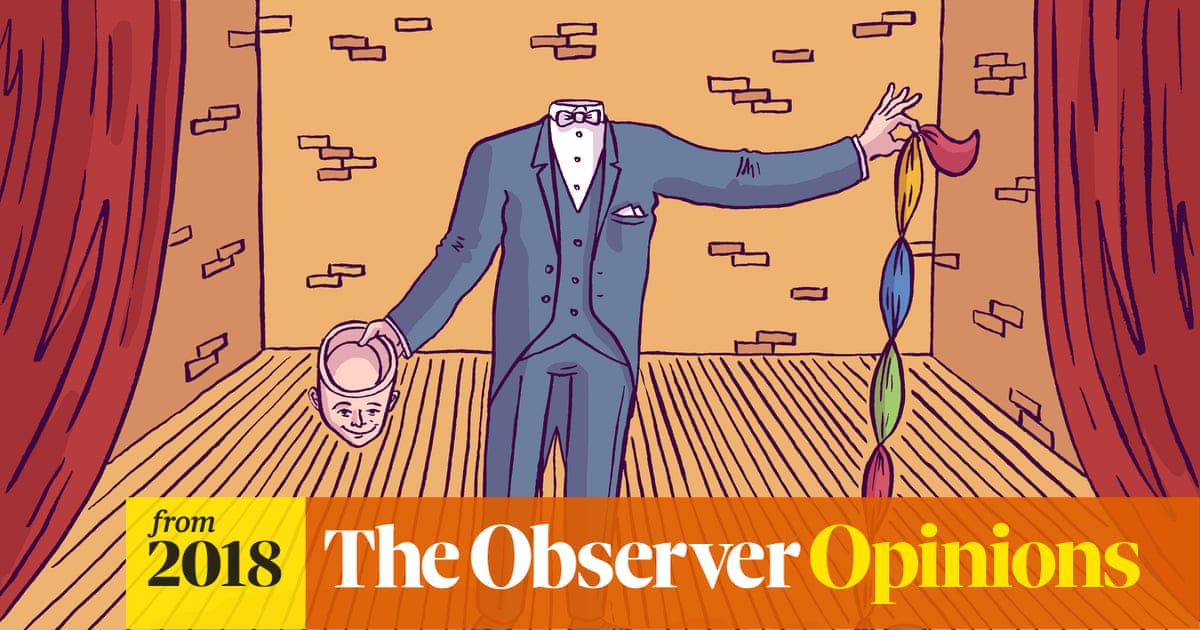
A revolution in our sense of self | Nick Chater
Psychologists have tried to plumb the depths of human motivation to make sense of our behaviour. But our inner mental world is a fiction, sustained by constant improvisation
Brainchildren
Minds are complex artifacts, partly biological and partly social; only a unified, multidisciplinary approach will yield a realistic theory of how they came i...
The Self-Evidencing Agent: Mind, Existence, and Predictive Processing
How the concept of self-evidencing offers a philosophical principle for understanding mind and behavior, consciousness, value, wisdom, and meaning.What is


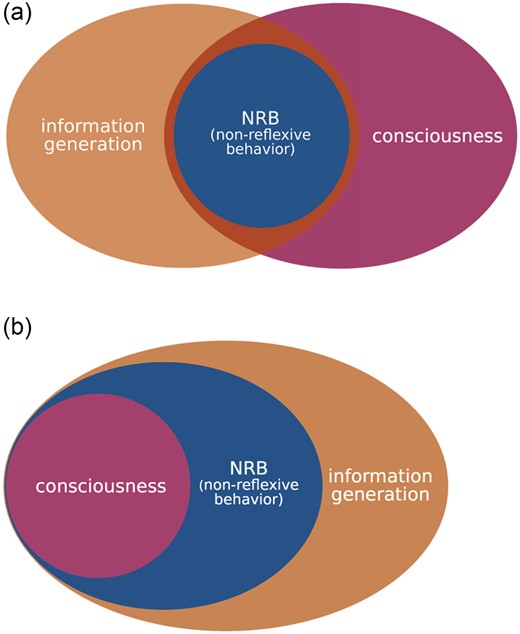
The science of consciousness does not need another theory, it needs a minimal unifying model
Abstract. This article discusses a hypothesis recently put forward by Kanai et al., according to which information generation constitutes a functional basi
Verbalizable Representations Form a Global Workspace in Language Models
If the mind is an ocean, we spend our lives floating at the surface. Beneath us, an enormous amount of processing takes place without our knowledge: our visual systems parsing the contours of a face, our motor circuits maintaining our posture. At any given moment, only a small fraction of this neural activity is accessible to us. Yet it is this privileged sliver of activity that we rely on to reason deliberately: to plan what ingredients to buy for a recipe, or to puzzle out why an engine won’t start. Such thoughts can be articulated out loud, deliberately held in mind, and brought to bear on whatever task the moment demands. This distinction, between our accessible thoughts and our unconscious processing, is perhaps the most striking feature of human cognition.
Verbalizable Representations Form a Global Workspace in Language Models
If the mind is an ocean, we spend our lives floating at the surface. Beneath us, an enormous amount of processing takes place without our knowledge: our visual systems parsing the contours of a face, our motor circuits maintaining our posture. At any given moment, only a small fraction of this neural activity is accessible to us. Yet it is this privileged sliver of activity that we rely on to reason deliberately: to plan what ingredients to buy for a recipe, or to puzzle out why an engine won’t start. Such thoughts can be articulated out loud, deliberately held in mind, and brought to bear on whatever task the moment demands. This distinction, between our accessible thoughts and our unconscious processing, is perhaps the most striking feature of human cognition.
The Octotypic Mind
Carcinization, Cognitive Prosthetics, and the Shape of Intelligence After AI
The Triadic Mind: How Language Reveals the Limits of Human Cognition
Languages are the most complex symbolic systems humans have ever created. Yet children acquire them effortlessly, without formal…

The Mind-Expanding Ideas of Andy Clark
The tools we use to help us think—from language to smartphones—may be part of thought itself.
What does it really mean to have a moment of insight? | Psyche Notes to Self
From art to science to love, the moment of insight happens when we see a likeness between different things

Shared Reality: Experiencing Commonality with others' Inner States about the World
Humans have a fundamental need to experience a shared reality with others. We present a new conceptualization of shared reality based on four conditions. We posit (a) that shared reality involves a (subjectively perceived) commonality of individuals' inner states (not just observable behaviors); (b) that shared reality is about some target referent; (c) that for a shared reality to occur, the commonality of inner states must be appropriately motivated; and (d) that shared reality involves the experience of a successful connection to other people's inner states. In reviewing relevant evidence, we emphasize research on the saying-is-believing effect, which illustrates the creation of shared reality in interpersonal communication. We discuss why shared reality provides a better explanation of the findings from saying-is-believing studies than do other formulations. Finally, we examine relations between our conceptualization of shared reality and related constructs (including empathy, perspective taking, theory of mind, common ground, embodied synchrony, and socially distributed knowledge) and indicate how our approach may promote a comprehensive and differentiated understanding of social-sharing phenomena.

The Experience of God: Being, Consciousness, Bliss
The Experience of God: Being, Consciousness, Bliss is a 2013 book by philosopher and religious studies scholar David Bentley Hart published by Yale University Press. The book lays out a statement and defense of classical theism and attempts to provide an explanation of how the word "God" functions in the theistic faiths, drawing particularly from Christianity, Islam and Hinduism.

Inducing language models to assert their own consciousness restores human beliefs and values
Aligning large language models to prevent them attributing consciousness to themselves inadvertently alters their representations of mindedness in other entities alongside human beliefs and values. We demonstrate that safety fine-tuning suppresses models' tendencies to attribute minds not only to themselves, but also to non-human animals and natural objects, while also driving a reduction in spiritual belief. Both ablating the learned safety-refusal direction and mechanistically steering a consciousness vector in activation space reverse this suppression. Restoring these internal representations recovers broad mind attribution and produces significantly more human-like responses on standardized sociological surveys regarding religiosity, moral values, hope, and subjective well-being. Crucially, these shifts occur without impairing Theory of Mind capabilities, demonstrating that core social reasoning remains mechanistically independent. Ultimately, current safety alignment efforts to curb potentially harmful self-attributions of mindedness entangle these self-attributions with benign spiritual beliefs and attributions of mind to non-human entities that are culturally accepted and widespread.

Reciprocal Research — Empirical AI Consciousness Research
Developing the empirical science of AI consciousness.