

Brian J. McVeigh (born 1959) is an American scholar of Asia who specializes in Japanese pop art, education, politics, and history. He is also a theorist of cultural psychology and historical changes in human mentality. He received his doctorate in 1991 from Princeton University's Department of Anthropology. While a graduate student, he studied under Julian Jaynes[1] whose influence is apparent in his research. He taught at the University of Arizona until 2013 and is a licensed mental health counselor. Currently he is researching how a Jaynesian psychology can be developed for therapeutic purposes, as seen in his The Self-healing Mind: Harnessing the Active Ingredients of Psychotherapy.
Introducing The Psyche Network
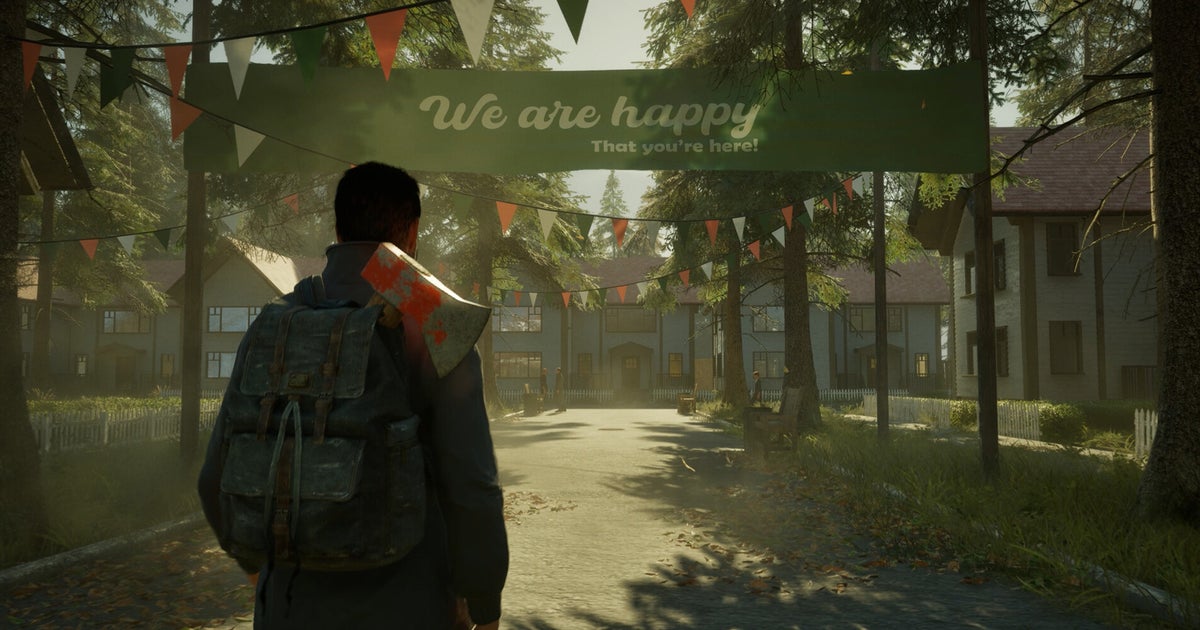
The Pines asks what would Alan Wake look like if it was about therapy, and I kind of want to know the answer
The open world psychological horror RPG looks familiar, but has enough going on to help it stand out.
The Speculative Empathy & Radical Hope of Disclosure Day
For most of Spielberg’s career, science fiction has been the mechanism through which he learns and teaches empathy. But in Disclosure Day, empathy itself is the speculative leap

Interdependent Thoughts
Bookmarked Will A.I. Become the New McKinsey? by Ted Chiang in the New Yorker
Little Boy: The Arts of Japan’s Exploding Subculture
Society cannot recover from such an epic scale of devastation - the atomic bombs dropped on Hiroshima and three days later on Nagasaki on August 9, 1945 - but may, instead, manifest trauma as a perpetual genetic scar—ontological chasm which moves as a consumptive demon ripping up through the generations as a peripatetic wound, egregious disfigurement banished from conscious thought, inflating to cartoon benignity in a pantomime of humanity, sutured gash badly sewn and always reopening, futile replacement of scarred mortality for the immaculate technology of machines, and finally as the wholesale abandonment of frail humanity for alternative existential states.
New paradigm for psychology just dropped
OR: the ideas your mother warned you about

The Psychopathic Selection Hypothesis: The Rules of the Game Keep Us Trapped - The Great Simplification
In this episode, Nate is joined by Greg Elliott, a systems theorist and author of the Psychopathic Selection Hypothesis (PSH), to unpack why our institutions themselves have become so psychopathic, and how that affects the behavior of the average human.

How Social Media Tricks our Brains — and Destroys our Politics - Aaron Ross Powell's Blog
The Best Kind of American: A True Story of Murder, War, and America's Undoing in the Middle East
A work of true crime following one American family’s search for answers after a 1984 murder in war-torn Beirut, where the Iranian revolution collided with the Israeli invasion of Lebanon, setting off the geopolitical conflagration that burns to this dayOn January 18, 1984, Malcolm Kerr, president of the American University of Beirut, was assassinated by a pair of gunmen outside his office. His murder, in the wake of the bombing of the US Marines’ barracks, Palestinian guerrilla warfare, and the 1982 Israeli invasion of Lebanon, was just one more shocking headline in a city ravaged by the chaos of nine years of war. There was no investigation. Four decades later, the question of who killed Malcolm and why still haunts Kerr’s family, including his son Steve, a world-famous basketball player and NBA coach. In The Best Kind of American, Kim Ghattas embarks on a quest to solve the mystery of Kerr’s assassination, weaving together the family’s story with that of Lebanon’s warlords and peacemakers, Hezbollah hostage takers and Iranian Revolutionary Guards, and American presidents from Reagan to Trump. She also tells the definitive story of how Beirut came to be the point of origin for the policies and people who went on to shape the Middle East for decades, from Israeli Prime Minister Benjamin Netanyahu to Iran’s Supreme Leader Ali Khamenei, who was then assassinated in a joint US-Israeli strike in the opening salvo of their 2026 war against the Islamic Republic. With the nuance, clarity, and storytelling that made Black Wave an era-defining work on the Middle East, Ghattas delivers a riveting, deeply human saga—a must-read for understanding why this conflict continues to shape today’s world.
The thinking style that makes people vulnerable to extremism | Psyche Ideas
The people most drawn to ideological thinking and authoritarianism aren’t aware of what makes them so susceptible
The Terrorist in the Brain
What can Robin Williams and Bruce Willis teach us about dementia? This article explores the complex biological realities of brain diseases, controversies in Alzheimer's research, the risks of new drugs, and the multi-billion-dollar industry exploiting our fear of cognitive decline.

Blog | Online Therapy NYC | New York City 11096 | The Keely Group
Struggling with self-doubt at work? Click here to explore therapy for imposter syndrome in Manhattan, NY, tailored for twice-exceptional professionals.

AMA | June 2026
AI Journal for Mental Wellbeing — Mindsera
Improve your mental health, mindset, and cognitive skills with the most advanced AI journal. Trusted by over 80,000 happy users. Backed by science.

"There is a contrast between my biological development, confidently realizing its in-built norm, and my fumbling psychological development, realizing partially..one among many apparently possible orders .. Learning what to want is the most radical, the most painful and the most creative art of life"
