Cognitive engineering is an interdisciplinary field that applies principles from cognitive psychology, cognitive neuroscience, and human factors to design and develop engineering systems that effectively support or enhance human cognitive processes.[1][2] The field emerged in the 1980s when Donald Norman and others recognized the need to better understand how humans interact with complex technological systems.[3]
The New Science of Designing for Humans (SSIR)
The rise of behavioral science and impact evaluation has created a new way for engineering programs and human interactions. <meta property=

Care at the Edge of Automation – Topos Institute
Technologies don’t just solve problems, they change us. We invent technologies, and they invent us in turn, shaping our lives and worlds. This is the phenomenon that Terry Winograd and Fernando Flores, in Understanding Computers and Cognition (1986), called “ontological design.” It matters now more than ever—along with a second lesson they saw clearly. Technological research is always guided (and sometimes misguided) by deep ontological assumptions about, e.g., the nature of cognition, agency, and communication. If we are to create technologies that truly serve human flourishing and care, we must bring these hidden assumptions into the open and question them at their roots.

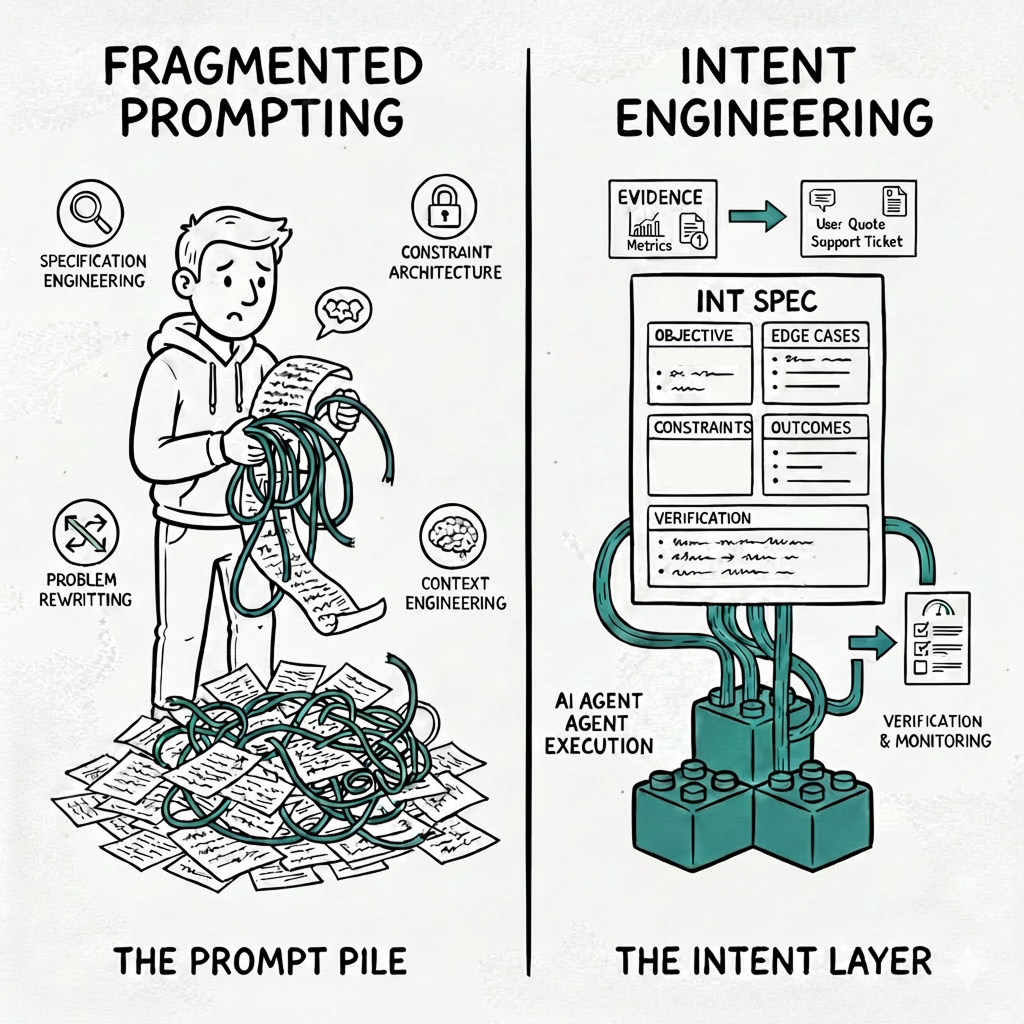
What Is Intent Engineering? The Discipline That Replaced Prompt Engineering
Intent engineering is how product teams turn judgment under evidence into specs precise enough for AI agents to execute — and verify. Here's the complete guide: what it is, why it matters, and how to practice it.
The third golden age of software engineering – thanks to AI, with Grady Booch
The third golden age of software engineering – thanks to AI, with Grady Booch
Jeff Hawkins Is Finally Ready to Explain His Brain Research (Published 2018)
He created the mobile computing companies Palm and Handspring. But for decades his passion has been studying how the human brain works.

(PDF) The sensemaking process and leverage points for analyst technology as identified through cognitive task analysis
PDF | On Jan 1, 2005, P. Pirolli and others published The sensemaking process and leverage points for analyst technology as identified through cognitive task analysis | Find, read and cite all the research you need on ResearchGate

Design Thinking by IDEO: Human-Centered Innovation
Learn how IDEO uses design thinking to help teams solve complex problems through human-centered innovation, creativity, collaboration, and impact.

Cognitive Load | Laws of UX
The amount of mental resources needed to understand and interact with an interface.

57 Ideas & Questions about Cognitive Infrastructures
562 – Ecological Cognition III: Radical Embodied Cognitive Science (part 1)
562 Continuing the journey in understanding the Ecological approach to cognition by looking at Tony Chemero’s book: Radical Embodied Cognitive Science. Conceptualizing cognition in terms of agent-environment dynamics instead of computation and representation. What is RECS, and where did these ideas come from?Download link

Software Design is Knowledge Building
The product of software development is not code but a mental model, a theory: a specific way of explaining the world.

Product Design Psychology by Wouter de Bres
Understand the minds you design for and the mind you design with.

Are We Thinking Correctly About AI Intelligence? | Quanta Magazine
Computer scientist Melanie Mitchell discusses why artificial intelligence doesn’t “think” or “reason” like humans, and how we can create better methods for measuring machine cognition.

What are Mental Models? — updated 2026
Harness the power of understanding and predicting user behavior with mental models. Simplify systems and enhance decision-making in your designs.

Cognitive Bias Lab | Learn to Make Better Decisions
Explore cognitive biases with interactive tests, simulations, and real-world examples. Free platform to sharpen decision-making and critical thinking — no sign-up needed.