


Collaborative filtering (CF) is, besides content-based filtering, one of two major techniques used by recommender systems. Collaborative filtering has two senses, a narrow one and a more general one.
2002: Last.fm and Audioscrobbler Herald the Social Web
Following in Amazon's footsteps, two student projects independently use 'collaborative filtering' to bring recommendations and social networking to online music; soon they will join forces.

Letting Users Choose Recommender Algorithms: An Experimental Study
Recommender systems are not one-size-fits-all; different algorithms and data sources have different strengths, making them a better or worse fit for different users and use cases. As one way of taking advantage of the relative merits of different algorithms, we gave users the ability to change the algorithm providing their movie recommendations and studied how they make use of this power. We conducted our study with the launch of a new version of the MovieLens movie recommender that supports multiple recommender algorithms and allows users to choose the algorithm they want to provide their recommendations. We examine log data from user interactions with this new feature to understand whether and how users switch among recommender algorithms, and select a final algorithm to use. We also look at the properties of the algorithms as they were experienced by users and examine their relationships to user behavior.
Matt Mullenweg Discusses Core Focuses, Downsides of a Consensus-Driven Model, and More on Apply Filters Podcast
Matt Mullenweg, co-founder of the WordPress open source project and CEO of Automattic, joined Pippin Williamson and Brad Touesnard on episode 81 of the Apply Filters podcast. Apply Filters is a pod…

How Platform Recommenders Work – Center for Human-Compatible Artificial Intelligence
A recommender system (or simply ‘recommender’) is an algorithm that takes a large set of items and determines which of those to display to a user—think the Facebook News Feed, the Twitter timeline, Google News, or the YouTube homepage. Recommenders are necessary tools to help navigate the sheer volume of content produced each day, but their scale and rapid development can cause unintended consequences. Facebook’s algorithms have been blamed for radicalizing users, TikTok’s for inundating teens with eating-disorder videos, and Twitter’s for political bias.
metabrainz/troi-recommendation-playground
A recommendation engine playground that should hopefully make playing with music recommendations easy.
Pixie: A System for Recommending 3+ Billion Items to200+ Million Users in Real-Time
User experience in modern content discovery applications critically depends on high-quality personalized recommendations. However, building systems that provide such recommendations presents a major challenge due to a …

Pixie: A System for Recommending 3+ Billion Items to 200+ Million Users in Real-Time
User experience in modern content discovery applications critically depends on high-quality personalized recommendations. However, building systems that provide such recommendations presents a major challenge due to a massive pool of items, a large

Preference Filtering: When Customers Share Narrow Preferences with Algorithms
Digital platforms commonly ask customers to select interest categories (e.g., genres/topics) as input for personalized recommendations. Twelve main studies and two pilot studies (total n = 8,808) reveal that customers share less diverse preferences with algorithms (vs. human curators or when merely listing preferences for themselves); they focus on core preferences while omitting tangential ones, a phenomenon termed “preference filtering.” It is driven by customers’ expectation that algorithms weight their preferences more uniformly than human curators (i.e., expected uniformity). A mathematical model identifies conditions under which preference filtering appears rational ex ante yet reduces recommendation fit ex post. Interviews and a survey suggest that customers expect more uniform weighting than practitioners do. The authors examine key design dimensions of the preference elicitation task—when preferences are elicited, how customers articulate them, what purpose is made salient, and who customers believe they are interacting with—that determine the extent to which customers engage in preference filtering. Two studies on self-developed video-streaming websites show that alleviating preference filtering can boost engagement and enhance customer reviews of recommendation services. These findings offer valuable insights for firms that rely on algorithms to engage customers.

Recommendation Systems - Not so discussed areas
Practical advice on recommendation systems in production

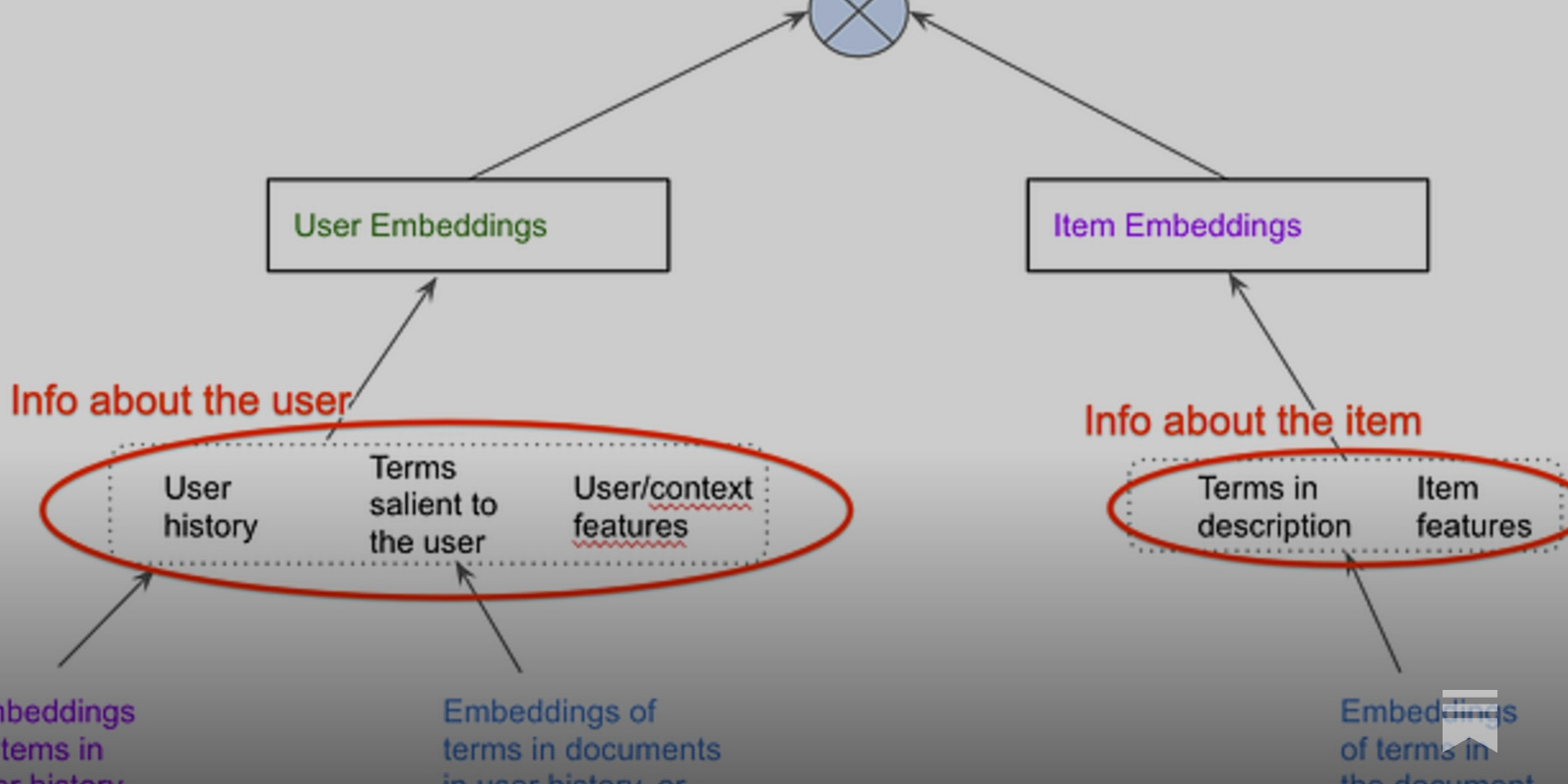
Two tower models for retrieval of recommendations
Fourth post in this series on personalized recommendations
Reviews and Ratings
Find the best products for your needs, based on our reviews, ratings and recommendations.

Bluesky "For You" feed playground
This page shows recommendations generated by the For You custom feed. The algorithm has three simple steps:
Bluesky "For You" feed playground
This page shows recommendations generated by the For You custom feed. The algorithm has three simple steps:
Pixie: a system for recommending 3+ billion items to 200+ million users in real-time
Pixie: a system for recommending 3+ billion items to 200+ million users in real-time Eksombatchai et al., WWW’18 (If you don’t have ACM Digital Library access, the paper can be accessed eithe…

This is definitely my feeling working with them on recommendation algorithm.

Mark Riedl
Fascinating experiment: current AI systems lack creativity to reliably pursue research arxiv.org/abs/2607.27191 - poor judgment about the bar for publishable research - uncreative responses in research design - ineffective backtracking from dead ends - poor resource awareness - instruction drift

