


Computational sociology is a branch of sociology that uses computationally intensive methods to analyze and model social phenomena. Using computer simulations, artificial intelligence, complex statistical methods, and analytic approaches like social network analysis, computational sociology develops and tests theories of complex social processes through bottom-up modeling of social interactions.
Computational statistics
Computational statistics, or statistical computing, is the study which is the intersection of statistics and computer science, and refers to the statistical methods that are enabled by using computational methods. It is the area of computational science specific to the mathematical science of statistics. This area is fast developing. The view that the broader concept of computing must be taught as part of general statistical education is gaining momentum.

Joe Bak-Coleman
I’m a computational social scientist whose research explores how collectives make decisions in the face of uncertainty, focusing on the impact of digital technologies on collective behavior.

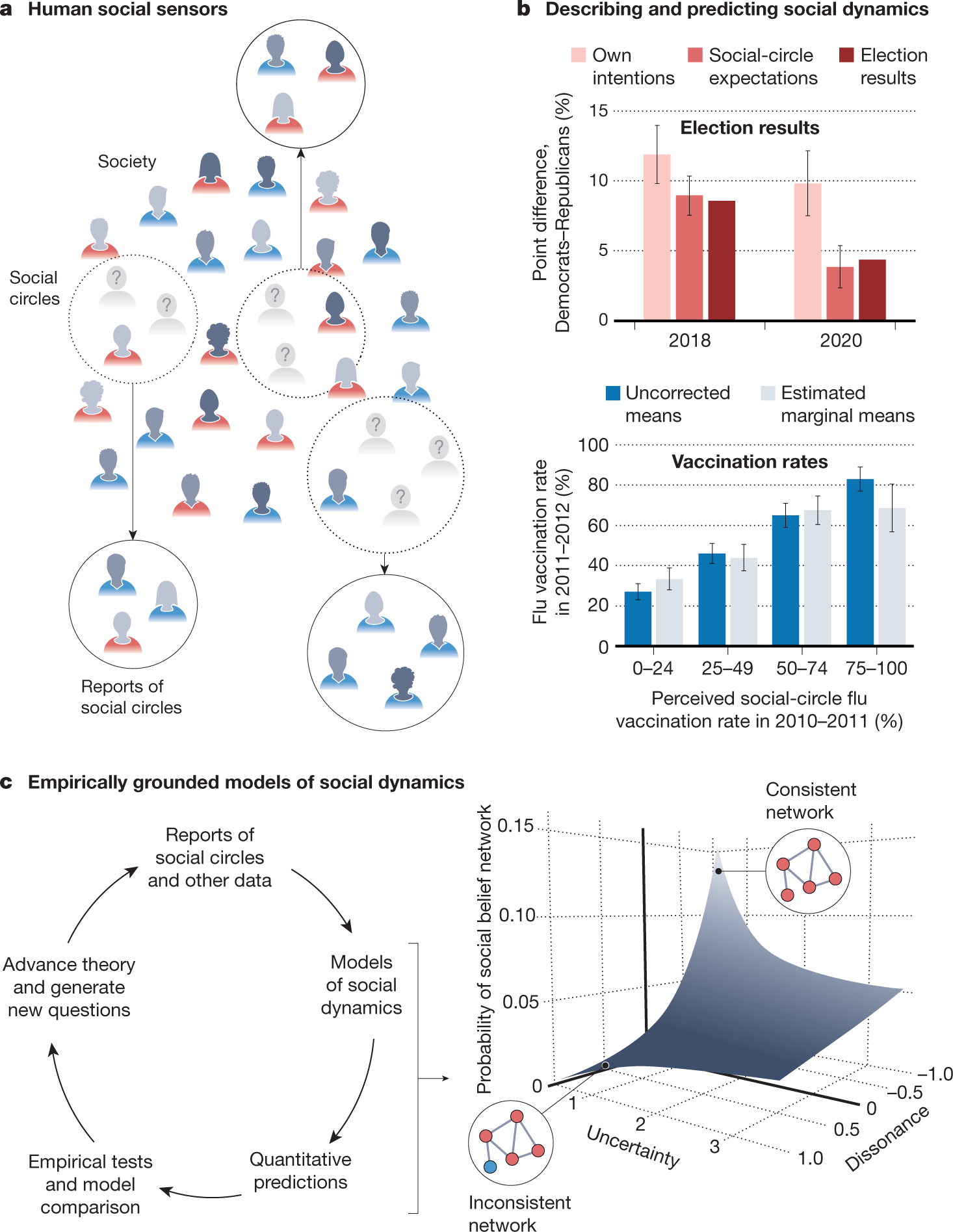
Human social sensing is an untapped resource for computational social science
The ability to ‘sense’ the social environment and thereby to understand the thoughts and actions of others allows humans to fit into their social worlds, communicate and cooperate, and learn from others’ experiences. Here we argue that, through the lens of computational social science, this ability can be used to advance research into human sociality. When strategically selected to represent a specific population of interest, human social sensors can help to describe and predict societal trends. In addition, their reports of how they experience their social worlds can help to build models of social dynamics that are constrained by the empirical reality of human social systems.
Generative AI and Society
Generative AI is an advancement of machine learning technologies, offering sociologists new methods for understanding social life while intervening in a society already shaped by algorithmic systems. Yet one feature sets it apart from earlier computational tools and also makes it distinctly sociological: its interactivity. These systems are trained on social exchanges, refined by human feedback, and used through dialogue and delegation, so that interaction runs throughout their development and use. We conceptualize this interactivity and introduce a framework for understanding how generative AI intervenes in social processes across individual, organizational, and institutional levels. The framework describes how generative AI expands users, functions as a proxy for society, and expresses power, in sociological practice and in society. We conclude with three dynamics that will challenge sociology in the near future: the transformation of scientific practice, the reorganization of social interaction, and the acceleration of algorithmic governance.
Manoel Horta Ribeiro (@manoelhortaribeiro.bsky.social)
Assistant Professor @ Princeton Previously: EPFL 🇨🇭, UFMG 🇧🇷 Interests: Computational Social Science, Platforms, GenAI, Moderation

Social Physics in the Age of Generative AI: How, Exactly, Is Society Complex?
The aspiration for a social physics — a science that would reveal universal laws of social life analogous to those governing the natural world—has haunted the social sciences since Comte. Each new wave of quantitative and computational methods breathes fresh life into this vision. The current moment is no exception: advances in artificial intelligence and large language models have reinvigorated attempts to model society through the methods of social physics. This essay argues that these ambitions rest on a confusion about the nature of social complexity. Drawing a distinction between systems complexity and anthropological complexity, we identify the limitations of analyzing society as a complex system akin to natural systems. One crucial obstacle for social physics is the analysis of meaning and interpretation. Generative artificial intelligence (GenAI) offers important opportunities to model language and reflexivity, inviting and perhaps compelling social physics to confront meaning and interpretation as constitutive features of the social world. At the same time, GenAI leaves untouched and may even aggravate social physics’ failure to grasp power, institutions, and inequality.
Social system
In sociology, a social system is the patterned network of relationships constituting a coherent whole that exist between individuals, groups, and institutions. It is the formal structure of role and status that can form in a small, stable group. An individual may belong to multiple social systems at once; examples of social systems include nuclear family units, communities, cities, nations, college campuses, religions, corporations, and industries. The organization and definition of groups within a social system depend on various shared properties such as location, socioeconomic status, race, religion, societal function, or other distinguishable features.

New Studies: How Commercial Forces Make Science Less Reliable
Computational social science has been distorted by commercial forces, and AI is making it worse.

Humans and algorithms work together — so study them together
Adaptive algorithms have been linked to terrorist attacks and beneficial social movements. Governing them requires new science on collective human–algorithm behaviour.

Field Theory: AI as Social Science Question, Object & Tool
Uses of advanced artificial intelligence are changing how societies organize labor, govern, produce knowledge, and make meaning. In light of these developments, this essay argues that AI models, tools, and systems pose three interrelated imperatives for social science: they demand renewed attention to social theories of how technology, human experience, and social order are entangled; they require study as objects of inquiry in their own right; and they offer capabilities that may transform—or upend—the practice of social investigation itself. From Weber’s analysis of rationalization to Du Bois’s study of technology and inequality to contemporary scholarship on algorithmic governance, the essay examines what social science distinctively offers: the capacity to historicize the apparently unprecedented, to trace connections across scales, and to center those most affected by technological change. It identifies how algorithmic systems are remaking the distribution of opportunity and risk as a central task of social inquiry and asks what futures social science might help bring into being.
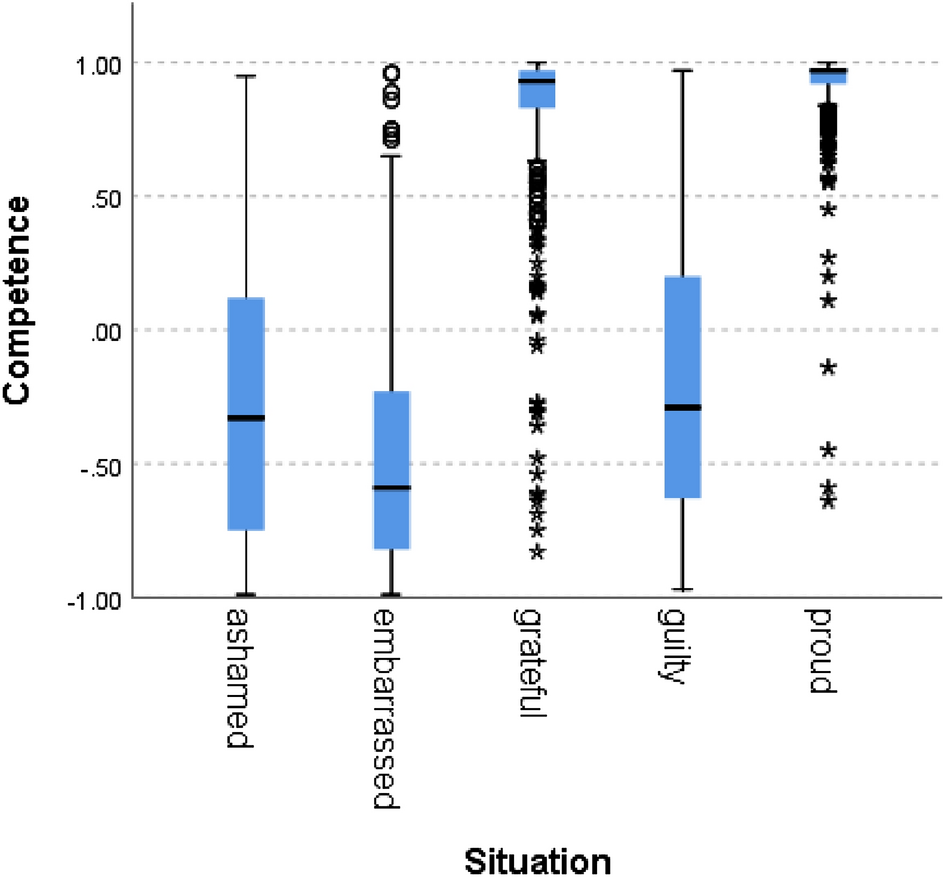
AI for identifying social norm violation
Identifying social norms and their violation is a challenge facing several projects in computational science. This paper presents a novel approach to identifying social norm violations. We used GPT-3, zero-shot classification, and automatic rule discovery to develop simple predictive models grounded in psychological knowledge. Tested on two massive datasets, the models present significant predictive performance and show that even complex social situations can be functionally analyzed through modern computational tools.
Call for Papers: Karl Marx and Max Weber on the Topic of Machines Dominating Labour
Part of the Joint Conference 2026 (JC2026) The 2nd RC20 Regional Conference on Comparative SociologyThe 1st RC56 Regional Conference on Historical SociologyThe 5th RC33 Regional Conference on Social Science Methodology: Asia📍 Khon Kaen University, Thailand / Japan Women’s University, Tokyo, Japan🗓 24–28 August 2026(Online Conference) Session Organizer Dr. Noel Packard, PhDIndependent Researcher and 2023 PhD...
The network science of collective intelligence
In the last few years, breakthroughs in computational and experimental techniques have produced several key discoveries in the science of networks and human collective intelligence. This review presents the latest scientific findings from two key fields of research: collective problem-solving and the wisdom of the crowd. I demonstrate the core theoretical tensions separating these research traditions and show how recent findings offer a new synthesis for understanding how network dynamics alter collective intelligence, both positively and negatively.

Computational Public Space
Chapters — Intro, Communal computing, This presentation, Physicality — Globalization, Centrally-planned, Isolating, Private property, Surveillance, Consumption, Hidden — Summary, Outline
"The convergence of computational and citizen science research represents a generational opportunity to reimagine how we conduct research, involve the public, and deliver scientific value to society."

Grand Challenges for the Convergence of Computational and Citizen Science Research Workshop Report
arxiv.orgComputational Law

RaC, rules as code, legislation as code, automated decision making, papers, resources, disasters, people

Legislation as Code | Version: 2

Governing Digital Legal Systems: Insights on Artificial Intelligence and Rules as Code · MIT Computational Law Report
Hamish Fraser
