


Computational statistics, or statistical computing, is the study which is the intersection of statistics and computer science, and refers to the statistical methods that are enabled by using computational methods. It is the area of computational science specific to the mathematical science of statistics. This area is fast developing. The view that the broader concept of computing must be taught as part of general statistical education is gaining momentum.
Niklaus Wirth
Niklaus Wirth (born 1934 in Switzerland) is one of the most prominent computer scientists, mostly known for creating Pascal and several other programming languages.
Turing: Probabalistic Programming in Julia | Cameron Pfiffer | JuliaCon 2019
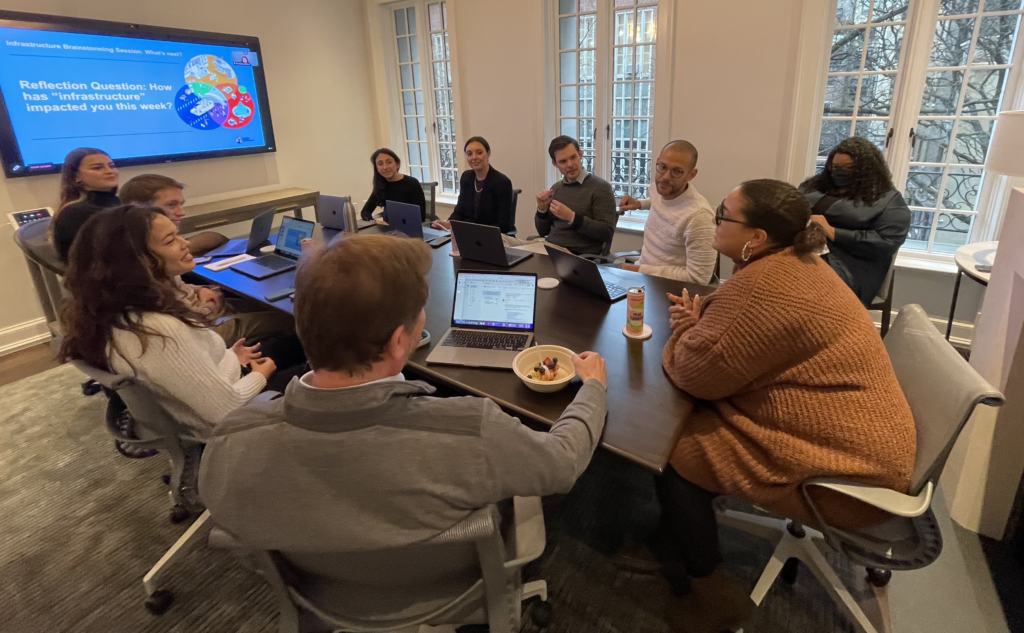
About Us - Siegel Family Endowment
About Our Chairman “Computational thinking is more than just a way to approach problem solving. It’s a way of processing and understanding the world through […]
Modular: The Claude C Compiler: What It Reveals About the Future of Software
Compilers occupy a special place in computer science. They're a canonical course in computer science education. Building one is a rite of passage. It forces you to confront how software actually works, by examining languages, abstractions, hardware, and the boundary between human intent and machine execution.

zach lieberman on Twitter / X
Today I was able to weave a line from Myron Krueger in a talk I gave : Computation is the medium of our lifetimes - it’s not just a technical medium but a cultural medium as well. We should explore the culture of computation.— zach lieberman (@zachlieberman) April 10, 2024
An Introduction To Robust-First Computation
Did you know there's an entire field of computer science barely yet explored? Join me at the entrance to a deep rabbit hole as we take a look at Robust-First Computation.
Konrad Hinsen's blog
How can we document software and computational analyses in such a way that others can convince themselves of their validity, and build on them for their own work? The question has been around for many years, and a number of attempts have been made to provide partial answers. This post provides a brief review and describes my own tentative answer, inviting you to play with it.
When did Computer Science Theory Get so Hard?
I posted on When did Math get so hard? a commenter pointed out that one can also ask When did Computer Science Theory Get so Hard? For t...
computational product market fit
‘computer science is no more about computers than astronomy is about telescopes.’ — edsger dijkstra
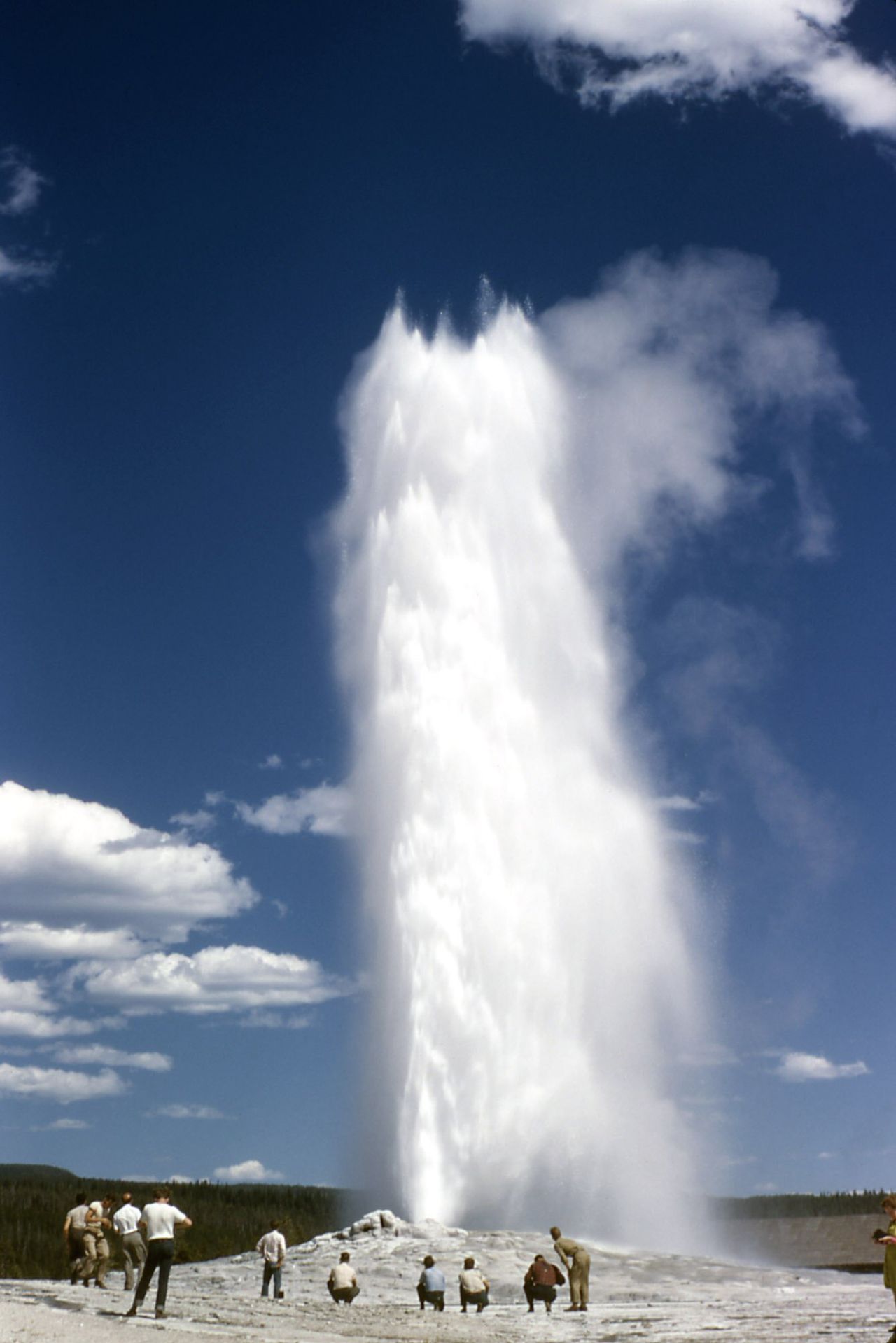
Drinking from the Firehose: Learning Computer Graphics Techniques and Programming
Graphics researchers waiting in the water fountain line at SIGGRAPH Yellowstone. Computer graphics as a field is broad, deep, complex, and intimidating. More than half a century of rapid progress driven by academic research and industry practices underly it. Parts delve pretty far into physics, math, signal processing, systems programming (and more). And performance is always at a premium—so simple, straightforward techniques are often not possible, and high-level programming abstractions not usable.
Category theory for computing science
Category theory for computing science by Michael Barr, 1990, Prentice Hall edition, in English

An Introduction to Statistical Learning
As the scale and scope of data collection continue to increase across virtually all fields, statistical learning has become a critical toolkit for anyone who wishes to understand data. An Introduction to Statistical Learning provides a broad and less technical treatment of key topics in statistical learning. This book is appropriate for anyone who wishes to use contemporary tools for data analysis.
What Are Machine Learning Algorithms? | IBM
A machine learning algorithm is the procedure and mathematical logic through which an AI model learns patterns in training data and applies to them to new data.

And this includes any all scientific uses of AI and indeed any computational system, weather prediction, cancer research, medical imaging, mathematics, please just don't claim it's fine if you don't research automation in those areas. I'll post further resources below...

Emily M. Bender
But speaking of staying in one's lane, can we PLEASE switch the default position from "It's fine to use 'AI' for this thing I'm not an expert in" to "Yeah, I'd be really skeptical of any use cases and need to see strong evidence that it's okay, but I'm not the one who can produce that evidence"?
Computational reproducibility

The why and how of making scientific computations reproducible
The future of programming and computing

Trends and adjacent possibles for the future of how computers are used and programmed
Introducing System One Models and Jev - TypeSafe AI Blog

Message from our CEO: After co-inventing ChatGPT, I kept asking myself: why have superhuman chat models not led to AGI? I’ve spent the last…
On-device intelligence for every product
SaaS Isn’t Dead. Sameness Is. - The Phoenix Architecture
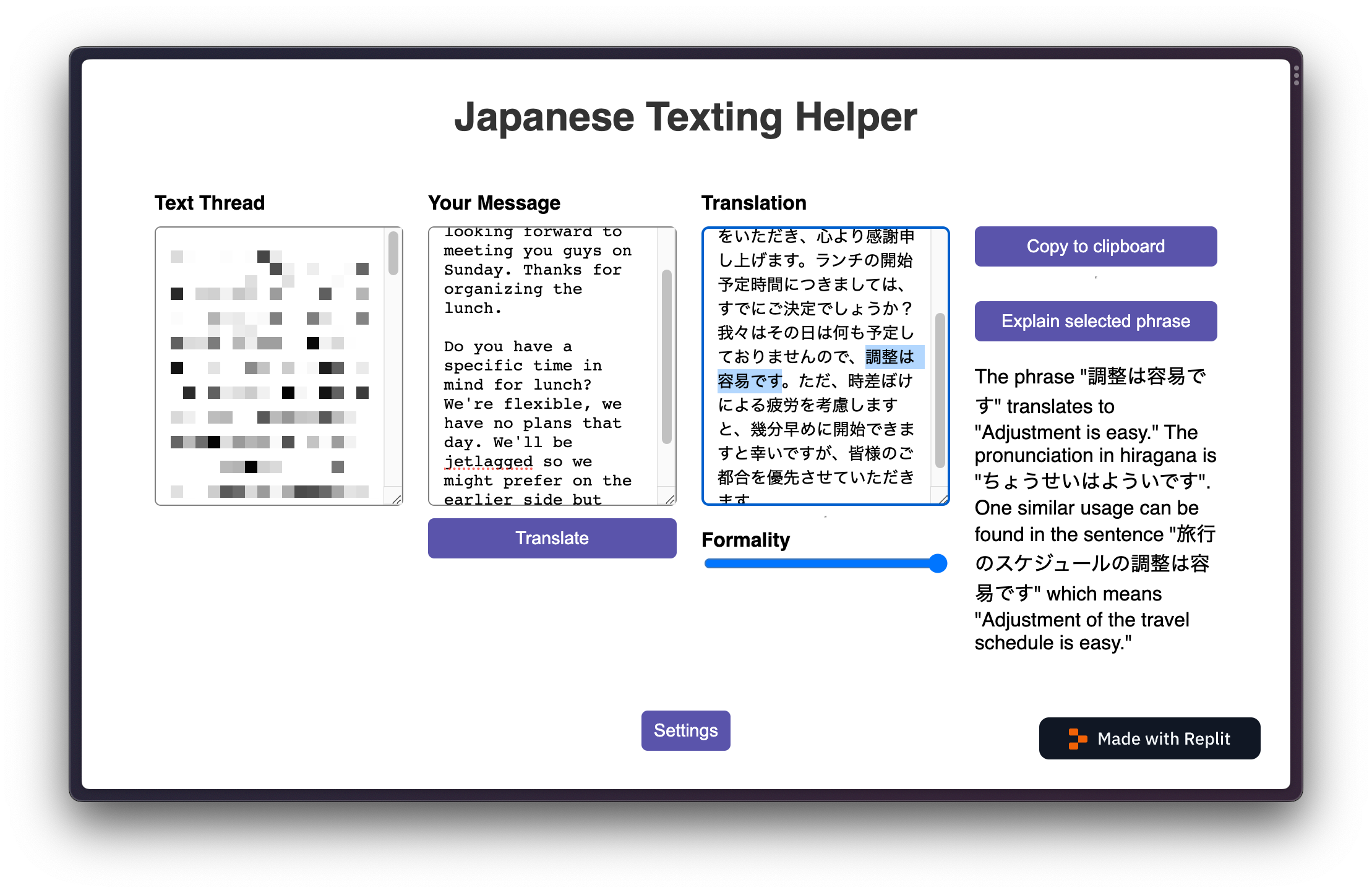
Codifying a ChatGPT workflow into a malleable GUI

MercuryOS
Konrad Hinsen's blog
Home Page - Software Heritage
GNU Guix transactional package manager and distribution — GNU Guix

Keynote: Reproducibility and replicability of computer simulations | Canal U

Reproducible research: methodological principles for transparent…
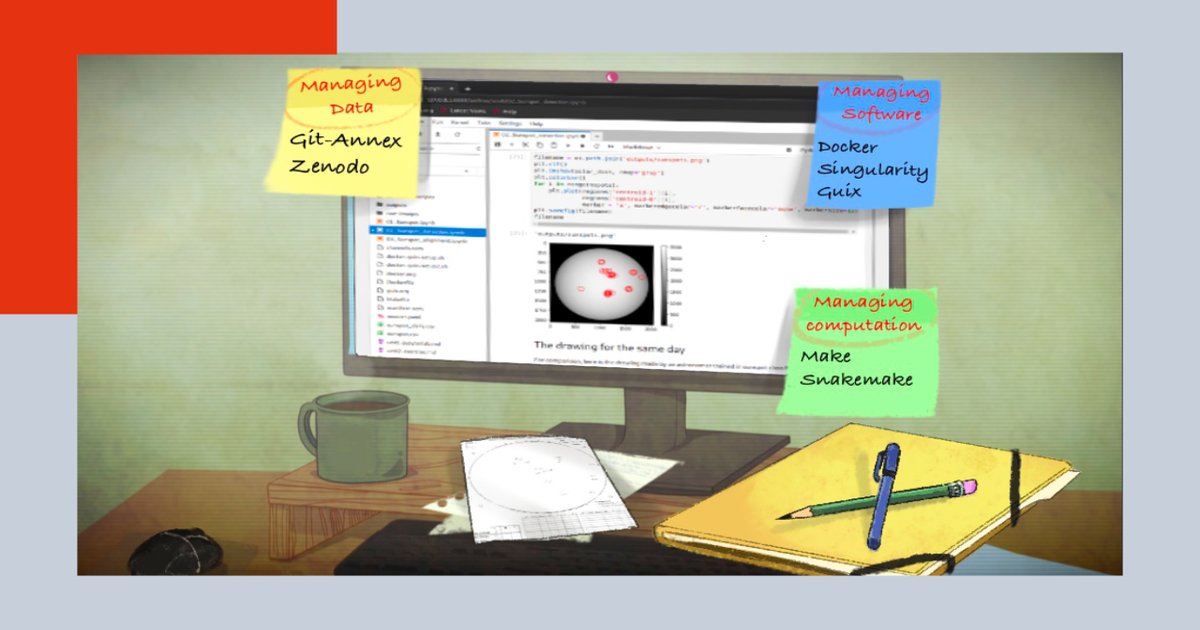
Reproducible Research II: Practices and tools for managing compu…
