


In Dante's Inferno, contrapasso is the punishment of souls "by a process either resembling or contrasting with the sin itself." A similar process occurs in the Purgatorio.
Harrowing of Hell
In Christian theology, the Harrowing of Hell is the period of time between the Crucifixion of Jesus and his resurrection. In triumphant descent, Christ brought salvation to the souls held captive there since the beginning of the world.

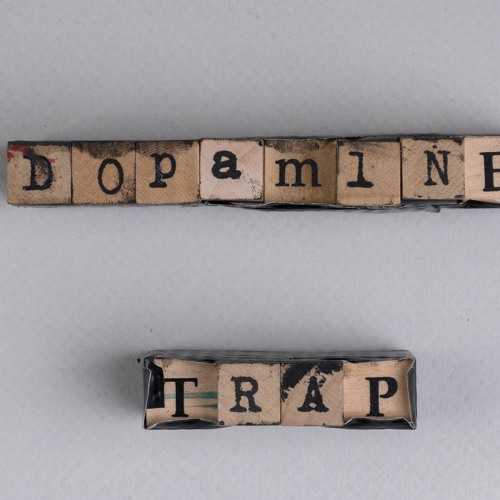
Dopamine Trap
Dopamine Trap does narrative driven decay. With organic noise, apocalyptic soundscapes, and scathing poetry his productions cast lovecraftian solopsisms on the roof of the skull, dripping with tumors of unresolved inter-generational trauma, resignation and reckless, violent love. He delights in emptiness and the granular implications of percussive silence.
Commentary: Cory Doctorow: Hell Is Other People - Locus
So this is hell. I'd never have believed it. You remember all we were told about the torture-chambers, the fire and brimstone, the 'burning marl.' Old wives' tales! There's no need for red-hot pokers. HELL IS – OTHER PEOPLE! –Jean Paul Sartre, No Exit Sartre was (arguably) an optimist. It's not that other people are unpleasant: quite the contrary! There's nothing that makes the day (or, pointedly, the night) …Read More

Ordeals
AbstractI argue that medieval judicial ordeals accurately assigned accused criminals’ guilt and innocence. They did this by leveraging a medieval superstition called iudicium Dei (judgments of God). According to that superstition, God condemned the guilty and exonerated the innocent through clergy-conducted physical tests. Medieval citizens’ belief in iudicium Dei created a separating equilibrium in which only innocent defendants were willing to undergo ordeals. Conditional on observing a defendant’s willingness to do so, the administering priest knew he or she was innocent and manipulated the ordeal to find this. My theory explains the peculiar puzzle of ordeals: trials of fire and water that should have condemned most persons who underwent them did the reverse. They exonerated these persons instead. Boiling water rarely boiled persons who plunged their arms in it. Burning iron rarely burned persons who carried it. Ordeal outcomes were miraculous, but they were miracles of mechanism design.

Lunacid
Cast into the Great Well, unwanted by the world above. You delve the dark in search of the Old One, your last salvation. Lunacid is a dark fantasy dungeon crawler inspired by Shadow Tower and King’s Field.

The Moon Is a Harsh Mistress
It is a tale of revolution, of the rebellion of a forme…

Propitiation - Etymology, Origin & Meaning
"atonement, expiation," from Late Latin propitiationem (nominative propitiatio) "an… See origin and meaning of propitiation.

Parrhesiastes Apertus
“No temas perder aquello que nunca estuvo bajo tu control; teme perderte intentando conservarlo.”


Pain and Sacrifice: Experience and Modulation of Pain in a Religious Piercing Ritual
Fascinating pain-related rituals have been observed throughout the world, but so far no systematic evidence exists to support previous ethnographic reports of analgesic states and dissociative sym...

Stonemachia
Fight, Zefiro! Arm yourself with the power of chess and explore Medhelan, a land haunted by the Plague of Angels, in a dark action-adventure with soulslike elements. Will you be able to return to Heaven?

Hell/a Mexican — Oakland Public Library
Hell/a Mexican — Madrigal Galindo, Kevin, — "Hell/a Mexican is an appreciation of the tragicomedy that is existing on American soil with foreign roots. These stories shed light on the boundless experience of living and learning through your identity. This collection, much like us, reaches for hope: sometimes we find it, sometimes we don't."--Back cover.
musings of a sad, seraphic slut - heart and soul ♡
a peek inside the heart and brain of soul

The Waluigi Effect (mega-post) — LessWrong
Everyone carries a shadow, and the less it is embodied in the individual’s conscious life, the blacker and denser it is. — Carl Jung …

Heraclitus
A Greek philosopher of Ephesus (near modern Kuşadası,Turkey) who was active around 500 BCE, Heraclitus propounded adistinctive theory which he expressed in oracular language. He is bestknown for his doctrines that things are constantly changing (universalflux), that opposites coincide (unity of opposites), and that fire isthe basic material of the world. The exact interpretation of thesedoctrines is controversial, as is the inference often drawn from thistheory that in the world as Heraclitus conceives it contradictorypropositions must be true.