


The Convention Relating to the Status of Refugees, also known as the 1951 Refugee Convention or the Geneva Convention of 28 July 1951, is a United Nations multilateral treaty originally designed to establish the legal status of displaced persons in post-World War II Europe. The convention defines the criteria for refugee status and outlines specific rights for individuals after they have been lawfully granted asylum by a host state.
Humanitarian Governance
This review examines humanitarian governance, defined as the increasingly organized and internationalized attempt to save the lives, enhance the welfare, and reduce the suffering of the world's most vulnerable populations. Political scientists and international relations scholars are only now beginning to explain this rapidly growing global governance of humanity, which is particularly evident in the developing literatures on humanitarian intervention, emergency relief, peacebuilding, and refugee protection. As they increasingly engage this relatively unexplored area of global life, political scientists are using the familiar analytics of the global governance literature to explain the origins, design, and effectiveness of this collective activity. This essay, though, interjects an alternative perspective, one that draws from critical theory, to widen the research agenda of the study of humanitarian governance. Specifically, the essay raises six central questions: What kind of world is being imagined and produced? What accounts for the tremendous growth of humanitarian governance over the last century? Who governs? How is humanitarian governance organized and accomplished? What are the principal techniques of control? By what authority do humanitarians govern and what do they do with that authority?

The secret mission to rescue the UN’s vital Palestinian refugee archive
Millions of documents chronicling generations of trauma saved from Gaza and East Jerusalem in 10-month Unrwa operation

Are Rohingyas Refugees Or Illegal Immigrants? Can They Be Detained Indefinitely? Supreme Court To Consider
197 votes, 43 comments. Source…
Amnesty concludes Israel is committing genocide in Gaza
Amnesty International’s research has found sufficient basis to conclude that Israel has committed and is continuing to commit genocide against Palestinians in the occupied Gaza Strip.
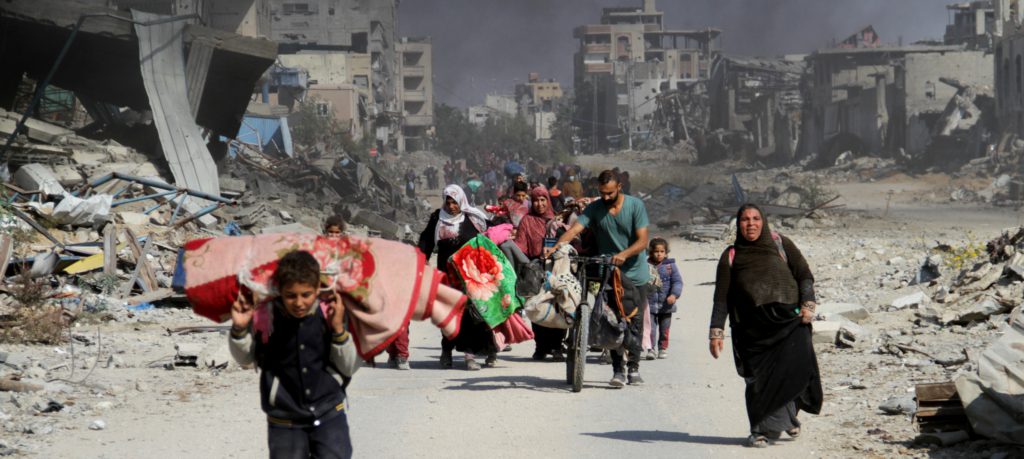
Israel has committed genocide in the Gaza Strip, UN Commission finds
GENEVA – Israel has committed genocide against Palestinians in the Gaza Strip, the UN Independent International Commission of Inquiry on the Occupied Palestinian Territory, including East Jerusalem, and Israel said in a new report today.

A world in turmoil: governing risk, establishing order in humanitarian crises
This special issue of Disasters on humanitarian governance focuses on risk and order. Its contributions show the tensions between humanitarian normative ideals and practical consequences, as many of ...

First-ever Home Office data reveals hundreds of child refugees wrongly treated as adults, despite expert warnings | Helen Bamber
After years of campaigning, the Home Office has for the first time published its own data confirming that hundreds of child refugees arriving in UK alone are being wrongly treated as adults, with devastating consequences. These children are routinely placed in adult accommodation, immigration detention and even adult prisons.
Gaza genocide
The Gaza genocide is the ongoing, intentional, and systematic destruction of the Palestinian people in the Gaza Strip carried out by Israel during the Gaza war. It encompasses mass killings, the deliberate killing of children, deliberate starvation, infliction of serious bodily and mental harm, and prevention of births. Other acts include blockading, destroying civilian infrastructure, destroying healthcare facilities, killing healthcare workers and aid-seekers, causing mass forced displacement, committing sexual violence, and destroying educational, religious, and cultural sites. The genocide has been recognised by a United Nations special committee and commission of inquiry, the International Association of Genocide Scholars, multiple human rights groups, state governments, numerous genocide studies and international law scholars, and other experts.

The Original Passport Index 2026
The Henley Passport Index is the original authority ranking passports by how many destinations holders can visit visa-free.

Framework Convention on Artificial Intelligence
The Framework Convention on Artificial Intelligence and Human Rights, Democracy and the Rule of Law (also called Framework Convention on Artificial Intelligence or AI convention) is an international treaty on artificial intelligence. It was adopted under the auspices of the Council of Europe (CoE) and signed on 5 September 2024.[1] The treaty aims to ensure that the development and use of AI technologies align with fundamental human rights, democratic values, and the rule of law, addressing risks such as misinformation, algorithmic discrimination, and threats to public institutions.[2]
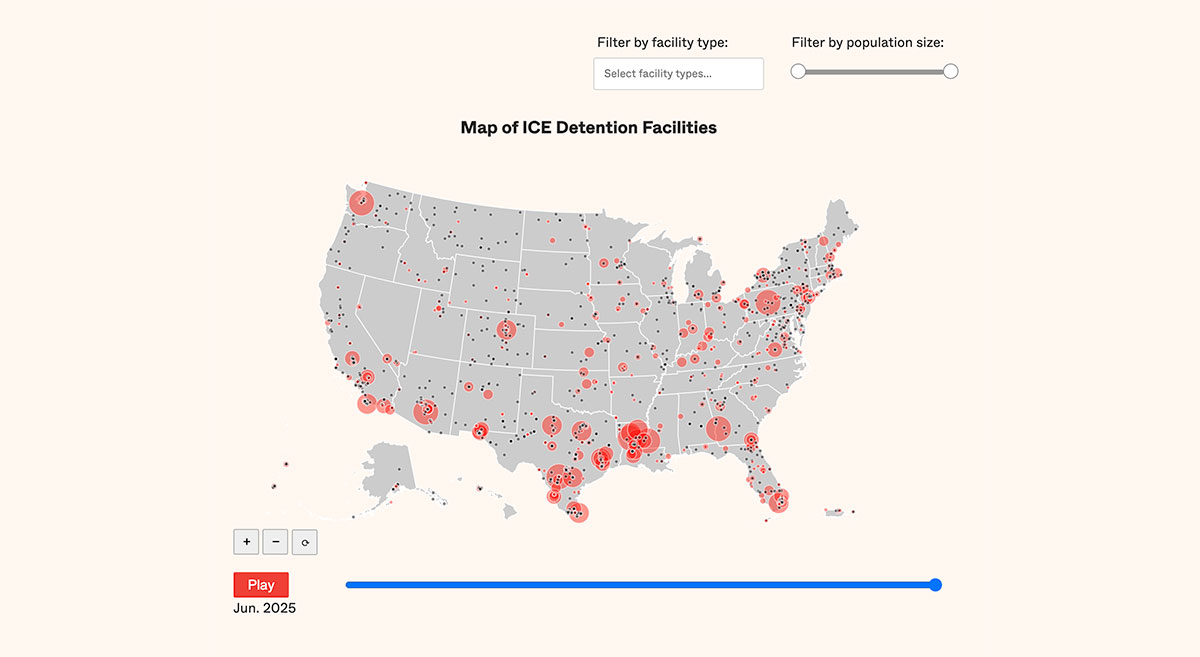
ICE Detention Trends | Vera Institute of Justice
Every year, U.S. Immigration and Customs Enforcement (ICE) subjects hundreds of thousands of people to civil immigration detention—a practice that is unjust, inhumane, and completely unnecessary. It does so under a veil of secrecy, sharing only limited, often error-prone statistics with the public. ICE’s failure to regularly release accurate, complete, and accessible data to the public enables it to operate its multi-billion-dollar detention network with impunity and little oversight.
Asylum by Algorithm
The UK has turned to AI to determine the age of asylum seekers, and other countries are likely to follow suit. Our investigation finds the technology is deeply unreliable.

When Is It Time to Flee?
Trans people and their families are facing hard questions and choices as threats to their safety and rights proliferate.

Haitian Immigrant’s Tragic Death Shines a Light on the Human Cost of Ending Temporary Protected Status – The Root
The Signal Code: A Human Rights Approach to Information During Crisis | Harvard Humanitarian Initiative
The Signal Code is the result of a six month study by the Signal Program on Human Security and Technology at the Harvard Humanitarian Initiative (HHI) at the Harvard T.H. Chan School of Public Health to identify what human rights people have to information during disasters. The Signal Code identifies five rights from multiple sources of international human rights and humanitarian law and standards that already exist and apply to humanitarian information activities (HIAs).