Cosmic dust – also called extraterrestrial dust, space dust, or star dust – is dust that occurs in outer space or has fallen onto Earth. Most cosmic dust particles measure between a few molecules and 0.1 mm (100 μm), such as micrometeoroids and meteoroids. Cosmic dust can be further distinguished by its astronomical location: intergalactic dust, interstellar dust, interplanetary dust, and circumplanetary dust. Information on the nature of dust in locations beyond the Solar System is mostly obtained by methods of observational astronomy, such as photometry, polarimetry and infrared spectroscopy. Direct methods are also available for the collection and study of space dust within the Solar System. For example, the Stardust spacecraft collected cometary dust, and also detected some particles of probable interstellar origin, returning samples to Earth in 2006.
Interstellar medium
The interstellar medium (ISM) is the matter and radiation that exists in the space between the star systems in a galaxy. This matter includes gas in ionic, atomic, and molecular form, as well as dust and cosmic rays. It fills interstellar space and blends smoothly into the surrounding intergalactic medium. The energy that occupies the same volume, in the form of electromagnetic radiation, is the interstellar radiation field. Although the density of atoms in the ISM is usually far below that in the best laboratory vacuums, the mean free path between collisions is short compared to typical interstellar lengths, so on these scales the ISM behaves as a gas, responding to electromagnetic radiation, and not as a collection of non-interacting particles.

Galaxy
A galaxy is a system of stars, stellar remnants, interstellar gas, dust, and dark matter bound together by gravity. The word is derived from the Greek galaxias (γαλαξίας), literally 'milky', a reference to the Milky Way galaxy that contains the Solar System. Galaxies, averaging an estimated 100 million stars, range in size from dwarfs with less than a thousand stars, to the largest galaxies known – supergiants with one hundred trillion stars, each orbiting its galaxy's centre of mass. Most of the mass in a typical galaxy is in the form of dark matter, with only a few percent of that mass visible in the form of stars and nebulae. Supermassive black holes are a common feature at the centres of galaxies.

Cosmic Voids and Void Lensing in the Dark Energy Survey Science...
Galaxies and their dark matter halos populate a complicated filamentary network around large, nearly empty regions known as cosmic voids. Cosmic voids are usually identified in spectroscopic...

Figure 9: The radiance curves of several LEDs useful to mimic the Black...
Download scientific diagram | The radiance curves of several LEDs useful to mimic the Black Body representative of the M stars (from M0 to M8 spectral type). The absorption spectra of several photosynthetic bacteria are also shown. from publication: Simulating super earth atmospheres in the laboratory | Several space missions, such as JWST, TESS and the very recently proposed ARIEL, or ground-based experiments, as SPHERE and GPI, have been proposed to measure the atmospheric transmission, reflection and emission spectra of extrasolar planets. The planet atmosphere... | Atmosphere, Earth and Extrasolar Planets | ResearchGate, the professional network for scientists.

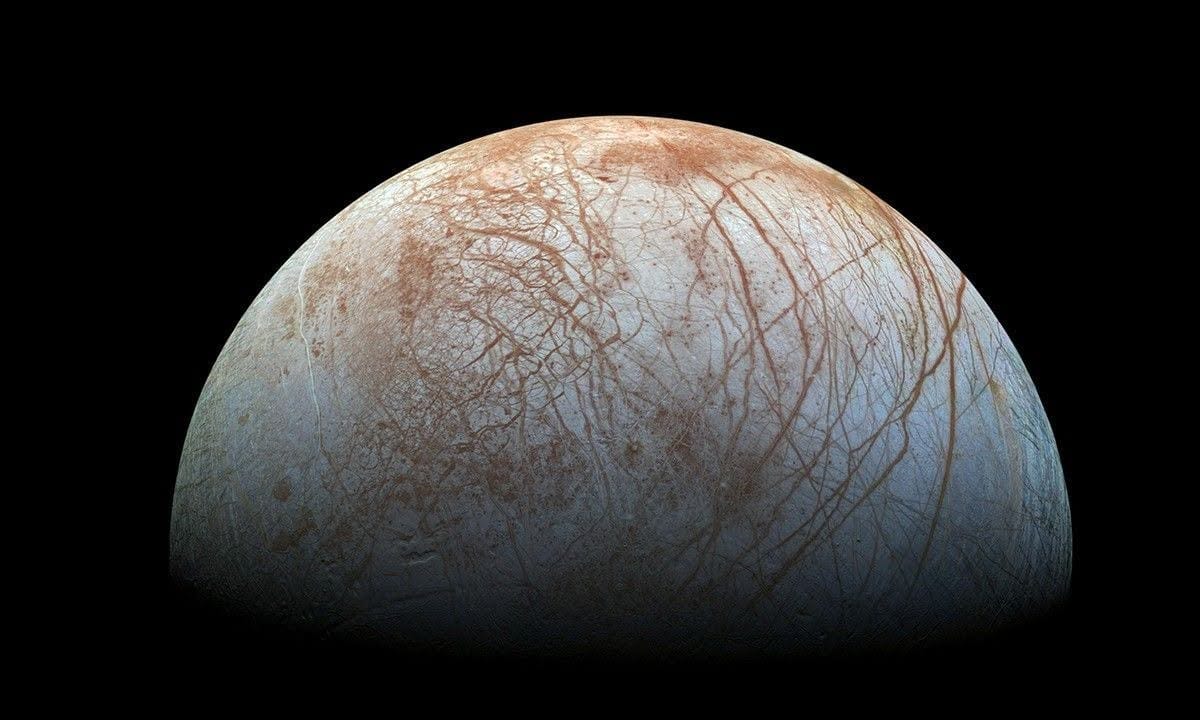
‘Highly Plausible’ Aliens on Europa Are Earthlings’ Descendants, Study Says
A new study suggests that bacteria dispersed through space on dust grains could potentially arrive intact and alive on Jupiter’s moon Europa.
The nature of voids: I. Watershed void finders and their connection with theoretical models
The statistical study of voids in the matter distribution promises to be an important tool for precision cosmology, but there are known discrepancies between theoretical models of voids and the voids actually found in large simulations or galaxy surveys. The empirical properties of observed voids are also not well understood. In this paper, we study voids in an N-body simulation, using the ZOBOV watershed algorithm. As in other studies, we use sets of subsampled dark matter particles as tracers to identify voids, but we use the full-resolution simulation output to measure dark matter densities at the identified locations. Voids span a wide range of sizes and densities, but there is a clear trend towards larger voids containing deeper density minima, a trend which is expected for all watershed void finders. We also find that the tracer density at void locations is usually smaller than the true density, and that this relationship depends on the sampling density of tracers. We show that fits given in the literature fail to match the observed density profiles of voids. The average enclosed density contrast within watershed voids varies widely with both the size of the void and the minimum density within it, but is always far from the shell crossing threshold expected from theoretical models. Voids with deeper density minima also show much broader density profiles. We discuss the implications of these results for the excursion set approach to modelling such voids.
Universal Density Profile for Cosmic Voids
We present a simple empirical function for the average density profile of cosmic voids, identified via the watershed technique in $Λ$CDM N-body simulations. This function is universal across...
The era of precision cosmology with voids
Cosmic voids, the large underdense regions of our Universe, have emerged over the past decade as powerful cosmological laboratories: their simple dynamics, sensitivity to local gravitational...
Star
A star is a luminous spheroid of plasma held together by self-gravity. The nearest star to Earth is the Sun. Many other stars are visible to the naked eye at night; their immense distances from Earth make them appear as fixed points of light. The most prominent stars have been categorised into constellations and asterisms, and many of the brightest stars have proper names. Astronomers have assembled star catalogues that identify the known stars and provide standardized stellar designations. The observable universe contains an estimated 1022 to 1024 stars. Only about 4,000 of these stars are visible to the naked eye—all within the Milky Way galaxy.

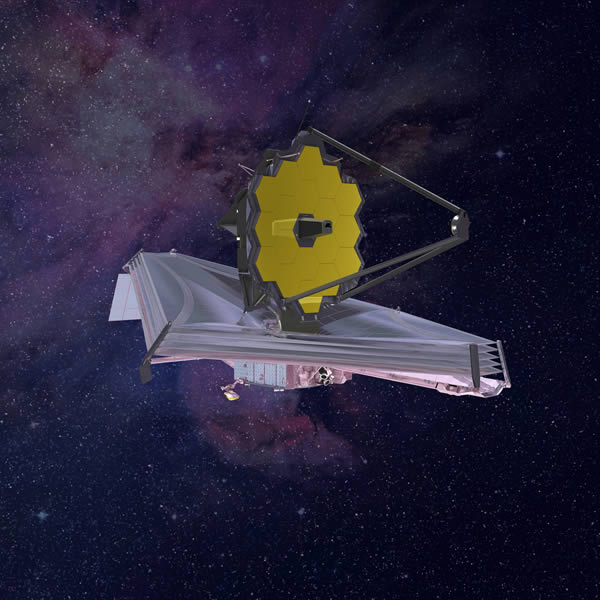
Webb Telescope & The Big Bang - NASA Science
The concept of the Big Bang is both simple and easy to misunderstand. Dr. John Mather, Nobel Laureate and James Webb Space Telescope Senior Project Scientist,
Dark matter
In astronomy and cosmology, dark matter is an invisible and hypothetical form of matter that does not interact with light or other electromagnetic radiation. Dark matter is implied by gravitational effects that cannot be explained by general relativity unless more matter is present than can be observed. Such effects occur in the context of formation and evolution of galaxies, gravitational lensing, the observable universe's current structure, mass position in galactic collisions, the motion of galaxies within galaxy clusters, and cosmic microwave background anisotropies. Dark matter is thought to serve as gravitational scaffolding for cosmic structures. After the Big Bang, dark matter clumped into blobs along narrow filaments with superclusters of galaxies forming a cosmic web at scales on which entire galaxies appear like tiny particles.

COSMIC
Impress users with the tools you build for them. COSMIC offers better performance, efficiency, and in-depth personalization to empower a wide variety of use cases.
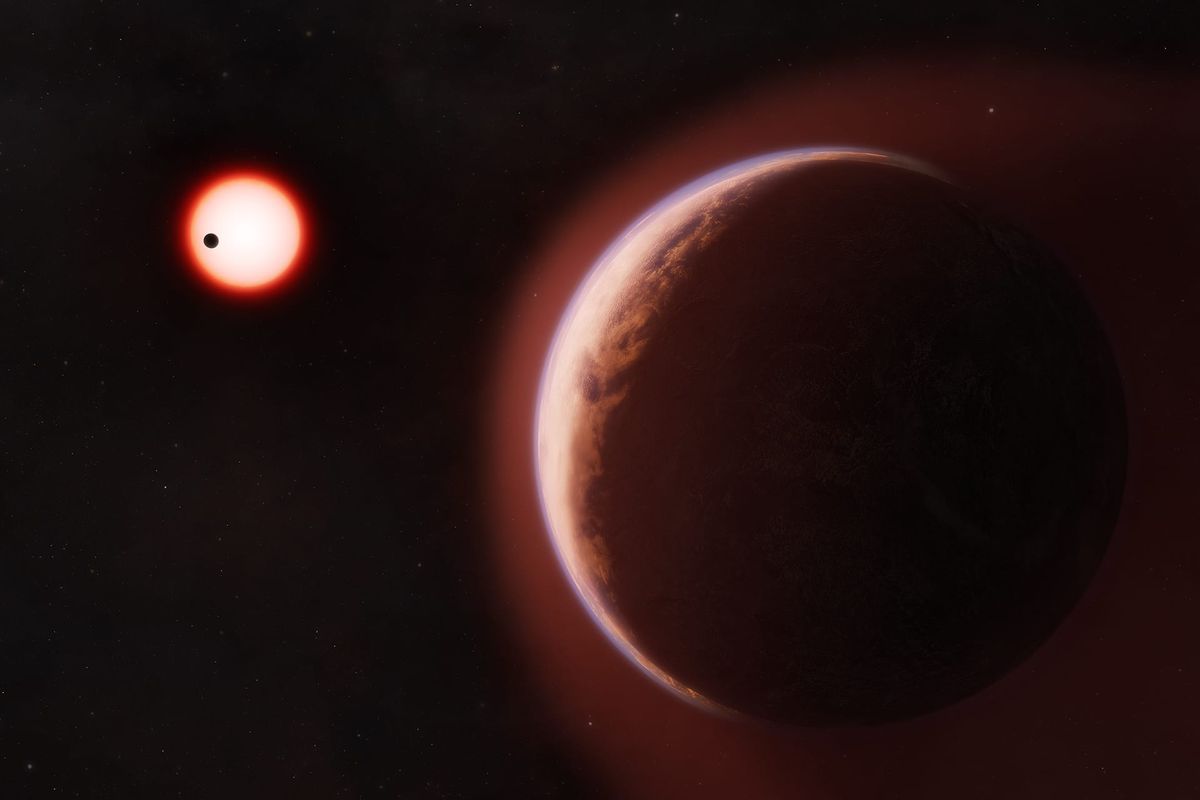
Scientists Discover Planet Has Everything to Host ‘Earth-Like Life’ In Breakthrough
For the first time, scientists found that a rocky planet in the habitable zone of its star has an atmosphere. It’s the best place to look for alien biosignatures, scientists say.
CStone: Universal Item Finder
A tool for Star Citizen that will help you find any in game item.

Precision cosmology with voids in the final BOSS data
We report novel cosmological constraints obtained from cosmic voids in the final BOSS DR12 dataset. They arise from the joint analysis of geometric and dynamic distortions of average void shapes...
🛸 UFOs: Explore atproto lexicons
Sample records and timeseries statistics for *every* collection seen in the ATmosphere.