

Cyclomatic complexity is a software metric used to indicate the complexity of a program. It is a quantitative measure of the number of linearly independent paths through a program's source code. It was developed by Thomas J. McCabe, Sr. in 1976.
The Compendium
A compendium of insights about complexity structured as inter-linked cards by Alex Komoroske

Why embracing complexity is the real challenge in software today
In the midst of industry discussions about productivity and automation, it’s all too easy to overlook the importance of properly reckoning with complexity.

All you need is data and functions
It's really easy to tend towards complexity as engineers. I think on some level, we love complexity. There are obviously bad types of complexity, but I think there are other types of it that we seek out, because there's something satisfying about wrapping your head around it; and I think a lot of that kind of complexity ends up in our programming languages.
Complexity is a source of income in open source ecosystems | R-bloggers
I am someone who regularly uses R, and my interest in programming languages means that on a semi-regular basis spend time reading blog posts about the language. Over the last year, or so, I had noticed several patterns of behavior, and after reading a recent blog post things started to make sense (the blog post […]

pseudosimplicity
In mainstream computing, ease of use is usually implemented as superficial simplicity or pseudosimplicity, as an additional layer of complexity that hides the underlying layers. Meanwhile, systems that are actually very simple and elegant are often presented in ways that make them look complex to laypeople.
Complexity Explorables
A collection of interactive explorable explanations of complex systems in biology, physics, mathematics, social sciences, epidemiology, ecology and other fields....
Routledge International Handbook of Complexity Economics | Ping Chen,
The Routledge International Handbook of Complexity Economics covers the historical developments and early concerns of complexity theorists and brings them into

Complexity and Strategy | HackerNoon
I struggled with how to think about complexity through much of my career, especially during the ten years I spent leading Office development. Modeling complexity impacted how we planned major releases, our technical strategy as we moved to new platforms, how we thought about the impact of new technologies, how we competed with Google Apps, how we thought about open source and throughout “frank and open” discussions with Bill Gates on our long term technical strategy for building the Office applications.
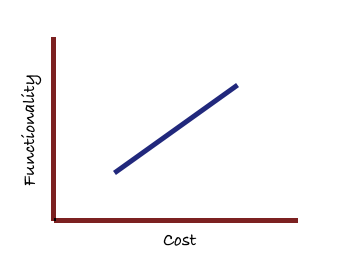
Variety (cybernetics)
In cybernetics, the term variety denotes the total number of distinguishable elements of a set, most often the set of states, inputs, or outputs of a finite-state machine or transformation, or the binary logarithm of the same quantity.[1] Variety is used in cybernetics as an information theory that is easily related to deterministic finite automata, and less formally as a conceptual tool for thinking about organization, regulation, and stability. It is an early theory of complexity in automata, complex systems,[1]: 6  and operations research.[2]
The ABCs of the Critical Path Method
Recently added to the growing assortment of quantitative tools for business decision making is the Critical Path Method—a powerful but basically simple technique for analyzing, planning, and scheduling large, complex projects. In essence, the tool provides a means of determining (2) which jobs or activities, of the many that comprise a project, are “critical” in […]
Description not evaluation - The Cynefin Co
One of the things I am enjoying at the moment is the way a lot of things are coming together conceptually. It happens like this when you develop or repurpose knowledge from different sources. Individual practices and ideas make sense in their own right. Then you read more, practice more, and the various origins […]

Emergent complexity, agile programming and the future of embedded systems design - Embedded
At the most recent Embedded Systems Conference in Boston, emergentcomplexity was discussed in a class presented by Brian Cruickshank,titled "Keeping Agile

P-code machine
In computer programming, a P-code machine (portable code machine[1]) is a virtual machine designed to execute P-code, the assembly language or machine code of a hypothetical central processing unit (CPU). The term P-code machine is applied generically to all such machines (such as the Java virtual machine (JVM) and MATLAB pre-compiled code), as well as specific implementations using those machines. One of the most notable uses of P-Code machines is the P-Machine of the Pascal-P system. The developers of the UCSD Pascal implementation within this system construed the P in P-code to mean pseudo more often than portable; they adopted a unique label for pseudo-code meaning instructions for a pseudo-machine.
The Complexity of Simplicity
The Complexity of Simplicity