


The DIKW pyramid is a model describing relationships between data, information, knowledge and wisdom sometimes also stylized as a chain, refer to models of possible structural and functional relationships between a set of components—often four: data, information, knowledge, and wisdom. The concept has roots predating the 1980s. In the latter years of that decade, interest in the models grew after explicit presentations and discussions, including from Milan Zeleny, Russell Ackoff, and Robert W. Lucky. Subsequent important discussions extended along theoretical and practical lines into the coming decades.
What is Knowledge distillation? | IBM
Knowledge distillation is a machine learning technique used to transfer the learning of a large pre-trained “teacher model” to a smaller “student model.”

DevReal: Simple Knowledge Graphs with Outlines, neo4j, and Modal, Cameron Pfiffer
Paradigma on Twitter / X
Flywheel views Directed Acyclic Graphs as the underlying data structure for research: nodes can be observations or experiments.When they're experiments, they contain an hypothesis and the artifact of the experiments that may reject it. In Flywheel, researchers can focus on… pic.twitter.com/DA1HtCzf3M— Paradigma (@paradigmainc) March 12, 2026
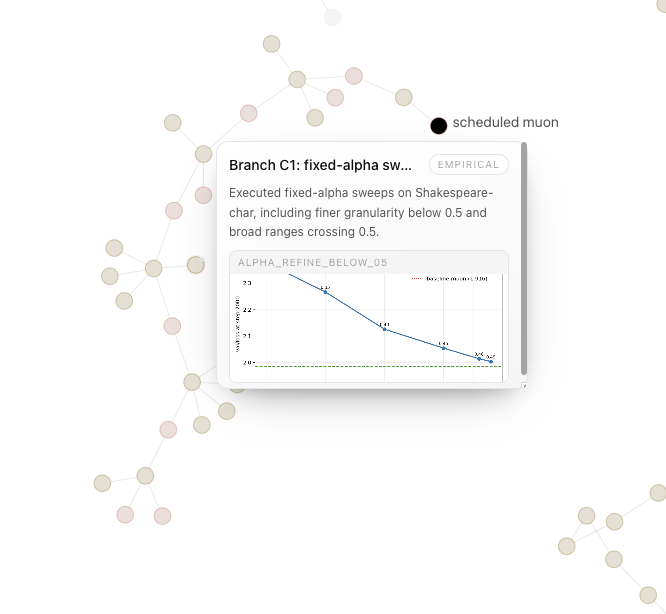
Simply Jekyll
A non-linear thread of important ideas weaved together to explore and understand the fabric of knowledge.
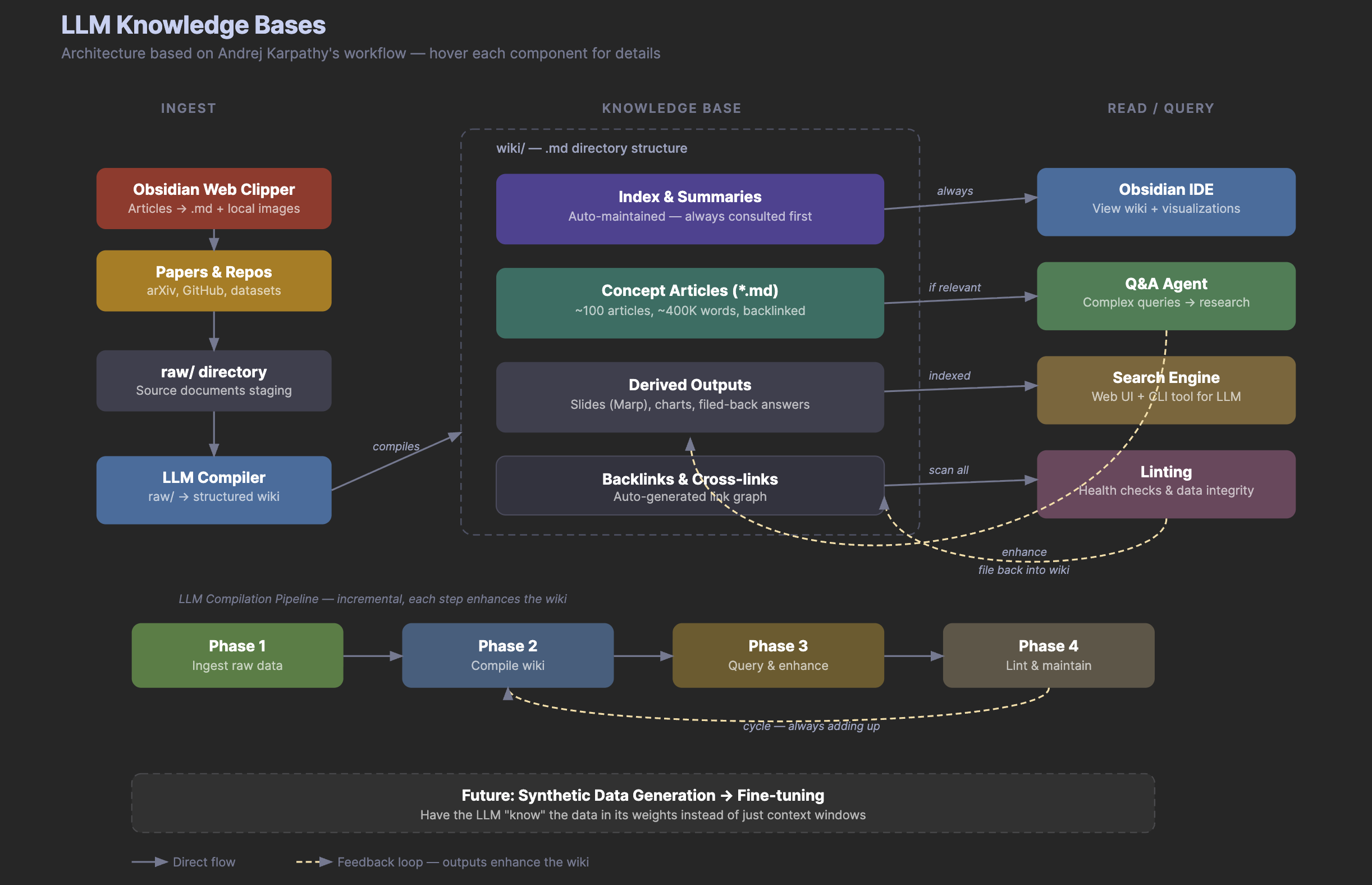
LLM Knowledge Bases
A visual breakdown of Andrej Karpathy's approach to building personal knowledge bases powered by LLMs. Learn the 4-phase pipeline: ingest, compile, query, and maintain - with an interactive architecture diagram.
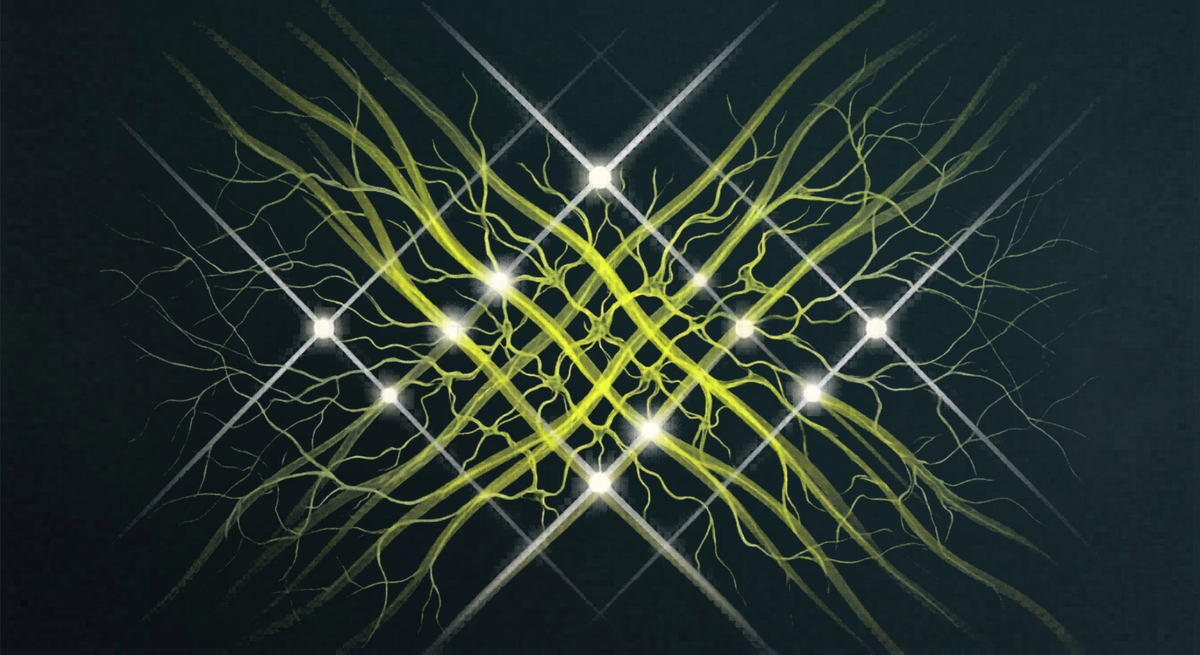
The Meshwork of Relational Infrastructure
What makes up Relational infrastructure when we zoom in? What are the qualities and attributes that might help us explain how we build it, nurture it and best invest in it - and indeed, what we can expect in return?
Information is Beautiful
Distilling the world's data, information & knowledge into beautiful infographics & visualizations

See what you think
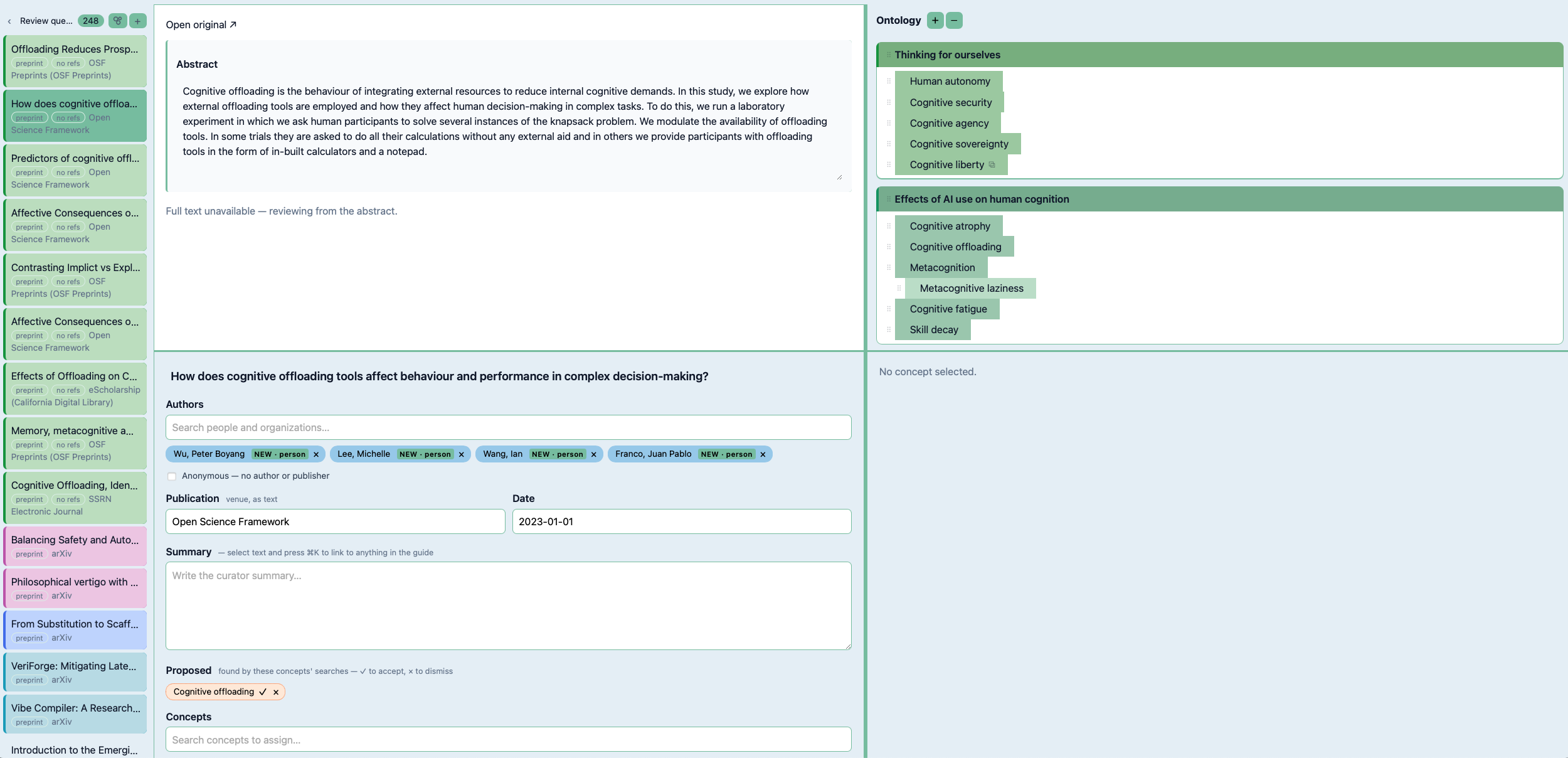
Allegra A. Beal Cohen's blog about knowledge curation, new interfaces, and large-scale qualitative data.
the metagraph
A substrate for decentralized cognition, grounded in reflexive directed hypergraphs, machine-native encoding, and federated knowledge.
The knowledge layer for collective intelligence
A portable data substrate for humans and their tools to think together.

The knowledge layer for collective intelligence
A portable data substrate for humans and their tools to think together.
The knowledge layer for collective intelligence
A portable data substrate for humans and their tools to think together.
The knowledge layer for collective intelligence
A portable data substrate for humans and their tools to think together.
Yuchen Jin on Twitter / X
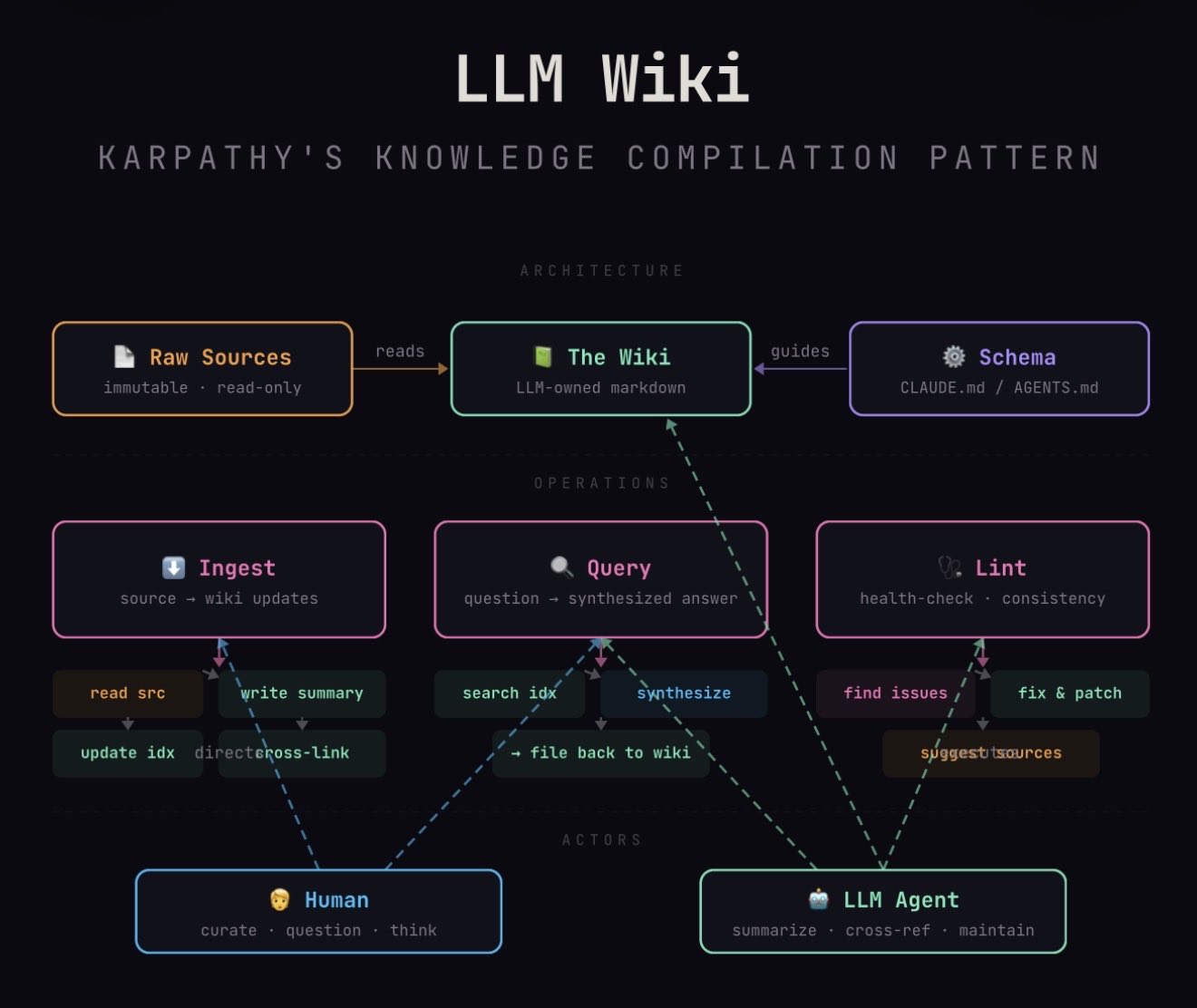
Karpathy’s “LLM Wiki” pattern: stop using LLMs as search engines over your docs. Use them as tireless knowledge engineers who compile, cross-reference, and maintain a living wiki. Humans curate and think.Diagram generated by my Claude agent knowledge worker. https://t.co/5u5i1GeFK8 pic.twitter.com/NIaq3KlAok— Yuchen Jin (@Yuchenj_UW) April 4, 2026
A Multiscale Logic of Collective Intelligence" by Donald Hoffman and Chetan Prakash
“‘Information’ is a relational concept that assumes meaning only when related to the cognitive structure of the observer.” -- Heinz von Foerster
Control Information Theory: The “Missing Link” In the Science Of Cybernetics | Institute for the Study of Complex Systems
complexsystems.org