

The Didascalia was clearly modeled on the earlier Didache.[3] The author is unknown, but he was probably a bishop. The provenance is usually regarded as Northern Syria, possibly near Antioch.[4]
Didascalia Apostolorum
Didascalia on Early Christian Writings: the New Testament, Apocrypha, Gnostics, and Church Fathers: information and translations of Gospels, Epistles, and documents of early Christianity.

Remote Origins: Translation, Genealogy, and Alterity in Medieval Castile (1252-circa 1390)
This dissertation analyzes selected examples of thirteenth- and fourteenth-century written culture to show their engagement with the religious alterity of Islam as an integral part of the origins of the kingdom of Castile. Following an interdisciplinary methodology, it addresses how medieval ideas about astrology, geography, history, medicine, race, and religion participated in creating discourses about origins that recognized the intellectual and political authority of al-Andalus. It argues that early Castilian vernacular texts conceptualized the translation of Arabic sources as an instrument for creating, transforming, and superseding the alterity of Islam while recognizing the cultural and political authority of Andalusi traditions. The first chapter serves as an introduction explaining the historical and theoretical framework of the dissertation. To do so, it provides an overview of Castilian ideas about genealogy, historiography, authority, and translatio, and translation. Then, through close reading and ample historicization, chapters two, three, and four analyze the impact of Andalusi textual traditions, cultural practices, and human population in three interrelated fields of medieval science, literature, and history. Chapter 2 explores the political implications of King Alfonso X’s (r. 1252-1284) dedication to the translation of Arabic sciences by focusing on the translation of a treatise of astrology titled Libro de las cruzes (1259). The chapter traces the cultural and political context that accompanied the transmission of the book in al-Andalus alongside the content of its Arabic and Castilian prologues. In light of ideas about the transference of knowledge (translatio studii) shared by Christian and Muslim scholars, I conclude that deployment of a twofold origin in the Libro de las cruzes illustrates the strategies and motivations of Alfonso X’s broader engagement with Arabic sources. The third chapter turns to the early fourteenth-century romance Libro del caballero Zifar with a double focus on its forged origin as a translation from caldeo (Chaldean) and the prominence of cursed lineages. Regarding lineage, the chapter explores the representation of exemplary virtues by the protagonists of the romance as enacting ideas about the transformable character of lineage and the capabilities of the individual to unmake inherited negative traits. Likewise, the textual strategy of the forged translation enables the inclusion of Arabic and Asian referents at the origin of a profoundly Christian text. In chapter 4, literature meets historiography in the analysis of the Crónica de Flores y Blancaflor. Being the result of intertwining a Castilian chronicle—Alfonso X’s Estoria de Espanna—and a French romance, this text narrates the love story between an Andalusi Muslim prince and the daughter of a captive Christian noble. The chapter focuses on Berta, the captive woman, to show the implications of her decision to nurture Flores and Blancaflor with her milk. Considering Christian and Muslim ideas about milk and wet nursing along with the tenets of Castilian historiography, the chapter shows the limits of dominant ideas about dynastic origins among the Christian elites of Castile while evidencing the existence of an alternative discourse that—coming from within Castilian historiography—incorporates maternal and non-Christian kinship as an essential part of the origins and possibilities of the kingdom. A short final chapter serves as a conclusion, suggesting paths for expanding the results of this dissertation within and the thirteenth and fourteenth centuries covered by its contents.
Selected works of S. Ephrem the Syrian
xvii, 449 p. ; 23 cm; Half-title : Rhythms of Saint Ephrem the Syrian

The Call of Abraham: A Midrash Revisited | JSTOR
PAUL MANDEL, The Call of Abraham: A Midrash Revisited, Prooftexts, Vol. 14, No. 3, SEPTEMBER 1994
Sarmizegetusa Regia
Sarmizegetusa Regia was the capital and the most important military, religious and political centre of the Dacians before the wars with the Roman Empire. Built on top of a 1200 m high mountain, the fortress, consisting of six citadels, was the core of a strategic and defensive system in the Orăștie Mountains. The archaeological site of Sarmizegetusa Regia is located in the village of Grădiștea de Munte in Hunedoara County.

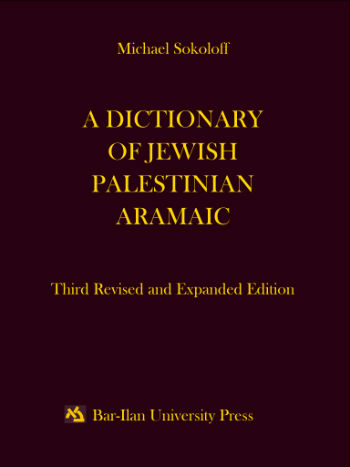
A Dictionary of Jewish Palestinian Aramaic of the Byzantine Period
contains the aramaic vocabulary of the jewish literary and epigraphic sources of eretz israel from the third century c e until the arab conquest including palestinian talmud midrashim targumim and synagogue inscriptions

The curse of Toumaï: an ancient skull, a disputed femur and a bitter feud over humanity’s origins
The long read: When fossilised remains were discovered in the Djurab desert in 2001, they were hailed as radically rewriting the history of our species. But not everyone was convinced – and the bitter argument that followed has consumed the lives of scholars ever since

Toward an exploratory medium for mathematics
The world's oldest complete piece of surviving music is the 3,400-year-old Hurrian cult hymn. The hymn was found inscribed on clay tablets excavated from the ancient city of Ugarit, in modern-day Syria. Sometime after the hymn was composed, the idea of using notation to record music was lost. Writing two millennia later, in the seventh century CE, the polymath Isidore of Seville stated that “unless [musical] sounds are held by the memory of man, they perish, because they cannot be written down.”
A Dictionary of Jewish Palestinian Aramaic of the Byzantine period (Dictionaries of Talmud, Midrash, and Targum)
Since the Middle Ages, lexographies of Talmudic and other rabbinic literature have combined in one entry Babylonian, Palestinian, and Targumic words from various periods. Because morphologically identical words in even closely related dialects can frequently differ in both meaning and nuance, their consolidation into one dictionary entry is often misleading. Scholars now realize the need to treat each dialect separately, and in A Dictionary of Jewish Palestinian Aramaic, Michael Sokoloff provides a complete lexicon of the dialect spoken and written by Jews in Palestine during the Byzantine period, from the third century C.E. to the tenth century. Sokoloff draws on a wide range of sources, from inscriptions discovered in the remains of synagogues and on amulets, fragments of letters and other documents, poems, and marginal notations to local Targumim, the Palestinian Midrashim and Talmud, texts addressing religious law (halacha), and Palestinian marriage documents (ketubbot) from the Arabic period. Many of these sources were unavailable to previous lexographers, who based their dictionaries on corrupt nineteenth-century editions of the rabbinic literature. The discovery of new manuscripts in both European libraries and the Cairo Geniza over the course of the twentieth century has revolutionized the textual basis of Jewish Palestinian Aramaic. Each entry in A Dictionary of Jewish Palestinian Aramaic is divided into six lemma or root, part of speech, English gloss, etymology, semantic features, and bibliographic references. Sokoloff also includes an index of all cited passages. This major reference work, updated to reflect the publication of new texts over the last decade, will both provide students and scholars with a tool for an accurate understanding of the Aramaic dialect of Jewish Palestinian literature of the Byzantine period and help Aramaist and Semitic linguists to see the relationship between this dialect and others, especially the contemporary dialects of Palestine. Publisher : Bar Ilan University Press; 2nd printing edition (January 1, 1990)Language : EnglishHardcover : 823 pagesISBN-10 : 9652261017ISBN-13 : 978-9652261014

Jonathan Berkey
I teach the full range of Middle Eastern history since the rise of Islam, and I participate in Davidson's Humanities Program. My research and writing focus on Islamic religious culture and medieval Egypt and Syria.
Collections: The Fremen Mirage, Part IIIb: Myths of the Atreides
This is Part IIIb of our four-and-three-quarters part series (I, II, IIIa) on what we’re calling the Fremen Mirage. Last week, we traced the origins of this idea in the Greek and Roman ethnog…

Ephrem the Syrian
Ephrem the Syrian, also known as Ephraem the Deacon, Ephrem of Edessa or Aprem of Nisibis was a prominent Christian theologian and writer who is revered as one of the most notable hymnographers and authors of Syriac literature in Eastern Christianity. He was born in Nisibis, served as a deacon and later lived in Edessa.

Parmenides: Pre-Socratic Philosophy
The Qurʾan and Syriac Christianity