

In linear algebra, an eigenvector (/ˈaɪɡən-/ EYE-gən-) or characteristic vector is a (nonzero) vector that has its direction unchanged (or reversed) by a given linear transformation. More precisely, an eigenvector v {\displaystyle \mathbf {v} } of a linear transformation T {\displaystyle T} is scaled by a constant factor λ {\displaystyle \lambda } when the linear transformation is applied to it: ⁠ T v = λ v {\displaystyle T\mathbf {v} =\lambda \mathbf {v} } ⁠. The corresponding eigenvalue, characteristic value, or characteristic root is the multiplying factor λ {\displaystyle \lambda } (possibly a negative or complex number).
Karma3Labs/ts-eigencaster
Contribute to Karma3Labs/ts-eigencaster development by creating an account on GitHub.
Transforming Normals - Eric Lengyel
If you’ve been working with 3D computer graphics for any amount of time, then you’ve probably heard that normal vectors transform differently than ordinary vectors. That is, if t is an ordinary column vector that’s tangent to some surface, and m is a \(3 \times 3\) matrix that transforms t with the product \(\mathbf t' = \mathbf{mt}\), then calculating \(\mathbf n' = \mathbf{mn}\) for some normal vector n perpendicular to the surface doesn’t necessarily produce the correct results. By correct results, I mean that if the vectors t and n are initially perpendicular to each other, then their transformations \(\mathbf t'\) and \(\mathbf n'\) must also be perpendicular to each other. This fails to hold if the matrix m contains a nonuniform scale, skew, or anything else that makes it nonorthogonal. For example, consider the case in which the triangle below is scaled by a factor of two in the horizontal direction only. If we apply the same matrix m used to transform the sides of the triangle to transform the normal vector n, then the transformed normal vector is no longer perpendicular to the diagonal side.
Vector theory of change — a theory of change for complex systems - The Cynefin Co
We're launching a short explainer on vector theory of change, which describes how approaches to theory of change thus far have not been suitable for complex systems, and how vector theory of change helps to rectify these issues. It walks you through vector theory of change step by step: starting from where you are, setting direction and finding stepping stones, designing interventions, and monitoring continuous feedback as opposed to recklessly aiming for a fixed endpoint at any cost.

eigent-ai/eigent
Eigent: The Open Source Cowork Desktop - Local and Free Alternative to Claude Cowork and Codex
Members of right-leaning parties prefer leaders with ‘dark triad’ personality traits
The ‘dark triad’ is made up of narcissism, Machiavellianism and psychopathy.

Yi Ma on Twitter / X
In system theory, it is called "linearization"... which has been studied and used for decades. Honestly, folks, there is no need to invent or introduce any new terminology. Remember, there is rarely anything new under the sun... https://t.co/yNLIv7Ptoh— Yi Ma (@YiMaTweets) March 14, 2026

Tensor
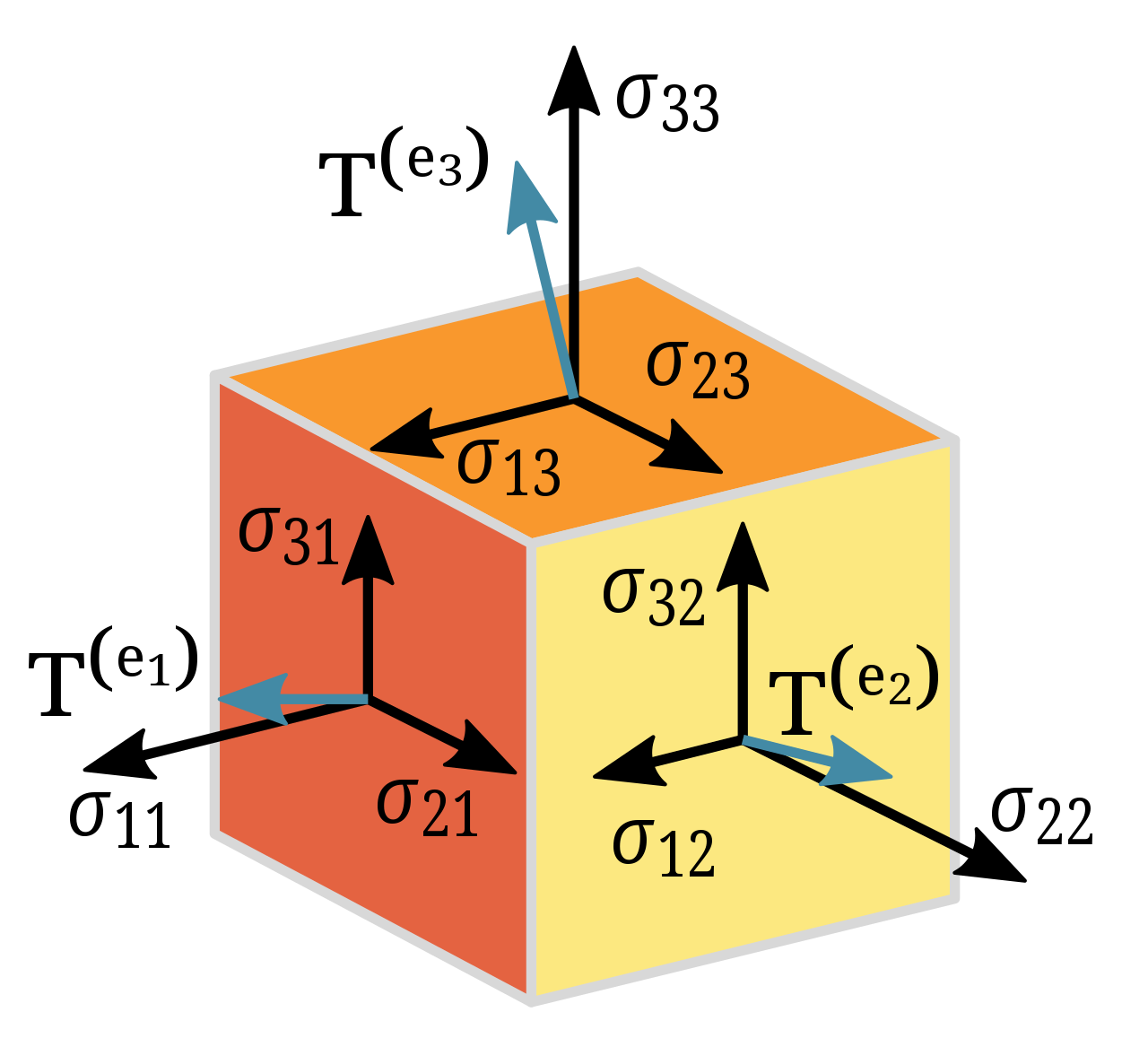
In mathematics, a tensor is an algebraic object that describes a multilinear relationship between sets of algebraic objects associated with a vector space. Tensors may map between different objects such as vectors, scalars, and even other tensors. There are many types of tensors, including scalars and vectors, dual vectors, multilinear maps between vector spaces, and even some operations such as the dot product. Tensors are defined independent of any basis, although they are often referred to by their components in a basis related to a particular coordinate system; those components form an array, which can be thought of as a high-dimensional matrix.
Crest factor
Crest factor is a parameter of a waveform, such as alternating current or sound, showing the ratio of largest value to the more typical value. More specifically, crest factor is the peak amplitude of the waveform divided by the root mean square (RMS) value of the waveform. The minimum possible crest factor is 1 or 1:1.
Likert scale
A Likert scale is a psychometric scale named after its inventor, American social psychologist Rensis Likert, which is commonly used in research questionnaires. It is the most widely used approach to scaling responses in survey research, such that the term is often used interchangeably with rating scale, although there are other types of rating scales.

Reality Roundtable #19 — Dark Triad Personality Traits: How Psychopathy, Narcissism, and Machiavellianism Impact Our Cultures & Social Systems - The Great Simplification
Psychopathy is often portrayed as a rare and distant phenomenon – something confined to movie villains or prison cells. Yet when psychopathy is combined with narcissism and Machiavellianism to form what psychologists call the Dark Triad, its impact becomes far more immediate. Individuals with these traits can wield disproportionate influence over our culture, institutions, and daily lives. What goes on inside their minds, and how do they shape the world around us?

Cosine similarity
In data analysis, cosine similarity is a measure of similarity between two non-zero vectors defined in an inner product space. Cosine similarity is the cosine of the angle between the vectors; that is, it is the dot product of the vectors divided by the product of their lengths. It follows that the cosine similarity does not depend on the magnitudes of the vectors, but only on their angle. The cosine similarity always belongs to the interval [ − 1 , + 1 ] . {\displaystyle [-1,+1].} For example, two proportional vectors have a cosine similarity of +1, two orthogonal vectors have a similarity of 0, and two opposite vectors have a similarity of −1. In some contexts, the component values of the vectors cannot be negative, in which case the cosine similarity is bounded in [ 0 , 1 ] {\displaystyle [0,1]} .
VUCA
VUCA is an acronym based on the leadership theories of Warren Bennis and Burt Nanus, to describe or to reflect on the volatility, uncertainty, complexity and ambiguity of general conditions and situations.[1][2] The U.S. Army War College introduced the concept of VUCA in 1987, to describe a more complex multilateral world perceived as resulting from the end of the Cold War.[3] More frequent use and discussion of the term began from 2002.[4][need quotation to verify] It has subsequently spread to strategic leadership in organizations, from for-profit corporations[5][6] to education.[7][8][9]
Variety (cybernetics)
In cybernetics, the term variety denotes the total number of distinguishable elements of a set, most often the set of states, inputs, or outputs of a finite-state machine or transformation, or the binary logarithm of the same quantity.[1] Variety is used in cybernetics as an information theory that is easily related to deterministic finite automata, and less formally as a conceptual tool for thinking about organization, regulation, and stability. It is an early theory of complexity in automata, complex systems,[1]: 6  and operations research.[2]
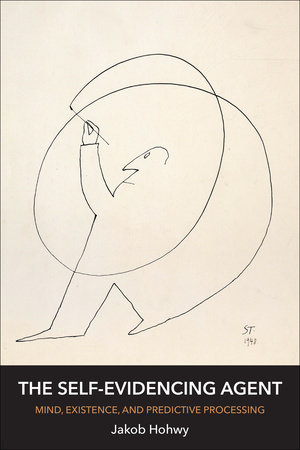
The Self-Evidencing Agent: Mind, Existence, and Predictive Processing
How the concept of self-evidencing offers a philosophical principle for understanding mind and behavior, consciousness, value, wisdom, and meaning.What is
TESCREAL
TESCREAL is a neologism proposed by computer scientist Timnit Gebru and philosopher Émile P. Torres. An acronym, it stands for Transhumanism, Extropianism, Singularitarianism, (modern) Cosmism, Rationalists (the internet community, not to be confused with other uses of the term), Effective Altruism, and Longtermism.[1][2] Gebru and Torres argue that these ideologies should be treated as an "interconnected and overlapping" group with shared origins.[1] They claim these constitute a movement that allows its proponents to use the threat of human extinction to justify expensive or detrimental projects and consider it pervasive in social and academic circles in Silicon Valley centered on artificial intelligence.[3] As such, the acronym is sometimes used to criticize a perceived belief system associated with Big Tech.[3][4][5]