In linear algebra, an eigenvector (/ˈaɪɡən-/ EYE-gən-) or characteristic vector is a (nonzero) vector that has its direction unchanged (or reversed) by a given linear transformation. More precisely, an eigenvector v {\displaystyle \mathbf {v} } of a linear transformation T {\displaystyle T} is scaled by a constant factor λ {\displaystyle \lambda } when the linear transformation is applied to it: ⁠ T v = λ v {\displaystyle T\mathbf {v} =\lambda \mathbf {v} } ⁠. The corresponding eigenvalue, characteristic value, or characteristic root is the multiplying factor λ {\displaystyle \lambda } (possibly a negative or complex number).
Karma3Labs/ts-eigencaster
Contribute to Karma3Labs/ts-eigencaster development by creating an account on GitHub.
Transforming Normals - Eric Lengyel
If you’ve been working with 3D computer graphics for any amount of time, then you’ve probably heard that normal vectors transform differently than ordinary vectors. That is, if t is an ordinary column vector that’s tangent to some surface, and m is a \(3 \times 3\) matrix that transforms t with the product \(\mathbf t' = \mathbf{mt}\), then calculating \(\mathbf n' = \mathbf{mn}\) for some normal vector n perpendicular to the surface doesn’t necessarily produce the correct results. By correct results, I mean that if the vectors t and n are initially perpendicular to each other, then their transformations \(\mathbf t'\) and \(\mathbf n'\) must also be perpendicular to each other. This fails to hold if the matrix m contains a nonuniform scale, skew, or anything else that makes it nonorthogonal. For example, consider the case in which the triangle below is scaled by a factor of two in the horizontal direction only. If we apply the same matrix m used to transform the sides of the triangle to transform the normal vector n, then the transformed normal vector is no longer perpendicular to the diagonal side.
Vector theory of change — a theory of change for complex systems - The Cynefin Co
We're launching a short explainer on vector theory of change, which describes how approaches to theory of change thus far have not been suitable for complex systems, and how vector theory of change helps to rectify these issues. It walks you through vector theory of change step by step: starting from where you are, setting direction and finding stepping stones, designing interventions, and monitoring continuous feedback as opposed to recklessly aiming for a fixed endpoint at any cost.

Update on Matrix Migration: Pausing the Transition
In recent days, we (Matrix contributors @ashfame, @psrpinto, and myself) have been closely evaluating and engaging with testing, feedback, and discussions stemming from this recent post about the t…

eigent-ai/eigent
Eigent: The Open Source Cowork Desktop - Local and Free Alternative to Claude Cowork and Codex
mp | What are matrices in R?
If everything in R is a vector, then what is a matrix? This entry will demonstrate that even matrices are vectors, and that processing of matrices can in certain circumstances be considerably more efficient if they are treated as simple vectors.
Chapter 6: The Matrix (Immersive Linear Algebra)
Members of right-leaning parties prefer leaders with ‘dark triad’ personality traits
The ‘dark triad’ is made up of narcissism, Machiavellianism and psychopathy.

Yi Ma on Twitter / X
In system theory, it is called "linearization"... which has been studied and used for decades. Honestly, folks, there is no need to invent or introduce any new terminology. Remember, there is rarely anything new under the sun... https://t.co/yNLIv7Ptoh— Yi Ma (@YiMaTweets) March 14, 2026

Tensor
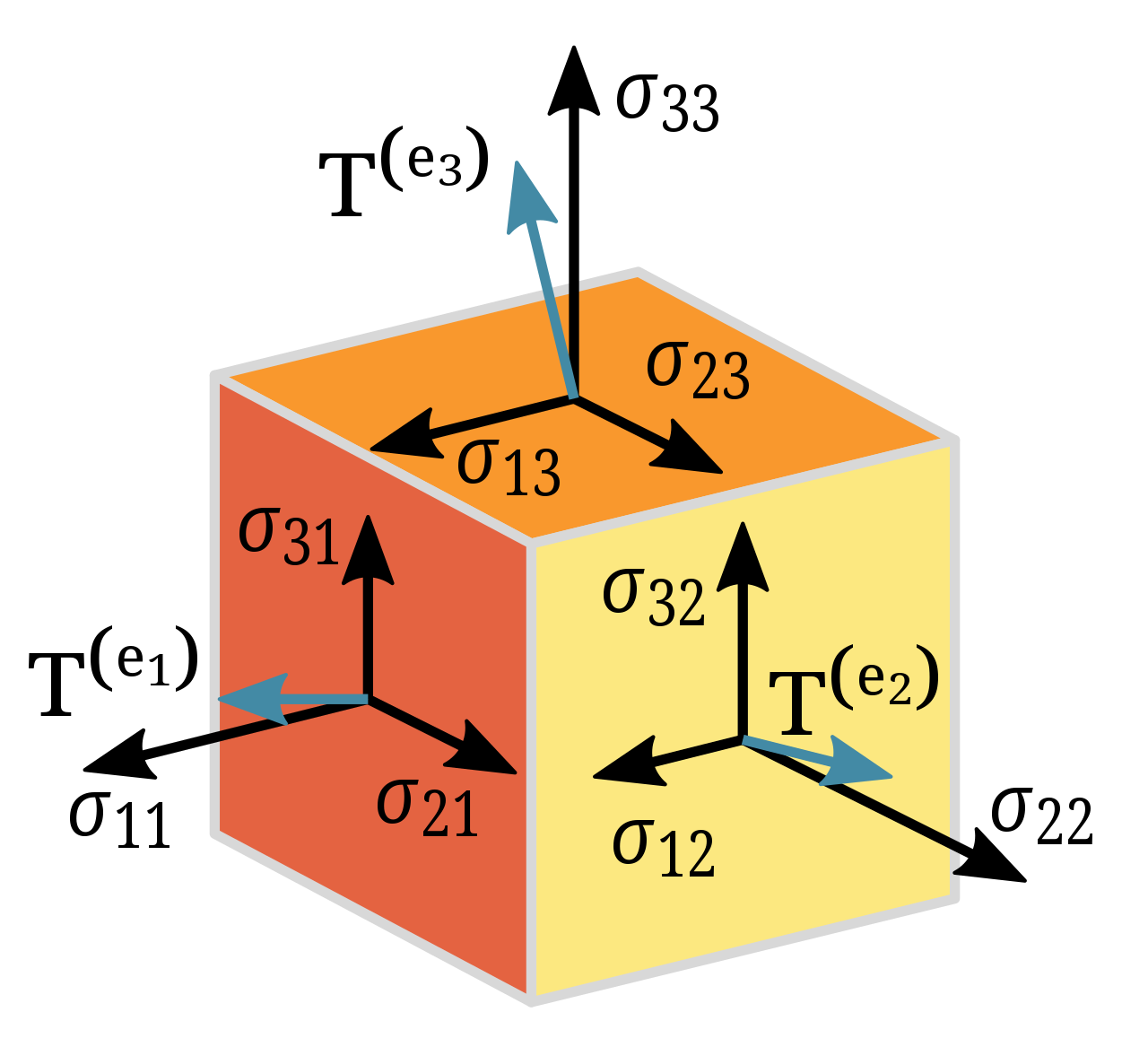
In mathematics, a tensor is an algebraic object that describes a multilinear relationship between sets of algebraic objects associated with a vector space. Tensors may map between different objects such as vectors, scalars, and even other tensors. There are many types of tensors, including scalars and vectors, dual vectors, multilinear maps between vector spaces, and even some operations such as the dot product. Tensors are defined independent of any basis, although they are often referred to by their components in a basis related to a particular coordinate system; those components form an array, which can be thought of as a high-dimensional matrix.
Linear Algebra | Mathematics | MIT OpenCourseWare
This course covers matrix theory and linear algebra, emphasizing topics useful in other disciplines such as physics, economics and social sciences, natural sciences, and engineering. It parallels the combination of theory and applications in Professor Strang’s textbook {{% resource_link "4cdcc772-348a-4e48-9678-0a6cc9328fde" "_Introduction to Linear Algebra_" %}}. Course Format This course has been designed for independent study. It provides everything you will need to understand the concepts covered in the course. The materials include: - A complete set of **Lecture Videos** by Professor Gilbert Strang. - **Summary Notes** for all videos along with suggested readings in Prof. Strang's textbook {{% resource_link "4cdcc772-348a-4e48-9678-0a6cc9328fde" "_Linear Algebra_" %}}. - **Problem Solving Videos** on every topic taught by an experienced MIT Recitation Instructor. - **Problem Sets** to do on your own with **Solutions** to check your answers against when you're done. - A selection of **Java® Demonstrations** to illustrate key concepts. - A full set of **Exams with Solutions**, including review material to help you prepare.
1.1 Separation of Scales: Why complex systems need a new mathematics
One of the central insights about complex systems is that the effect of dependencies among components cannot be fully represented by…

Crest factor
Crest factor is a parameter of a waveform, such as alternating current or sound, showing the ratio of largest value to the more typical value. More specifically, crest factor is the peak amplitude of the waveform divided by the root mean square (RMS) value of the waveform. The minimum possible crest factor is 1 or 1:1.
Likert scale
A Likert scale is a psychometric scale named after its inventor, American social psychologist Rensis Likert, which is commonly used in research questionnaires. It is the most widely used approach to scaling responses in survey research, such that the term is often used interchangeably with rating scale, although there are other types of rating scales.

Reality Roundtable #19 — Dark Triad Personality Traits: How Psychopathy, Narcissism, and Machiavellianism Impact Our Cultures & Social Systems - The Great Simplification
Psychopathy is often portrayed as a rare and distant phenomenon – something confined to movie villains or prison cells. Yet when psychopathy is combined with narcissism and Machiavellianism to form what psychologists call the Dark Triad, its impact becomes far more immediate. Individuals with these traits can wield disproportionate influence over our culture, institutions, and daily lives. What goes on inside their minds, and how do they shape the world around us?