


Eusociality is the highest level of organization of sociality. It is defined by the following characteristics: cooperative brood care, overlapping generations within a colony of adults, and a division of labor into reproductive and non-reproductive groups. The division of labor creates specialized behavioral groups within an animal society, sometimes called castes. Eusociality is distinguished from all other social systems because individuals of at least one caste usually lose the ability to perform behaviors characteristic of individuals in another caste. Eusocial colonies can be viewed as superorganisms.
Cooperation emerges when groups are small and memories are long, study finds
The tragedy of the commons, a concept described by ecologist Garrett Hardin, paints a grim view of human nature. The theory goes that, if a resource is shared, individuals will act in their own self-interest, ...

Social system
In sociology, a social system is the patterned network of relationships constituting a coherent whole that exist between individuals, groups, and institutions. It is the formal structure of role and status that can form in a small, stable group. An individual may belong to multiple social systems at once; examples of social systems include nuclear family units, communities, cities, nations, college campuses, religions, corporations, and industries. The organization and definition of groups within a social system depend on various shared properties such as location, socioeconomic status, race, religion, societal function, or other distinguishable features.


La compétition attise les inégalités et mine la cohésion sociale. Il faut miser sur la coopération
Compétition et inégalités vont de pair. Pour contrer cette tendance généralisée à tous les domaines de la vie sociale, il faut sortir de cette logique et opter pour la coopération. Le point de vue de Sandra Hoibian, directrice du Crédoc.

What is Communalism?
Murray Bookchin What is Communalism? The Democratic Dimension of Anarchism

CoSocialism Update
This week we had our CoSocial AGM and it came off just fine. I regularly tell the world that Mastodon is the only good choice for social media going forward, and I think it’s worth a few extra words on why the CoSocial model is interesting, and what it teaches.

The Cooperative Account of the Rise of Virtues
This chapter presents an account of how virtues evolve. The primary challenge any such account must address is why different societies regard different traits as virtues and why these views change over time. The account developed here builds on the theory of Morality as Cooperation, which identifies seven core types of cooperation that correspond to seven universally valued virtues—filial piety, loyalty, fair-mindedness, courage, deference, justice, and respect for property. The chapter argues that virtues are stable character traits that dispose individuals to perform cooperative actions in response to recurrent social interaction problems. Different societies at different times face different problems of cooperation, which leads to different virtues. The chapter concludes with humility as a test case for this account of the evolution of virtues.

Human–Animal Interaction and Human Prosociality: A Meta-Analytic Review of Experimental and Correlational Studies
Pet ownership and interactions with animals confer various physiological and psychological benefits to humans. Although interactions with animals are commonplace, there is no consensus in the liter...

Hierarchy is Detrimental for Human Cooperation
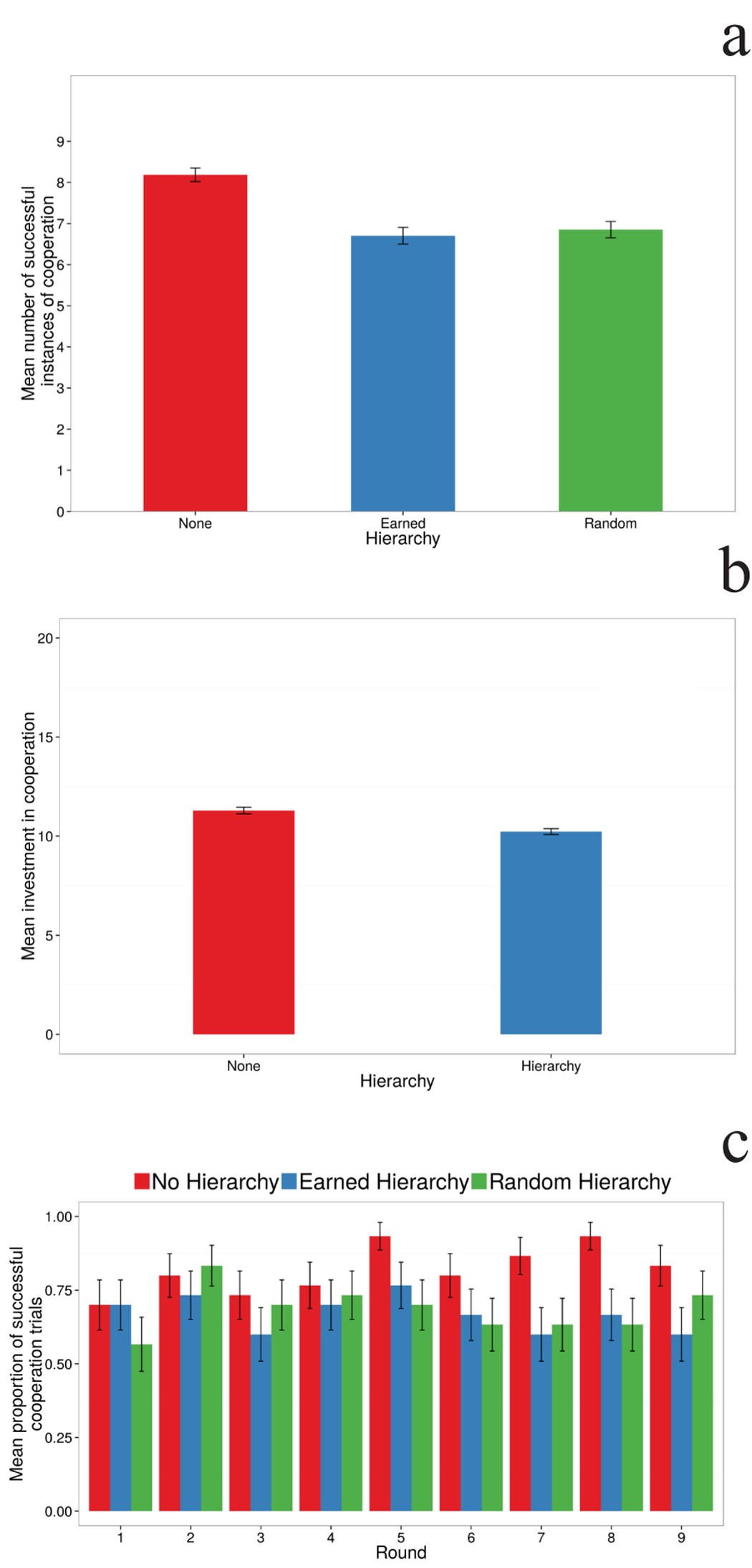
Studies of animal behavior consistently demonstrate that the social environment impacts cooperation, yet the effect of social dynamics has been largely excluded from studies of human cooperation. Here, we introduce a novel approach inspired by nonhuman primate research to address how social hierarchies impact human cooperation. Participants competed to earn hierarchy positions and then could cooperate with another individual in the hierarchy by investing in a common effort. Cooperation was achieved if the combined investments exceeded a threshold and the higher ranked individual distributed the spoils unless control was contested by the partner. Compared to a condition lacking hierarchy, cooperation declined in the presence of a hierarchy due to a decrease in investment by lower ranked individuals. Furthermore, hierarchy was detrimental to cooperation regardless of whether it was earned or arbitrary. These findings mirror results from nonhuman primates and demonstrate that hierarchies are detrimental to cooperation. However, these results deviate from nonhuman primate findings by demonstrating that human behavior is responsive to changing hierarchical structures and suggests partnership dynamics that may improve cooperation. This work introduces a controlled way to investigate the social influences on human behavior and demonstrates the evolutionary continuity of human behavior with other primate species.
Liberating work - workers.coop
Worker cooperatives enable workers to unite and collectively advance their economic, social, and cultural interests.
Can we have hierarchy without oppression?
Science fiction from the very literary to the very pulpy has pondered whether humans are doomed to oppress each other because we live in a hierarchical

Mutual Aid: A Factor of Evolution
Mutual Aid: A Factor of Evolution is a 1902 collection of anthropological essays by Russian naturalist and anarchist philosopher Peter Kropotkin. The essays, initially published in the English periodical The Nineteenth Century between 1890 and 1896, explore the role of mutually beneficial cooperation and reciprocity in the animal kingdom and human societies both past and present. It is an argument against theories of social Darwinism that emphasize competition and survival of the fittest, and against the romantic depictions by writers such as Jean-Jacques Rousseau, who thought that cooperation was motivated by universal love. Instead, Kropotkin argues that mutual aid has pragmatic advantages for the survival of human and animal communities and, along with the conscience, has been promoted through natural selection.

Inducing Peer Pressure to Promote Cooperation
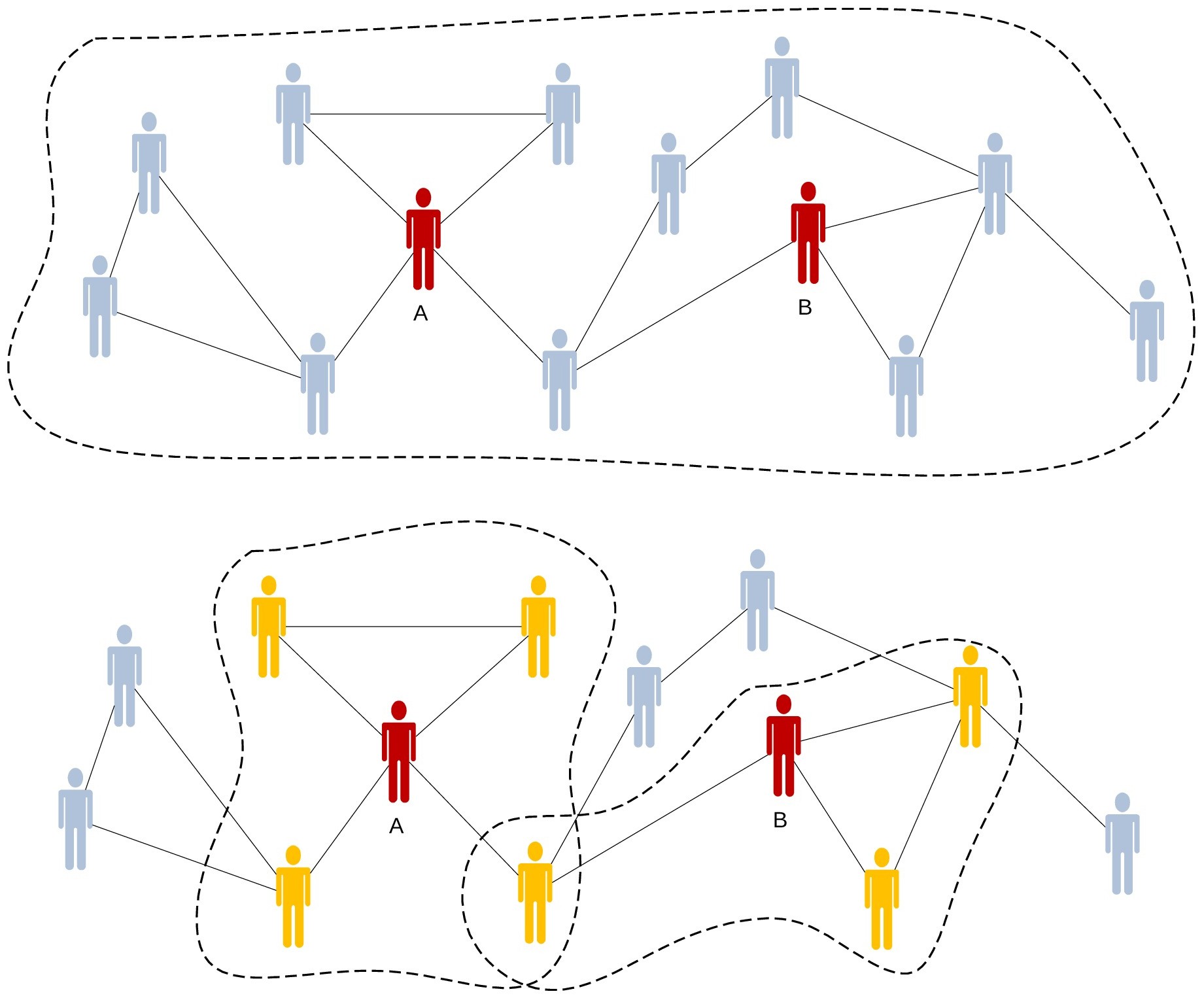
Cooperation in a large society of self-interested individuals is notoriously difficult to achieve when the externality of one individual's action is spread thin and wide on the whole society. This leads to the ‘tragedy of the commons’ in which rational action will ultimately make everyone worse-off. Traditional policies to promote cooperation involve Pigouvian taxation or subsidies that make individuals internalize the externality they incur. We introduce a new approach to achieving global cooperation by localizing externalities to one's peers in a social network, thus leveraging the power of peer-pressure to regulate behavior. The mechanism relies on a joint model of externalities and peer-pressure. Surprisingly, this mechanism can require a lower budget to operate than the Pigouvian mechanism, even when accounting for the social cost of peer pressure. Even when the available budget is very low, the social mechanisms achieve greater improvement in the outcome.
Heterospecific social behavior in primates: insights into the evolutionary roots of pet-keeping
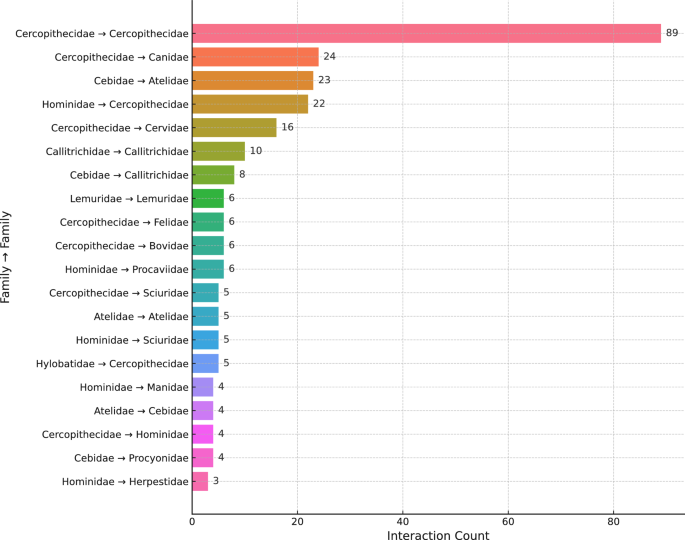
Primate interspecific interactions with both other primates and non-primate species range from predator–prey dynamics to affiliative behaviors such as grooming, play, and carrying. While many primates participate in interspecific associations or commensal relationships, to our knowledge interspecific social interactions have never been systematically synthesized. Here, we present the first comprehensive review of such interactions, compiling 427 cases from the literature, media sources, and a global survey of primatologists. These involved 88 primate species and 127 non-primate species (including mammals, birds, reptiles, amphibians, malacostracans, and insects) across wild (n = 311) and captive (n = 111) contexts. The most frequent interactions occurred within or between primate families (e.g., Cercopithecidae–Cercopithecidae, Cebidae–Atelidae), though affiliative behaviors were also directed toward distantly related taxa such as dogs and birds. Play (n = 139) and grooming (n = 136) were most common. Juveniles and infants predominantly engaged in play, while adult females were more likely to groom. Adult males were less affiliative overall. Contrary to expectations, affiliative behaviors were not more often directed toward immature than adult heterospecifics. Primates were the initiators in most interactions. These findings offer new insights into the diversity and contexts of heterospecific sociality in primates and suggest that some behavioral tendencies relevant to later forms of human–animal companionship – such as caregiving, tolerance, and exploratory play – may be more widespread among primates than previously recognized.
Children's Acquisition and Application of Norms
All human societies are permeated by collectively shared entities that govern daily social interactions and promote coordination and cooperation: norms. While the study of norm development is not new to developmental psychology, it has only recently been the target of an interdisciplinary wave of research using new methodologies and (often) complementary theoretical accounts to describe and explain the origins and potentially species-unique aspects of human norm psychology. Here we review recent developmental research showing that young children swiftly acquire and infer norms in a variety of social contexts. Moreover, children actively enforce these norms, even as unaffected bystanders, when third parties do things the wrong way. This research suggests that the foundations of human norm psychology can be found in early childhood. Deeper insights into the ontogenetic roots of norm psychology may contribute to understanding the evolutionary emergence of human cooperation and its maintenance in the contemporary world.
This is called anthropomorphizing, when we ascribe human traits, emotions or behaviors to non-human things, such as animals or inanimate objects. Instead, explain what a system does, how well it performs, who built it and who could be affected by it. apnews.com/article/openai-safety-ai-fram…
https://apnews.com/article/openai-safety-ai-framework-089e75b95bc935af092da7b79d92706d
apnews.com