

Evolutionary graph theory is an area of research lying at the intersection of graph theory, probability theory, and mathematical biology. Evolutionary graph theory is an approach to studying how topology affects evolution of a population. That the underlying topology can substantially affect the results of the evolutionary process is seen most clearly in a paper by Erez Lieberman, Christoph Hauert and Martin Nowak.[1]
Evolution
Evolution is the change in the heritable characteristics of biological populations over successive generations. It occurs when evolutionary processes such as genetic drift and natural selection act on genetic variation, resulting in certain characteristics becoming more or less common within a population over successive generations. The process of evolution has given rise to biodiversity at every level of biological organisation.

NETWORKED MINDS: Where human evolution is heading
by Dirk Helbing [1] Having studied the technological and social forces shaping our societies, we are now turning to the evolutionary for...

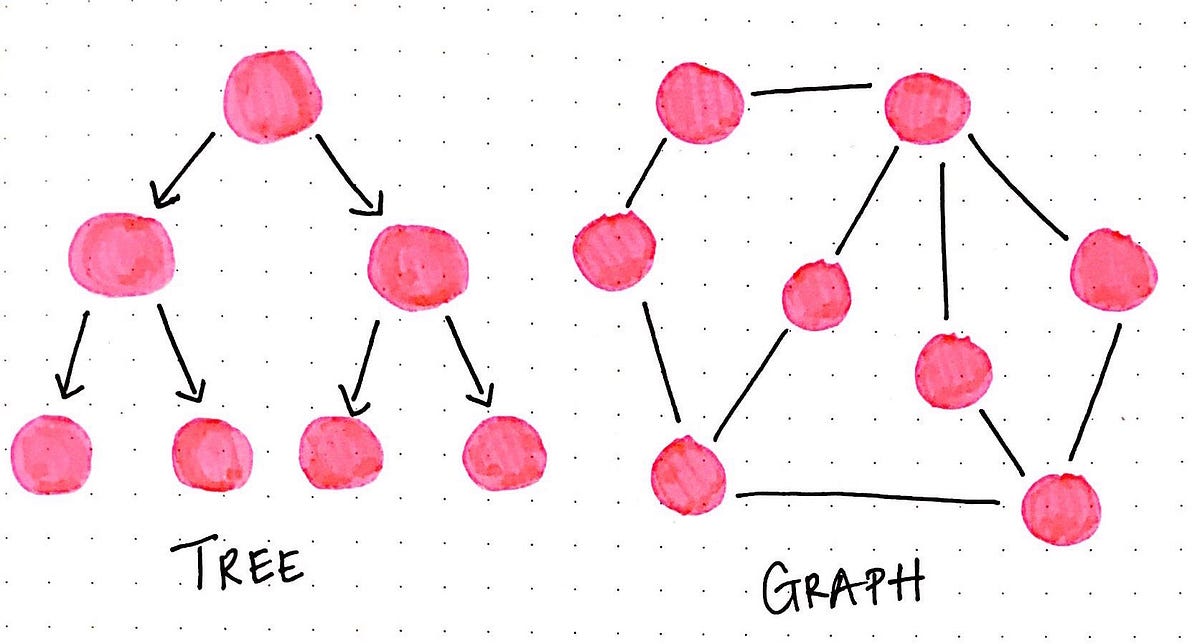
A Gentle Introduction To Graph Theory
So many things in the world would have never come into existence if there hadn’t been a problem that needed solving. This truth applies to…
Evolution as fitness landscape navigation: Concepts, Measures, and...
Fitness landscapes are mappings between genotypes, phenotypes, and fitness that shape evolution. In recent years, empirical work and theoretical models have greatly advanced our understanding of...

Subgraph Covers: An Information-Theoretic Approach to Motif Analysis in Networks
Many complex systems can be represented as networks of interacting elements. A new theoretical method identifies characteristics of the connectivity patterns of networks.
Brad's Thoughts on the Social Graph
I've been thinking a lot about the social graph for awhile now: aggregating the graph, decentralization, social network portability, etc.
Brad's Thoughts on the Social Graph
I've been thinking a lot about the social graph for awhile now: aggregating the graph, decentralization, social network portability, etc.
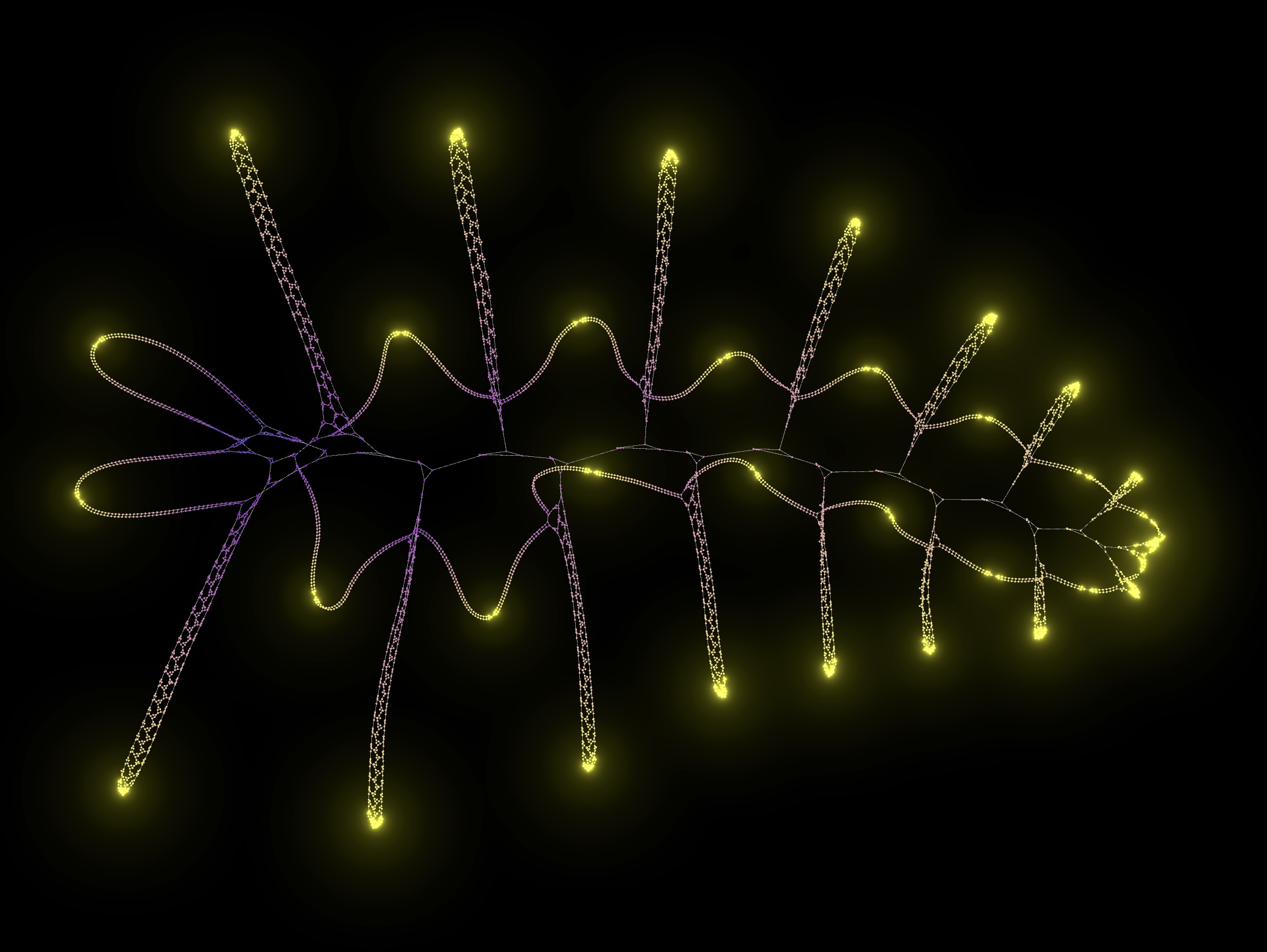
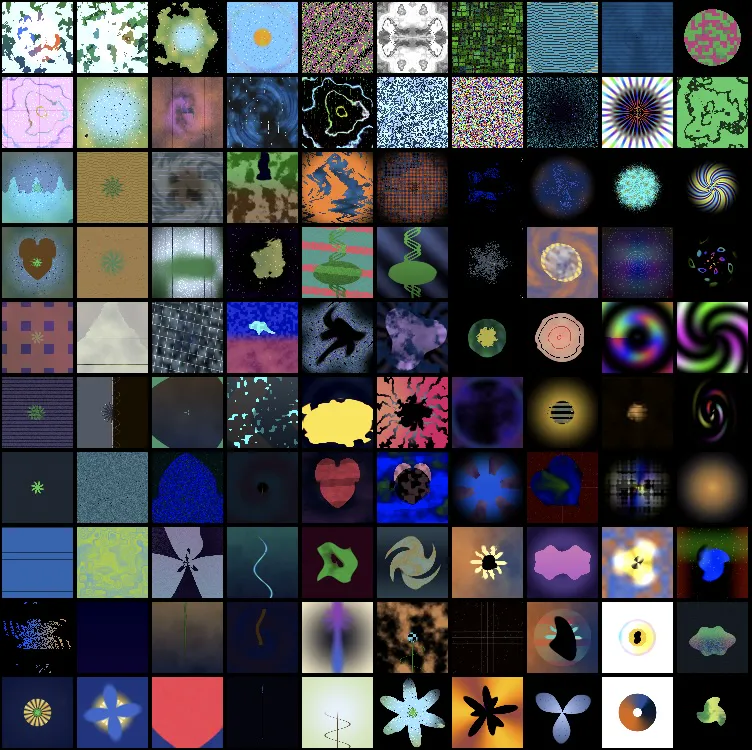
Growing Graphs
Experimental simulation of emergent complexity through graph-rewriting automata.
The emergence of consensus: a primer
The origin of population-scale coordination has puzzled philosophers and scientists for centuries. Recently, game theory, evolutionary approaches and complex systems science have provided quantitative insights on the mechanisms of social consensus. However, the literature is vast and widely scattered across fields, making it hard for the single researcher to navigate it. This short review aims to provide a compact overview of the main dimensions over which the debate has unfolded and to discuss some representative examples. It focuses on those situations in which consensus emerges ‘spontaneously’ in the absence of centralized institutions and covers topics that include the macroscopic consequences of the different microscopic rules of behavioural contagion, the role of social networks and the mechanisms that prevent the formation of a consensus or alter it after it has emerged. Special attention is devoted to the recent wave of experiments on the emergence of consensus in social systems.

Handbook of Evolutionary Psychology
‘This Handbook is refreshingly different. While including requisite chapters on subfields within evolutionary psychology, it also includes chapters on evolutionary psychology’s influence on other disciplines (e.g., Anthropology, Criminology), and retrospectives on six foundational studies. And perhaps most innovative, chapters are written by an international collection of up-and-coming scholars who give their take on the current and future state of evolutionary psychology.’ – David F. Bjorklund, Florida Atlantic University, USA

The Cost of Representing Higher-Order Dynamics on Graphs: A Theoretical Framework
Can graphs represent the dynamics of higher-order (multi-body) interactions, or are hypergraphs necessary? We decompose network dynamics into three components: the combinatorial structure (graph or hypergraph), per-edge coupling functions, and per-node aggregation functions. Within this framework, we prove that graphs can always reproduce the trajectories of any hypergraph dynamics by absorbing the coupling logic into the aggregation. This generalizes a recent result by Peixoto et al., who showed the same under the assumption of flat dynamics. However, the graph representation pays a price in parsimony: when the coupling and aggregation functions are polynomials of degree at most D, the graph aggregation requires Θ(k^D/D!) parameters relative to the hypergraph alternative, where k is the interaction size. Without symmetry, the comparison can reverse. The framework also clarifies two other recent contributions by Moutuou and by Lacasa, and identifies overlooked modeling degrees of freedom including partial interaction symmetries and the role of non-additive aggregation.
Tim Berners-Lee, Giant Global Graph (2007)
A new vision for the web where the users master their data and link them to everybody's benefit in a giant global graph.
The network science of collective intelligence
In the last few years, breakthroughs in computational and experimental techniques have produced several key discoveries in the science of networks and human collective intelligence. This review presents the latest scientific findings from two key fields of research: collective problem-solving and the wisdom of the crowd. I demonstrate the core theoretical tensions separating these research traditions and show how recent findings offer a new synthesis for understanding how network dynamics alter collective intelligence, both positively and negatively.

Evolutionary Political Economy: Content and Methods
In this paper we present the major theoretical and methodological pillars of evolutionary political economy. We proceed in four steps. Aesthetics: In chapter 1 the immediate appeal of evolutionary ...

