

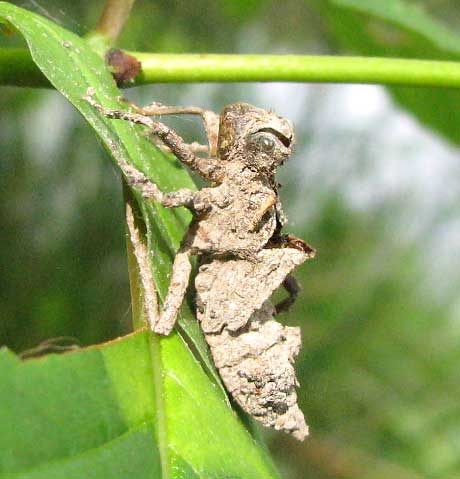
An exoskeleton is a skeleton that is on the exterior of an animal in the form of hardened integument, which both supports the body's shape and protects the internal organs, in contrast to an internal endoskeleton which is enclosed underneath other soft tissues. Some large, hard and non-flexible protective exoskeletons are known as shell or armour.
Ecdysis
Ecdysis is the moulting of the cuticle in many invertebrates of the clade Ecdysozoa. Since the cuticle of these animals typically forms a largely inelastic exoskeleton, it is shed during growth and a new, larger covering is formed. The remnants of the old, empty exoskeleton are called exuviae.

Arthropod exoskeleton
Arthropods are covered with a tough, resilient integument, cuticle or exoskeleton of chitin. Generally the exoskeleton will have thickened areas in which the chitin is reinforced or stiffened by materials such as minerals or hardened proteins. This happens in parts of the body where there is a need for rigidity or elasticity. Typically the mineral crystals, mainly calcium carbonate, are deposited among the chitin and protein molecules in a process called biomineralization. The crystals and fibres interpenetrate and reinforce each other, the minerals supplying the hardness and resistance to compression, while the chitin supplies the tensile strength. Biomineralization occurs mainly in crustaceans. In insects and arachnids, the main reinforcing materials are various proteins hardened by linking the fibres in processes called sclerotisation and the hardened proteins are called sclerotin. The dorsal tergum, ventral sternum, and the lateral pleura form the hardened plates or sclerites of a typical body segment.
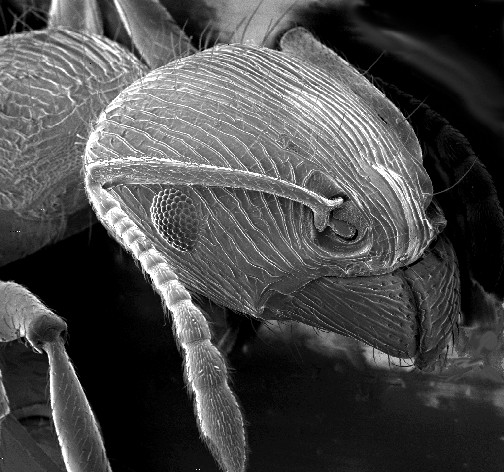
Ultimate Walking Skeleton Cowboy
Ultimate Walking Skeleton Cowboy: For Halloween, I wanted to make something that looked impossible: a seven-foot skeleton walking around on its own, with an apparently hollow rib cage and nobody inside. The secret is that I am directly behind it, hidden between two layers of a black…
Instar
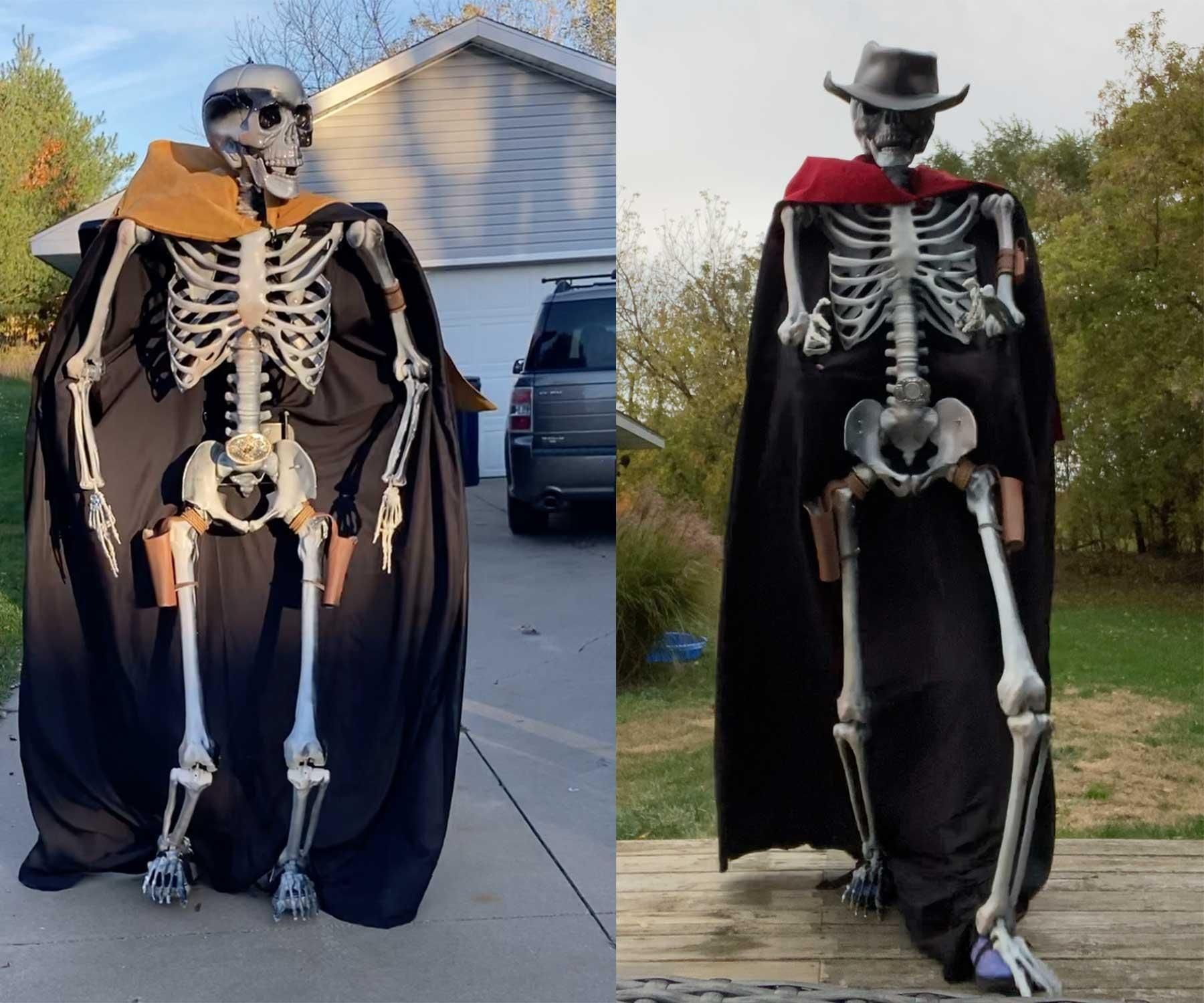
An instar is a developmental stage of arthropods, such as insects, which occurs between each moult (ecdysis) until sexual maturity is reached. Arthropods must shed the exoskeleton in order to grow or assume a new form. Differences between instars can often be seen in altered body proportions, colors, patterns, changes in the number of body segments or head width.

Integrated Bone Tissue Physiology: Anatomy and Physiology
No title
You're looking at an unpowered "ankle exoskeleton" that researcher report can improve walking efficiency by 7 percent. Carnegie Mellon engineers Gregory

Spiracle (arthropods)
A spiracle or stigma is the opening in the exoskeletons of insects, myriapods, velvet worms and many arachnids that admits air into the respiratory system.

Pluralistic: Technocarcinization (01 Jul 2026) – Pluralistic: Daily links from Cory Doctorow
"Carcinization" is a curious biological phenomenon: given enough time, across many environments, many species will evolve into crabs. The body-type of a crab, with its low center of gravity, sideways gait (useful for evading predators), ease of concealment and protected organs is suitable to many different environments:
es - extensible shell
Es is an extensible shell. The language was derived from the Plan 9 shell, rc, and was influenced by functional programming languages, such as Scheme, and the Tcl embeddable programming language. This implementation is derived from Byron Rakitzis's implementation of rc, and was written by Paul Haahr & Byron Rakitzis.
Infisical/infisical
Infisical is the open-source platform for securing secrets, certificates, access, and AI Agents.
Earliest octopuses were giant top predators in Cretaceous oceans
Top predators drive changes in ecosystem structure. For the last ~370 million years, large-sized vertebrates have dominated the apex of the marine food chain, while invertebrates have served as smaller prey. Here we describe invertebrate top predators ...

How Exercise Shapes You, Far Beyond the Gym
The biggest benefit might be that it teaches people to be comfortable with being uncomfortable.

Osteoblast Differentiation at a Glance
ABSTRACT Ossification is a tightly regulated process, performed by specialized cells called osteoblasts. Dysregulation of this process may cause inade...
8 Ways Doing Planks Daily Transform Your Body - LifeHack
Bodyweight exercises are gaining ground in the fitness world due to the practicality and simplicity of getting in shape using your own body weight. If

Alt text: Black-and-white illustrations of a bat, a peacock, an elephant, and some kind of a monkey with their skeletons on top of faint silhouettes of their bodies. The bat and peacock also have studies of their skulls on the page

The Public Domain Review
From Comparative Osteology (1821–38) with illustrations by the Italian-born German naturalist Edouard Joseph d’Alton, an artist and art history professor whose students included a young Karl Marx. More of his wonderful images here: publicdomainreview.org/collection/comparative-osteol…
