

Formulaic language (previously known as automatic speech or embolalia) is a linguistic term for verbal expressions that are fixed in form, often non-literal in meaning, with attitudinal nuances, and closely related to communicative-pragmatic context.[1]
The Lambek Calculus
There is a noticeable revival of categorial grammar these days, as a vehicle for linguistic description. The systems used differ somewhat from the original calculus of Ajdukiewicz and Bar-Hillel, however. In particular, there is a component of rules for ‘type change’ of expressions, making for greater flexibility and elegance. One fundamental system of this kind is the so-called ‘Lambek Calculus’, whose type-change rules show a close analogy with the inference rules of constructive propositional logic. In this paper, we present one calculus of this kind, and survey its theoretical properties as a device in linguistic semantics. Our two main new contributions are a new and complete semantics for this calculus, as well as a modest study of its language-accepting capacity. In this way, we hope to provide a better understanding of the background theory of flexible categorial grammar, in tandem with its descriptive uses.

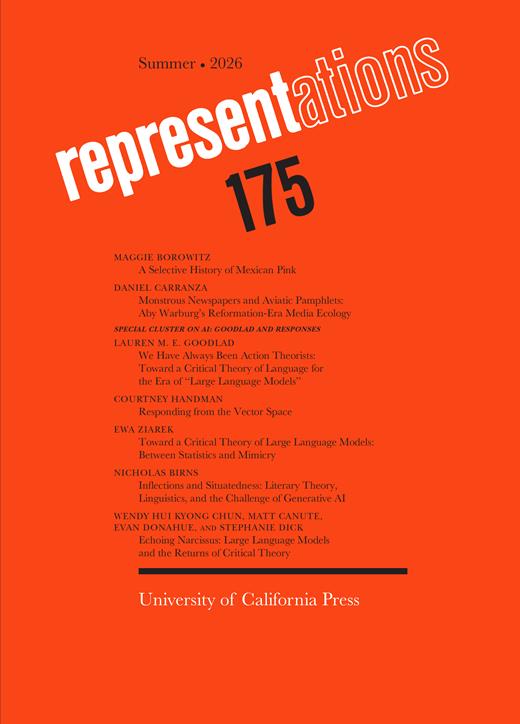
We Have Always Been Action TheoristsToward a Critical Theory of Language for the Era of “Large Language Models”
Scholars of literature and culture understandably place themselves among the world’s premiere experts on matters of language. But they also know that fields like linguistics and communication have their own ways of studying how people express themselves through speech and written media. A key difference concerns the theories and methodologies...
Maite Taboada
Maite Taboada. Professor. Department of Linguistics, Simon Fraser University. Research: discourse analysis, computational linguistics
Navier-Stokes lost in translation: Why Lean verification of AI autoformalisation does not guarantee correct natural language proofs
Autoformalisation is increasingly used to verify mathematical texts, including those generated by AI, as in OpenAI's announced proof of blow-up of solutions to the Navier-Stokes equations. In this process, an AI system translates the text from a natural language (NL) into a formal language such as Lean. Once this translation is done, the argument expressed in the formal language can easily be mechanically verified. The purpose of this article is to demonstrate why this process may offer no confidence in the original NL argument, owing to the various difficulties in performing the translation semantically faithfully. In particular, we highlight that the problem of resolving ambiguities in mathematical NL text, which is necessary in order to provide semantically faithful translation, is arbitrarily high up in the Solvability Complexity Index (SCI) hierarchy/arithmetical hierarchy (the SCI $= \infty$). Hence, informally, providing semantically faithful AI autoformalisation is harder than any computational problem including the Halting problem (which has SCI $= 1$). To demonstrate the effect of this result we provide several examples of AI mistranslations of NL statements and proofs into Lean in practice, resulting in mismatches between NL proofs and their Lean `verifications'. These include OpenAI's announced Navier-Stokes proof. In particular, we show that the formalised Lean proof does not correspond to the NL proof of blow-up of solutions to the Navier-Stokes equations.

Abstract syntax and variable binding
We develop a theory of abstract syntax with variable binding. To every binding signature we associate a category of models consisting of variable sets endowed with compatible algebra and substitution structures. The syntax generated by the signature is the initial model. This gives a notion of initial algebra semantics encompassing the traditional one; besides compositionality, it automatically verifies the semantic substitution lemma.
Tokenization: A Survey for Modern NLP
While modern language models take raw text as their input and produce raw text as output, they do not operate over text directly. Hidden in the very first step of language model pipelines is...
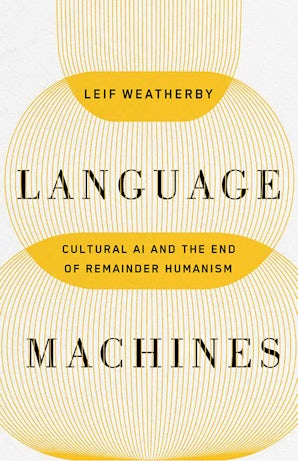
Language Machines
How generative AI systems capture a core function of language Looking at the emergence of generative AI, Language Machines presents a new theory of meaning i...
Syntax and semantics of dependent types
In this chapter we fix a particular syntax for a dependently typed calculus and define an abstract notion of model as well as a general interpretation function mapping syntactical objects to entities in a model. This interpretation function is shown to be sound with respect to the syntax.

Operadic consistency: a label-free signal for compositional...
Detecting LLM reasoning failures at inference time without ground-truth labels has motivated a wide range of confidence baselines, including self-consistency, semantic entropy, and P(True), built...
The language of generalization.
Visual language
A visual language is a system of communication using visual elements. Speech as a means of communication cannot strictly be separated from the whole of human communicative activity which includes the visual and the term 'language' in relation to vision is an extension of its use to describe the perception, comprehension and production of visible signs.

Understanding Understanding: A Pragmatic Framework Motivated by...
Motivated by the rapid ascent of Large Language Models (LLMs) and debates about the extent to which they possess human-level qualities, we propose a framework for testing whether any agent (be it...
Computation and its Connotations
A Review of Language Machines by Leif Weatherby
Thoughts on thinking | Hacker News
The process of forming expressions just is the process of conceptual and rational articulation (as per Brandom). Those who misunderstand this -- believing that concepts are ready made, then encoded and decoded from permutations of tokens, or, worse, who have no room to think of reasoning or conceptualization at all -- they will be automated away.
Jan Kulveit on Twitter / X
To take the most egregious example, in the tweet you say"No. Agents lines of code. They do not feel emotions, assume things, think things, want things, or figure things out." [frame is asking people to not use such language]This is wrong on many levels.The meta-problem is…— Jan Kulveit (@jankulveit) September 1, 2026
