

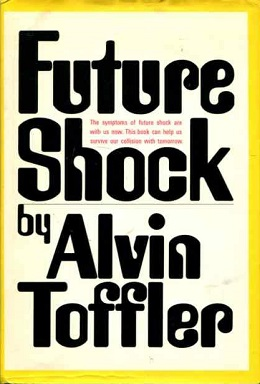
Future Shock is a 1970 book by American futurist Alvin Toffler, written together with his wife Adelaide Farrell, in which the authors define the term "future shock" as a certain psychological state of individuals and entire societies, and a personal perception of "too much change in too short a period of time". The book, which became an international bestseller, has been widely translated.
Neuralink and the Brain's Magical Future — Wait But Why
I knew the future would be shocking but this is a whole other level.

the earthquake room
In the near future, Oakland is haunted by natural disaster and political collapse. When k realizes that she has infected her girlfriend, bea, with a disease, she loses herself in a masochistic quest for atonement, leaving bea to contend with her fears about an increasingly precarious world by herself. Literary and adventurous, lyrical yet anchored, Davey Davis' work explores the meanings of responsibility, romantic love, and queer resistance in a late-capitalist hellscape where futurity is always in question. 204 pages, perfect bound softcover.---------------------------------------------------"A haunting, spare story set in an Oakland besieged by natural disaster, Davis’s novel explores queer intimacy and resistance in a world where the future is always in question.... Often mentioned when trans mascs of a certain type discuss how they figured out they were trans."--Torrey Peters"Davis is an observant and meticulous writer [...] Their writing is both surgical and mystical"—Alana Mohamed, Village Voice"Davis’s ability to trace the reverberations of psychic damage through to the body, and into its encounters with other bodies, is especially remarkable."—Laura Thorne, The Rumpus"A beautiful, necessary book about queer love & disaster." —Lorelei Lee"Intimate, taut, shimmery, and unflinching, the earthquake room crosses two cities, one bay, and a kind of queer love that feels like it's about to be lost forever. This is the very physical story of a nearby disaster, an urgent reminder that the (almost) end of the world doesn't mean what we feel for one another gets squared up—but rather that wanting to feel at all is how we survive.— Melissa Gira Grant, Playing the Whore"Davey Davis’ writing is so intimate it’s uncomfortable, so certain that it’s incredibly anxious. the earthquake room is chock-full of satisfying paradoxes and nuanced complexities." —Amber Dawn, author of How Poetry Saved My Life and Sub Rosa"the earthquake room is a beautifully written story about love, pain, fear, and friendship set against an apocalyptic moment that looks very much like our own. It's a romance at once dystopian and utopian, wrought with a miniaturist's skill and precision."—Lydia Kiesling, author of The Golden State"Immutable dread permeates the novel, which tells the story of a disintegrating queer relationship against the backdrop of a very-near-future Oakland in which the threat of devastating natural disaster looms. Yet amidst the pre-apocalypse, life—aka dyke drama—must go on. The novel’s unfortunate prescience struck me this week, as I hid in my apartment from the Most Unhealthy Air Quality in the World, perusing an Instagram feed that alternated between respiratory mask selfies and personal ads (“NON-TOXIC MASC 4 RADICAL TENDERNESS”). I couldn’t help feeling as though Davis’s vision of the very-near-future had in fact already arrived."—Tara Marsden, The Millions---------------------------------------------------Davey Davis writes about culture, sexuality, technology, and genderqueer embodiment. You can find them on Twitter at @k8bushofficial. ---------------------------------------------------INTERNATIONAL SHIPPING is painfully expensive! We know and we are sorry. We try to only charge you what it costs us. We are not able to ship to the UK or EU countries at this time due to changed VAT regulations.

The Future According to Stanisław Lem by Ezra Glinter
September 12, 2014 – In his 1971 novella The Futurological Congress, the Polish science-fiction writer Stanisław Lem describes a group of futurologists who have gathered at

The Age of Extremes
The Age of Extremes: The Short Twentieth Century, 1914–1991 is a book by Eric Hobsbawm, published in 1994. In it, Hobsbawm comments on what he sees as the disastrous failures of state socialism, capitalism, and nationalism; he offers an equally sceptical take on the progress of the arts and changes in society in the latter half of the twentieth century.

A heartbreaking work of staggering genius
A book that redefines both family and narrative for the…

After the Deluge: What Future for Climate Fiction? - Public Books
Even in a world remade, the past defines the present.

The Future of Everything is Lies, I Guess
This is a long article, so I've broken it up into a series of posts, listed below. You can also read the full work as a PDF or EPUB.
How to Future
A good futurist focuses on the 3 time phases: past, present, future.
The Future of Everything is Lies, I Guess: Where Do We Go From Here?
This is a long article, so I've broken it up into a series of posts, listed below. You can also read the full work as a PDF or EPUB.
What comes next with the energy shock?
The disruption to oil supply, oil prices and the world economy has been surprisingly manageable so far

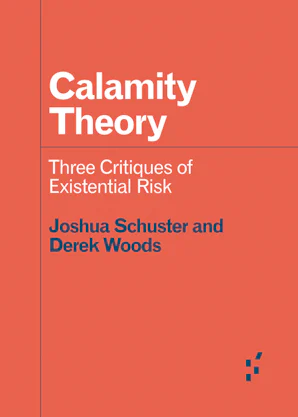
Calamity Theory
What are the implications of how we talk about apocalypse? A new philosophical field has emerged. “Existential risk” studies any real or hypothetical hum...
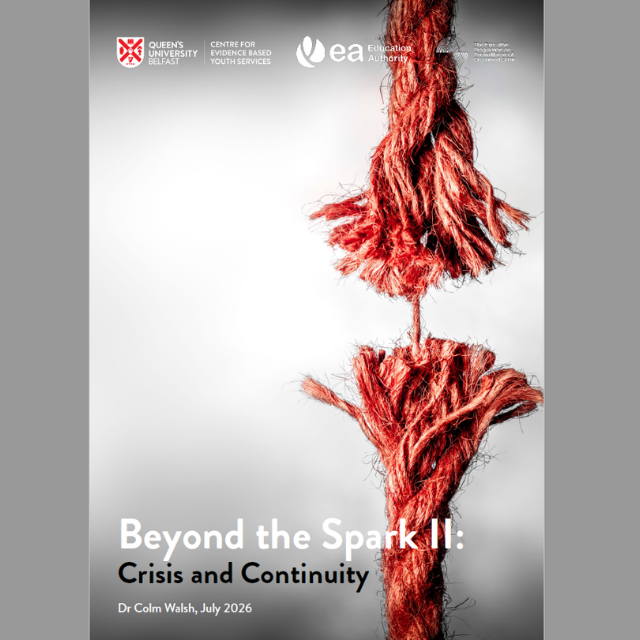
Beyond the Spark II: Crisis and Continuity - Ending The Harm
Beyond the Spark II: Crisis and Continuity is a new report by Dr Colm Walsh (Queen’s University Belfast), examining the conditions that contributed to the Ballymena riots of June 2025 and the lessons for preventing future episodes of collective violence. Building on the original Beyond the Spark research, the study explores the experiences of young people […]
To Make Sense of the Present, Brains May Predict the Future | Quanta Magazine
A controversial theory suggests that perception, motor control, memory and other brain functions all depend on comparisons between ongoing actual experiences and the brain’s modeled expectations.

The present no longer lasts long enough to be a setting. All fiction is either science fiction or historical fiction. I've been saying this for long enough that even this statement itself is no longer true. The future doesn't last long enough either. All science fiction is now retrofuturism.
