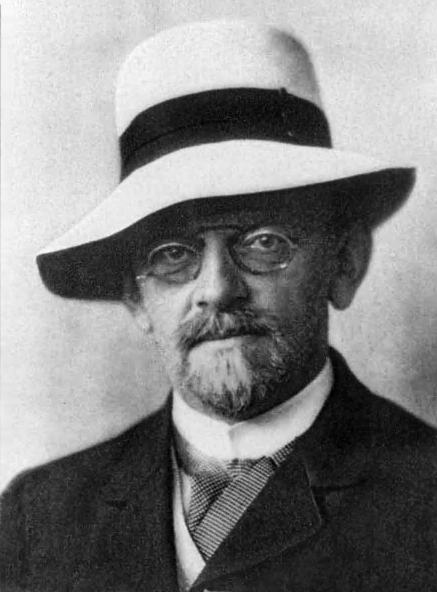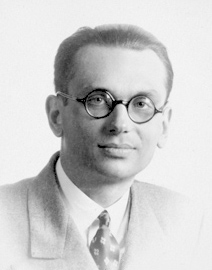
Gödel's incompleteness theorems are two theorems of mathematical logic that are concerned with the limits of provability in formal axiomatic theories. These results, published by Kurt Gödel in 1931, are important both in mathematical logic and in philosophy of mathematics. The theorems are interpreted as showing that Hilbert's program to find a complete and consistent set of axioms for all mathematics is impossible.
Cological Words
Formalizing 100 Theorems
There is a "top 100" of mathematical theorems on the web, which is a rather arbitrary list (and most of the theorems seem rather elementary), but still is nice to look at. On the current page I keep track of which theorems from this list have been formalized. Currently the fraction that already has been formalized seems to be
Good book for learning and practising axiomatic logic
I want to learn axiomatic (Hilbert style ) logic. not just a book that says that it exist and is an good way to proof theorems. What is a good book to learn and practice this method? would like: ...

Axioms and Computation
We have seen that the version of the Calculus of Constructions that has been implemented in Lean includes dependent function types, inductive types, and a hierarchy of universes that starts with an impredicative, proof-irrelevant Prop at the bottom. In this chapter, we consider ways of extending the CIC with additional axioms and rules. Extending a foundational system in such a way is often convenient; it can make it possible to prove more theorems, as well as make it easier to prove theorems that could have been proved otherwise. But there can be negative consequences of adding additional axioms, consequences which may go beyond concerns about their correctness. In particular, the use of axioms bears on the computational content of definitions and theorems, in ways we will explore here.
What Theory is Not, Theorizing Is
Sets for Mathematics in nLab
deduction system, natural deduction, sequent calculus, lambda-calculus, judgment
Decidability of Quasi-Dense Modal Logics
There are comments on PubPeer for publication: Decidability of Quasi-Dense Modal Logics (2024)
Homotopy Type Theory: Univalent Foundations of Mathematics
Homotopy type theory is a new branch of mathematics, based on a recently discovered connection between homotopy theory and type theory, which brings new ideas into the very foundation of mathematics. On the one hand, Voevodsky's subtle and beautiful "univalence axiom" implies that isomorphic structures can be identified. On the other hand, "higher inductive types" provide direct, logical descriptions of some of the basic spaces and constructions of homotopy theory. Both are impossible to capture directly in classical set-theoretic foundations, but when combined in homotopy type theory, they permit an entirely new kind of "logic of homotopy types". This suggests a new conception of foundations of mathematics, with intrinsic homotopical content, an "invariant" conception of the objects of mathematics -- and convenient machine implementations, which can serve as a practical aid to the working mathematician. This book is intended as a first systematic exposition of the basics of the resulting "Univalent Foundations" program, and a collection of examples of this new style of reasoning -- but without requiring the reader to know or learn any formal logic, or to use any computer proof assistant.

Theory Beyond Theorems and Proofs: A Guest Post
Scott’s foreword: I’m extremely grateful to my brilliant colleagues, Pravesh Kothari, Raghu Meka, and Prasad Raghavendra, for sharing the guest post below about how theoretical computer…

The Genius Who Invented Reverse Mathematics
A formulation of the simple theory of types
The purpose of the present paper is to give a formulation of the simple theory of types which incorporates certain features of the calculus of λ-conversion. A complete incorporation of the calculus of λ-conversion into the theory of types is impossible if we require that λx and juxtaposition shall retain their respective meanings as an abstraction operator and as denoting the application of function to argument. But the present partial incorporation has certain advantages from the point of view of type theory and is offered as being of interest on this basis (whatever may be thought of the finally satisfactory character of the theory of types as a foundation for logic and mathematics).For features of the formulation which are not immediately connected with the incorporation of λ-conversion, we are heavily indebted to Whitehead and Russell, Hilbert and Ackermann, Hilbert and Bernays, and to forerunners of these, as the reader familiar with the works in question will recognize.The class of type symbols is described by the rules that ı and o are each type symbols and that if α and β are type symbols then (αβ) is a type symbol: it is the least class of symbols which contains the symbols ı and o and is closed under the operation of forming the symbol (αβ) from the symbols α and β.
Introduction to Higher-Order Categorical Logic (Cambridge Studies in Advanced Mathematics)
Introduction to higher order catagorical logic by J. Lambek, March 25, 1988, Cambridge University Press edition, Paperback in English

Formalizing the Real Numbers in Homotopy Type Theory with Cubical Agda
Real numbers in constructive mathematics have always seemed to require compromises of one form or another. Classical proofs of Cauchy completeness require countable choice, Bishop's setoid construction introduces persistent bookkeeping overhead on every definition and theorem, and Dedekind cuts force cumbersome universe-level tracking in predicative type theory. The Homotopy Type Theory (HoTT) book presents an alternative construction of the Cauchy real numbers as a higher inductive-inductive type family, avoiding all three compromises. We formalize the HoTT book reals in Cubical Agda, a proof assistant whose native support for higher inductive types allows the construction to be expressed directly. The code type-checks without postulates or holes, providing a foundation for further machine-assisted work in constructive analysis.
Iconic Math
As an introduction to a forthcoming book (late 2025), this page links to three narrated videos about unary boundary logic:
Hilbert's problems
Hilbert's problems are 23 problems in mathematics published by German mathematician David Hilbert in 1900. They were all unsolved at the time, and several proved to be very influential for 20th-century mathematics. Hilbert presented ten of the problems at the Paris conference of the International Congress of Mathematicians, speaking on August 8 at the Sorbonne. The complete list of 23 problems was published later, and translated into English in 1902 by Mary Frances Winston Newson in the Bulletin of the American Mathematical Society. Earlier publications appeared in Archiv der Mathematik und Physik.