


A galaxy is a physical system of stars, planetary systems, stellar remnants, substellar objects, interstellar gas, dust, and dark matter bound together by gravity. The word is derived from the Greek galaxias (γαλαξίας), meaning 'milky', a reference to the Milky Way galaxy that contains the Solar System. Galaxies, averaging an estimated 100 million stars, range in size from dwarfs with less than a thousand stars to the largest galaxies known—supergiants with one hundred trillion stars, each orbiting its galaxy's center of mass. Most of the mass in a typical galaxy is in the form of dark matter, with only a few percent of that mass visible in the form of stars and nebulae. Supermassive black holes are a common feature at the centers of galaxies.
Dark matter
In astronomy and cosmology, dark matter is an invisible and hypothetical form of matter that does not interact with light or other electromagnetic radiation. Dark matter is implied by gravitational effects that cannot be explained by general relativity unless more matter is present than can be observed. Such effects occur in the context of formation and evolution of galaxies, gravitational lensing, the observable universe's current structure, mass position in galactic collisions, the motion of galaxies within galaxy clusters, and cosmic microwave background anisotropies. Dark matter is thought to serve as gravitational scaffolding for cosmic structures. After the Big Bang, dark matter clumped into blobs along narrow filaments with superclusters of galaxies forming a cosmic web at scales on which entire galaxies appear like tiny particles.

Star
A star is a luminous spheroid of plasma held together by self-gravity. The nearest star to Earth is the Sun. Many other stars are visible to the naked eye at night; their immense distances from Earth make them appear as fixed points of light. The most prominent stars have been categorised into constellations and asterisms, and many of the brightest stars have proper names. Astronomers have assembled star catalogues that identify the known stars and provide standardized stellar designations. The observable universe contains an estimated 1022 to 1024 stars. Only about 4,000 of these stars are visible to the naked eye—all within the Milky Way galaxy.

Compact object
In astronomy, the term compact object (or compact star) refers collectively to white dwarfs, neutron stars, and black holes. It could also include exotic stars if such hypothetical, dense bodies are confirmed to exist. All compact objects have a high mass relative to their radius, giving them a very high density compared to ordinary atomic matter. The term is used as a generalization for cases where the exact nature of a significant gravitational effect isolated to a small radius is not known.
Cosmic dust
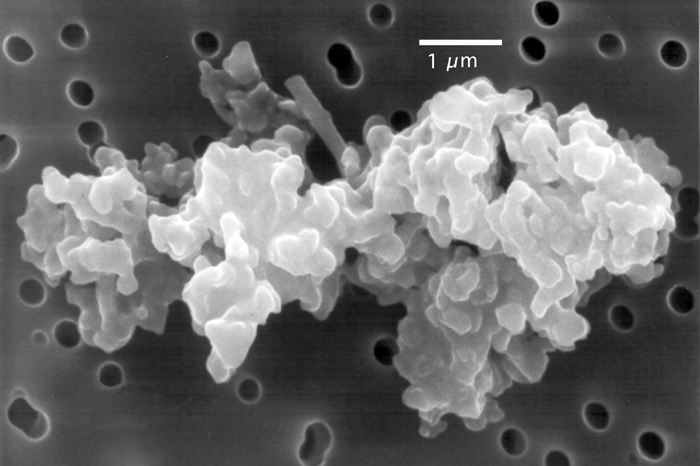
Cosmic dust – also called extraterrestrial dust, space dust, or star dust – is dust that occurs in outer space or has fallen onto Earth. Most cosmic dust particles measure between a few molecules and 0.1 mm (100 μm), such as micrometeoroids and meteoroids. Cosmic dust can be further distinguished by its astronomical location: intergalactic dust, interstellar dust, interplanetary dust, and circumplanetary dust. There are several methods to obtain space dust measurement.
Interstellar medium
The interstellar medium (ISM) is the matter and radiation that exists in the space between the star systems in a galaxy. This matter includes gas in ionic, atomic, and molecular form, as well as dust and cosmic rays. It fills interstellar space and blends smoothly into the surrounding intergalactic medium. The energy that occupies the same volume, in the form of electromagnetic radiation, is the interstellar radiation field. Although the density of atoms in the ISM is usually far below that in the best laboratory vacuums, the mean free path between collisions is short compared to typical interstellar lengths, so on these scales the ISM behaves as a gas, responding to electromagnetic radiation, and not as a collection of non-interacting particles.

Cosmic Voids and Void Lensing in the Dark Energy Survey Science...
Galaxies and their dark matter halos populate a complicated filamentary network around large, nearly empty regions known as cosmic voids. Cosmic voids are usually identified in spectroscopic...

Solar System
The Solar System is the gravitationally bound system of the Sun and the masses that orbit it, most prominently its eight planets, of which Earth is one. The system formed about 4.6 billion years ago when a dense region of a molecular cloud collapsed, creating the Sun and a protoplanetary disc from which the orbiting bodies assembled.

Cosmological constraints from the BOSS DR12 void size function
We present the first cosmological constraints derived from the analysis of the void size function. This work relies on the final BOSS DR12 data set, a large spectroscopic galaxy catalog, ideal for...
Dark matter as a Ricci soliton
In this paper we consider clumped baryonic matter as a spherically symmetric barotropic fluid associated with a compact four-dimensional Einstein manifold with a four-radius that is determined by the fluid density. We further investigate the properties of these matter generated manifolds and show that because of their homogeneity and isotropy they exhibit FLRW metric properties and expand with cosmic time. At low densities such as those encountered in star clusters, galaxies and galactic clusters, these manifolds are large and show the same properties that are currently attributed to dark matter.
Neutrino mass constraint from an Implicit Likelihood Analysis of BOSS voids
Cosmic voids identified in the spatial distribution of galaxies provide complementary information to two-point statistics. In particular, constraints on the neutrino mass sum, $\sum m_ν$,...
The nature of voids: I. Watershed void finders and their connection with theoretical models
The statistical study of voids in the matter distribution promises to be an important tool for precision cosmology, but there are known discrepancies between theoretical models of voids and the voids actually found in large simulations or galaxy surveys. The empirical properties of observed voids are also not well understood. In this paper, we study voids in an N-body simulation, using the ZOBOV watershed algorithm. As in other studies, we use sets of subsampled dark matter particles as tracers to identify voids, but we use the full-resolution simulation output to measure dark matter densities at the identified locations. Voids span a wide range of sizes and densities, but there is a clear trend towards larger voids containing deeper density minima, a trend which is expected for all watershed void finders. We also find that the tracer density at void locations is usually smaller than the true density, and that this relationship depends on the sampling density of tracers. We show that fits given in the literature fail to match the observed density profiles of voids. The average enclosed density contrast within watershed voids varies widely with both the size of the void and the minimum density within it, but is always far from the shell crossing threshold expected from theoretical models. Voids with deeper density minima also show much broader density profiles. We discuss the implications of these results for the excursion set approach to modelling such voids.
Games Demystified: Super Mario Galaxy
Want to see how Mario Galaxy created its unique gravity-based physics effects for the in-game planets? Developer Alessi analyzes and reproduces the same concepts with a playable game prototype and source code.
Black hole
A black hole is an astronomical body so compact that its gravity prevents anything, including light, from escaping. Albert Einstein's theory of general relativity, which describes gravitation as the curvature of spacetime, predicts that any sufficiently compact mass will form a black hole. The boundary of no escape is called the event horizon. In general relativity, crossing a black hole's event horizon traps an object inside but produces no locally detectable change. General relativity also predicts that every black hole should have a central singularity, where the curvature of spacetime is infinite.

Galaxy class | Memory Alpha | Fandom
The Galaxy-class was a Starfleet heavy capital ship class first introduced in the mid 2360s. It was one of the largest and most powerful Federation starship classes of its time, with many serving...

The era of precision cosmology with voids
Cosmic voids, the large underdense regions of our Universe, have emerged over the past decade as powerful cosmological laboratories: their simple dynamics, sensitivity to local gravitational...