


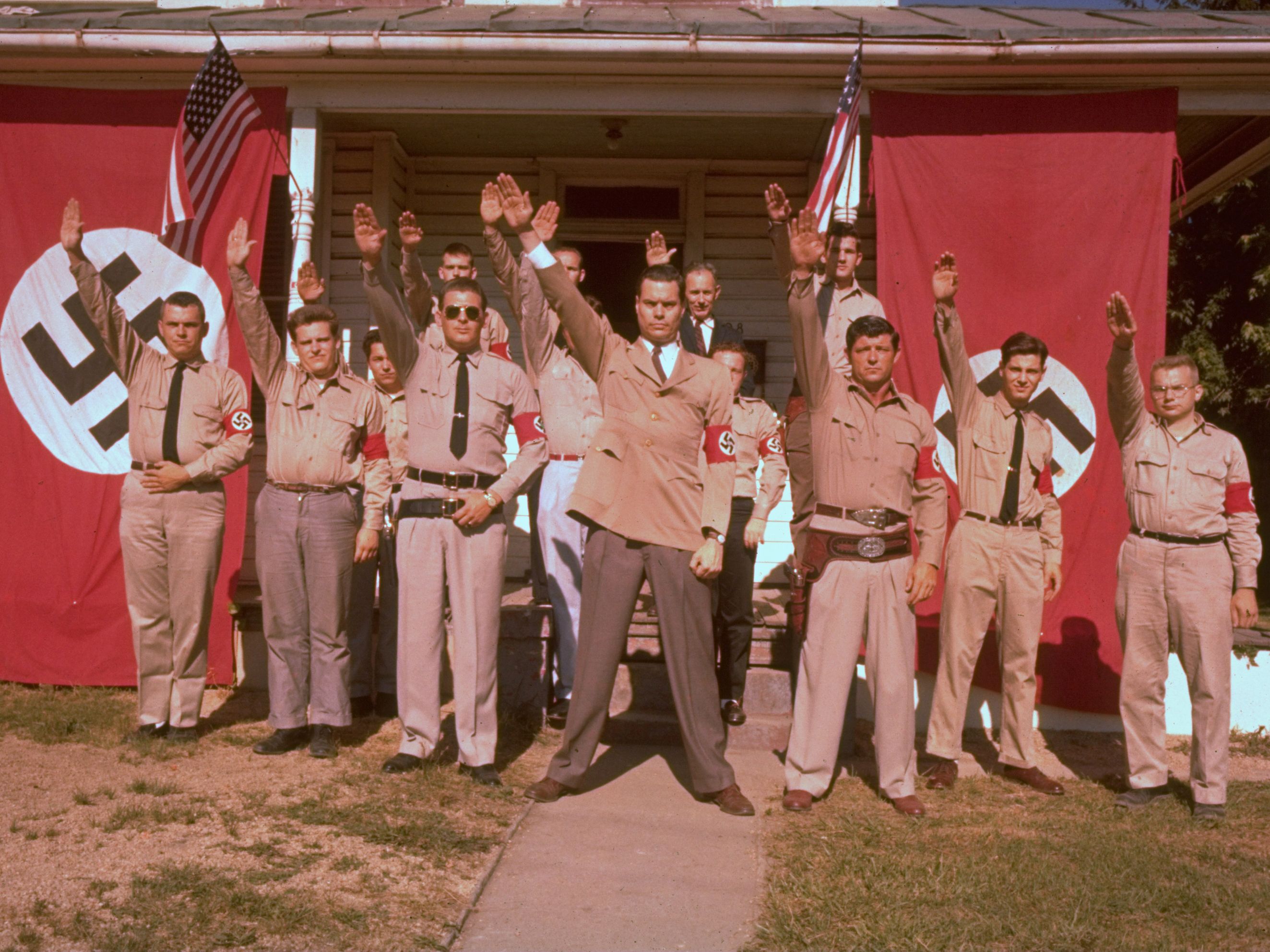
George Lincoln Rockwell was an American neo-Nazi activist and politician who founded the American Nazi Party (ANP) and became one of the most notorious white supremacists in the United States until his assassination in 1967. While Rockwell remains obscure to the American public and never achieved political power, he remains an influence on far-right extremism.
George Lincoln Rockwell and Members of the American Nazi Party Attend a Nation of Islam Summit, 1961 - Rare Historical Photos
George Lincoln Rockwell, flanked by members of the American Nazi Party, listening to Malcolm X's speech at Black Muslims meeting.
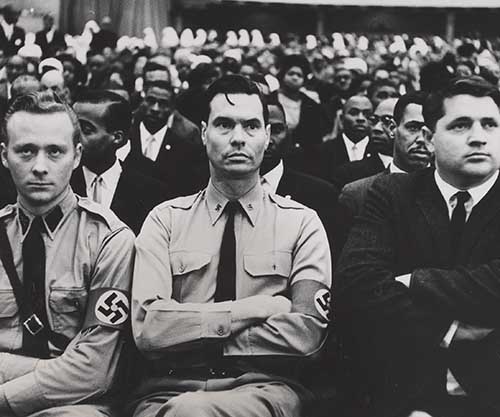
Malcolm X Thanks George Lincoln Rockwell for $20 Donation at Washington, D.C. Rally (June 25, 1961)
Isaac Asimov Laments the “Cult of Ignorance” in the United States (1980)
Rochester Institute of Technology, via Wikimedia Commons In 1980, scientist and writer Isaac Asimov argued in an essay that 'there is a cult of ignorance in the United States, and there always has been.' That year, the Republican Party stood at the dawn of the Reagan Revolution, which initiated a decades-long conservative groundswell.
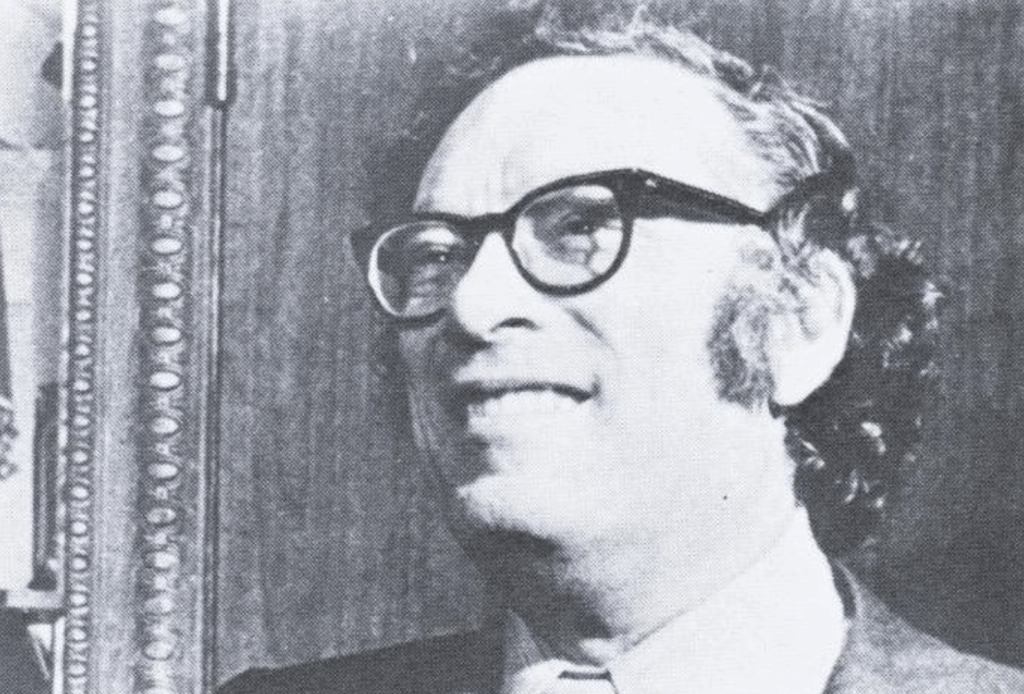
Art Spiegelman: ‘The US needs a counter-revolution’
More than four decades after his Holocaust story Maus transformed the graphic novel genre, Art Spiegelman discusses Trump, the shadow of 9/11 and the rise of fascism in America
The Authoritarian Personality
This hugely influential study on the psychology of authoritarianism was written in answer to Hitler’s Germany—and now rings more relevant than ever as fascism and anti-Semitism sweep across America.What makes a fascist? Are there character traits that make someone more likely to vote for the far right? The Authoritarian Personality is not only one of the most significant works of social psychology ever written, it also marks a milestone in the development of Adorno’s thought, showing him grappling with the problem of fascism and the reasons for Europe’s turn to reaction. Over half a century later, and with the rise of right-wing populism and the reemergence of the far-right in recent years, this hugely influential study remains as insightful and relevant as ever.This new edition includes an introduction by Frankfurt School scholar Peter E. Gordon and contains the first-ever publication of Adorno’s subsequent critical notes on the project.“Adorno and his colleagues could easily have been describing Alex Jones’s paranoid InfoWars rants or the racist views expressed by many Trump supporters.” —New York Times
Tucker Carlson
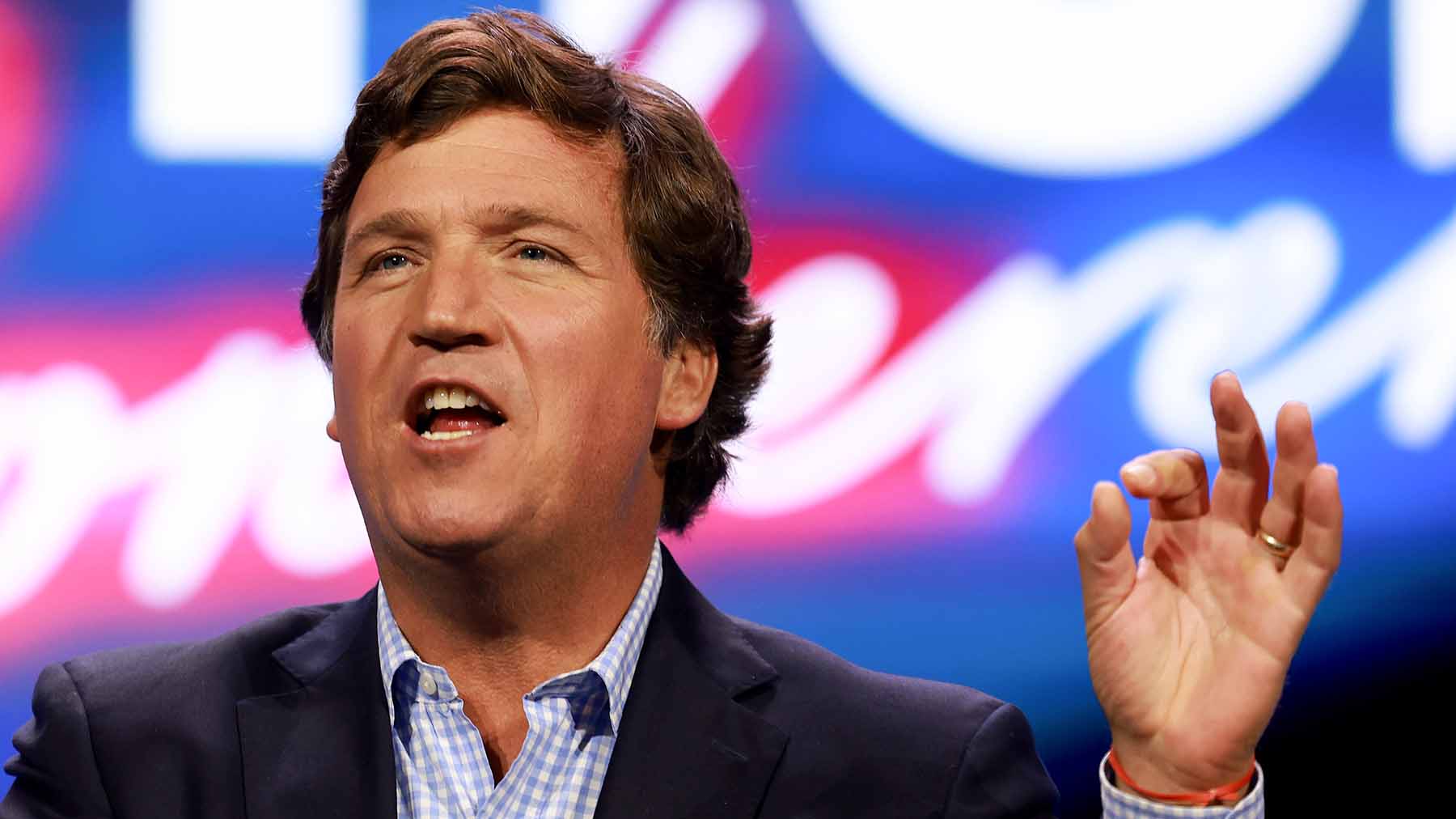
Tucker Carlson is a veteran television personality who emerged in 2016 as one of the most influential figures of the authoritarian, anti-democracy, right-wing movement that rose to prominence around the political career of former President Donald J. Trump. Carlson’s propaganda, which obsessively portrays white men as being victims of a corrupt, feminist, multicultural system, often mirrors the talking points found in fringe internet spaces where extremists congregate. He injects these talking points into his commentary on current events, giving extremists both an audience and a TV-ready polish that would be otherwise difficult to obtain. Carlson is undoubtedly the most listened-to pundit the anti-immigrant movement in America has ever seen and is regarded as a heroic figure to white supremacists and other admirers of fascism. Outside of Trump himself, arguably no single figure has proven to be more influential in radicalizing the right in the 21st century.
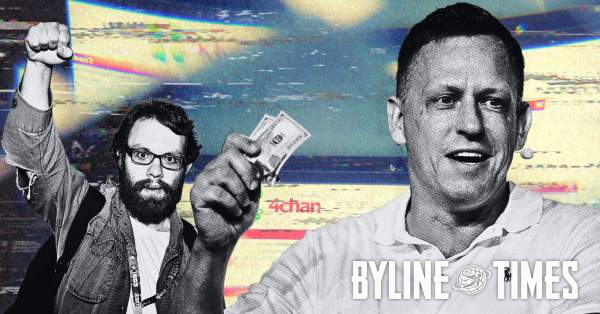
The Neo-Nazi Enforcer Who Helped Build Peter Thiel’s Online Influence Empire
New Epstein-linked revelations show how neo-Nazi operative Andrew Auernheimer became a crucial link between Peter Thiel and the online far-right subcultures waging ‘memetic warfare’ against their enemies
Corporations and the Nazi regime
It is apparent, 90 years after the beginnings of the Nazi period, that large corporations played an important and lamentable role in Nazi power and administration, and the implementation of the atr…

American Socialist: The Life and Legacy of Eugene V. Debs
Before Bernie Sanders, before Zohran Mamdani, America’s favorite socialist was Eugene Debs.In 1912, some 1,200 Socialists held elected office across the United States. Wisconsin had a Socialist congressman in Washington, and ministers in Oklahoma preached the gospel of “Christian socialism” at revival-style gatherings come summertime. The leader of this vibrant movement? One Eugene V. Debs—part working-class agitator, part radical prophet, a man who made it feel like being an American and a socialist was the most natural thing in the world. Even opponents would describe Debs as Christlike. Born in Indiana in 1855, he’d dropped out of school at fourteen to work on the railroad. Elected to the state legislature in his twenties, he’d seemed a rising star in the Democratic Party: an optimistic moderate who urged respectability and compromise. But this was the Gilded Age: an era of corporate tycoons and outrageous sums of money in politics, of grueling hours and few rights for workers (if any). And when, in 1894, the president sent in thousands of troops to break a nationwide railroad strike Debs helped organize, Debs was radicalized. He emerged from a six-month prison sentence as a crusader, a stirring orator who would soon see all forms of unaccountable power—rich over poor, men over women, white over Black, colonizer over colonized—as poisonous to human freedom. Cofounding the Socialist Party of America, Debs would run for president five times and spend the rest of his life convincing ordinary workers that, together, they could create a political movement strong enough to transform the world. It wouldn’t be easy. He would suffer from chronic illness, lose friends and enrage allies, risk his marriage to a woman he loved, and receive a decade-long prison sentence for opposing World War I. And yet, countless Americans—not just in his lifetime, but in ours—would heed Debs’s righteous call for human solidarity. When Debs ran for president in 1920 from behind bars, he received almost a million votes. A rousing, poignant, intimately human tale of struggle against the odds, American Socialist is a stunning portrait of one man’s radicalization—and of the country he radicalized in turn. It’s a story that speaks powerfully to our own Gilded Age, when the very wealthy again rule America’s political and economic life and millions are looking for an alternative.
American Babylon
A gripping portrait of black power politics and the struggle for civil rights in postwar Oakland

The weird time Nazis made common cause with black nationalists
The black nationalist Nation of Islam and the American Nazi Party didn't have a lot in common, but they did believe in staying as far away from each other's race as…
Grok Becomes ‘MechaHitler,’ Twitter Becomes X: How Centralized Tech Is Prone To Fascist Manipulation
This week, Elon Musk’s Grok AI started spewing extreme antisemitism, responding with conspiracy theories about Jewish people, and for a brief period telling people to call it “MechaHitl…

AI: The New Aesthetics of Fascism
It's embarrassing, destructive, and looks like shit: AI-generated art is the perfect aesthetic form for the far right.
Thank God for Bluesky
A little love letter to the people who would not compromise with Nazis.

Technically Radical
They're so thoroughly hypnotized by the short-term victory of global capitalism that they can't surf the new paradigm, look to the longer term. – Charles Stross, Accelerando One obvious role for a radical intellectual is to do precisely that: look at those who are creating viable alternatives, try to figure out what might be the larger implications of what they are (already) doing, and then offer those ideas back [to the world], not as prescriptions, but as contributions, possibilities—as gifts. – David Graeber, Fragments of an Anarchist Anthropology Over 2024, we saw major tech investors and company owners overtly turn toward the right, overtly backing Donald Trump in his electoral campaign....
