


Global labor arbitrage is an economic phenomenon where, as a result of the removal of or disintegration of barriers to international trade, jobs move to nations where labor and the cost of doing business are inexpensive and/or impoverished labor moves to nations with higher paying jobs.
Unequal exchange of labour in the world economy
Researchers have argued that wealthy nations rely on a large net appropriation of labour and resources from the rest of the world through unequal exchange in international trade and global commodity chains. Here we assess this empirically by measuring flows of embodied labour in the world economy from 1995–2021, accounting for skill levels, sectors and wages. We find that, in 2021, the economies of the global North net-appropriated 826 billion hours of embodied labour from the global South, across all skill levels and sectors. The wage value of this net-appropriated labour was equivalent to €16.9 trillion in Northern prices, accounting for skill level. This appropriation roughly doubles the labour that is available for Northern consumption but drains the South of productive capacity that could be used instead for local human needs and development. Unequal exchange is understood to be driven in part by systematic wage inequalities. We find Southern wages are 87–95% lower than Northern wages for work of equal skill. While Southern workers contribute 90% of the labour that powers the world economy, they receive only 21% of global income.

Labor-Value Commodity Chains: The Hidden Abode of Global Production - Monthly Review
Intan Suwandi is a frequent contributor to Monthly Review. This article is adapted from her book, Value Chains: The New Economic Imperialism, winner of the 2018 Paul M. Sweezy-Paul A.... READ MORE

Labor Market Adaptation to Rising Import Competition
In Places versus People: The Ins and Outs of Labor Market Adjustment to Globalization (NBER Working Paper 33424), David Autor, David Dorn, Gordon H. Hanson, Maggie R. Jones, and Bradley Setzler examine how local labor markets and the workers in these markets adjusted to increased Chinese import competition in the first two decades of this century. They analyze comprehensive employer-employee data from the Census Bureau’s Longitudinal Employer-Household Dynamics program over the 2000–19 period. Their analysis exploits location-specific variation in the impact of growing imports from China following China’s accession to the World Trade Organization (WTO) in 2001, which is due to the heterogeneity in industry composition across local labor markets.

Strategic interdependence is rewiring the global economy
It is no longer sufficient for the US-China trade relationship to be driven solely by cost and efficiency

interfluidity » The great game of global public goods provision
War is bad. Excuses should not be made for it. All sides should work to end this and every war as quickly as possible and shift to modes of bargaining and competition that are not profoundly destructive.
Handbook of Labor Economics
What new tools and models are enriching labor economics?Developments in Research Methods and their Application, Volume 4A summarizes recent advances in the ways economists study wages, employment, and labor markets. Mixing conceptual models and empirical work, contributors cover subjects as diverse as field and laboratory experiments, program evaluation, and behavioral models. The combinations of these improved empirical findings with new models reveal how labor economists are developing new and innovative ways to measure key parameters and test important hypotheses. - Investigates recent advances in methods and models used in labor economics - Demonstrates what these new tools and techniques can accomplish - Documents how conceptual models and empirical work explain important practical issues
annotations: La globalisation, la fragmentation et le système monétaire international
Traduction française de "Globalisation, fragmentation, and the international monetary system" de Barry Eichengreen
Une note sur les déficits commerciaux et l’industrie
Traduction française du billet de blog "A note on trade deficits and manufacturing. Some perspective on the eve of trade war" de Paul Krugman

CMV: The labor theory of value is flawed
72 votes, 407 comments. This might be an obscure topic, however, in some—largely Marxist circles— the approach seems to motivate much of the dialogue…
L’incontournable trilemme de l'économie mondiale
Traduction française de Dani Rodrik (2012), « The inescapable trilemma of the world economy »
.png)
US Labor & Imperialism Pt. 1: the War Against Communism w/ Jeff Schuhrke
Offshoring
Offshoring is the relocation of a business process from one country to another—typically an operational process, such as manufacturing, or supporting processes, such as accounting. Usually this refers to a company business, although state governments may also employ offshoring. More recently, technical and administrative services have been offshored.

What will be scarce?
The economics of structural change and the post-commodity future of work
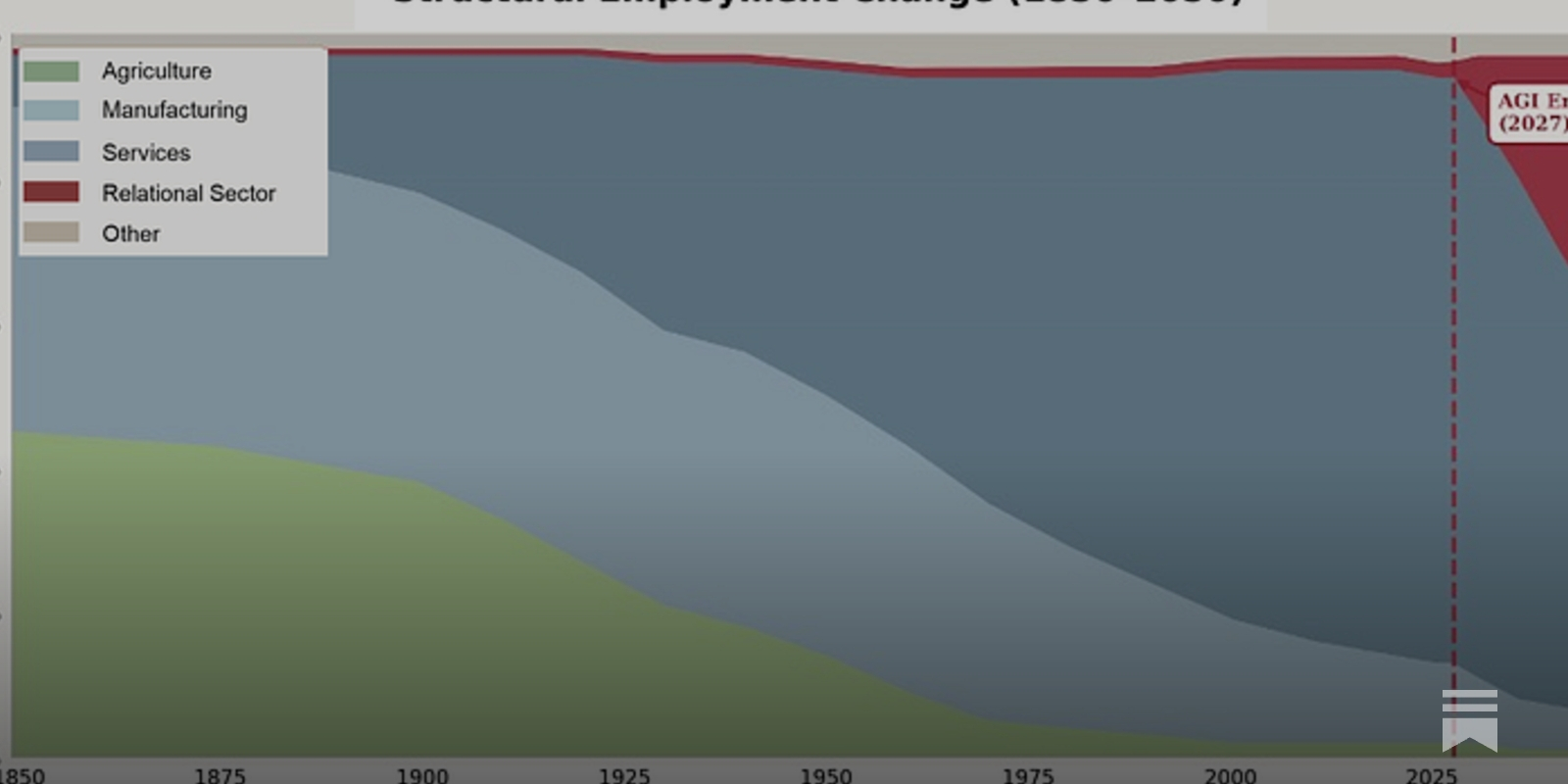
Technological Disruption in the US Labor Market • The Aspen Institute Economic Strategy Group
DAVID DEMING, CHRISTOPHER ONG, LAWRENCE H. SUMMERS This paper explores past episodes of technological disruption in the US labor market, with the goal of learning lessons about the likely future impact of artificial intelligence (AI). The authors measure changes in the structure of the US labor market going back over a century in two ways. ...

Do Employers Have More Monopsony Power in Slack Labor Markets?
This article confronts monopsony theory’s predictions regarding workers’ wages with observed wage patterns over the business cycle. Using German administrative data for the years 1985 to 2010 and an estimation framework based on duration models, the authors construct a time series of the labor supply elasticity to the firm and estimate its relationship to the unemployment rate. They find that firms possess more monopsony power during economic downturns. Half of this cyclicality stems from workers’ job separations being less wage driven when unemployment rises, and the other half mirrors that firms find it relatively easier to poach workers. Results show that the cyclicality is more pronounced in tight labor markets with low unemployment, and that the findings are robust to controlling for time-invariant unobserved worker or plant heterogeneity. The authors further document that cyclical changes in workers’ entry wages are of similar magnitude as those predicted under pure monopsonistic wage setting.

if there's one conclusion that the study of both labor history and imperialism converge on, it is that the richest people in the world are happy to burn money on control, power, impunity. and the "everything is about profit" version of anti-capitalism does not survive serious contact with either

Leonard Pierce
Adding to this thread: it’s a common mistake (I’ve made it myself, many times) to think of the motivations of the capitalist elites as essentially mercantilist: that is, that they are largely still motivated *entirely* by profit and loss, selling product, etc. This has not been true for a while.
