

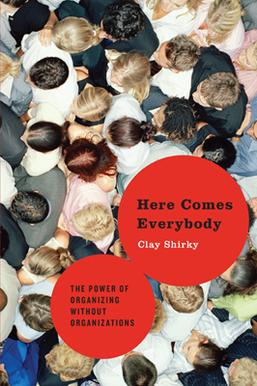
Here Comes Everybody: The Power of Organizing Without Organizations is a book by Clay Shirky published by Penguin Press in 2008 on the effect of the Internet on modern group dynamics and organization. The author considers examples such as Wikipedia, MySpace, and other social media in his analysis. According to Shirky, the book is about "what happens when people are given the tools to do things together, without needing traditional organizational structures". The title of the work alludes to HCE, a recurring and central figure in James Joyce's Finnegans Wake and considers the impacts of self-organizing movements on culture, politics, and business.
"Collective Power: Patterns for a Self-Organized Future by Ted J. Rau" [english edition] (ebook) - Sociocracy For All
by Ted Rau Preorder Ebook
Get Together: How to Build a Community with Your People
A practical and heartfelt guide to cultivating a community, online or IRL.Although communities feel magical, they don’t come together by magic. Get Together is a practical and heartfelt guide to cultivating a community. Whether starting a run crew, connecting with fans online, or sparking a movement of K–12 teachers, the secret to getting people together is this: build your community with people, not for them.In Get Together, Bailey Richardson, Kevin Huynh, and Kai Elmer Sotto of People & Company share true stories of everyday people who have created thriving communities, both in person and online. They provide clear steps to untangle the challenge of getting passionate people together, helping individuals and organizations navigate the intricacies of leading a community, including: - How to rally the first people - How to get people talking - How to attract new, authentic folks - How to develop leaders and expand globally.The People & Company team reminds us that we each hold the potential to spark a community. Get Together shows readers that if we join forces—as company and customers, artist and fans, organizer and advocates—we’ll do more together than we ever could alone.
More notes on Organizing, Mutual Aid, and Activism on decentralized social networks
Part 3 of a series. See If not now, when? Mutual aid and organizing in the fediverses, the ATmosphere, and whatever comes next and Notes (and thoughts) on organizing in the fediverses and the ATmosphere for previous installments and a reading list. "Mutual aid. Organizing. Sharing, contextualizing, and making meaning

Opinion | The New Power Structure (Published 2018)
New organizations are forming and succeeding in an age of distrust.

Get Together Book | How to Build a Community With Your People
Get Together is a guidebook to building a community by Bailey Richardson, Kevin Huynh, and Kai Elmer Sotto of People & Company. Book published by Stripe Press. Available on Amazon.

Rudy Fraser on Blacksky, Mutual Aid & Reclaiming Social Media
Digital Strategy for Organisations
Digital power is created through the interplay of mobilizing and organizing. Open Social protocols bridge the gap.

Infrastructure for Interdependence: Building technology in service of collective power - The Algo Rhythm by Blacksky
[This document serves as a memo for investors]
Using Loomio to govern a self-organising community
…without ever having everyone at a meeting

WE ALL WE GOT
Welcome to We All We Got: A Digital Green Book for the Culture—a guide for navigating the ever-growing wave of digital manipulation aimed at dividing, deceiving, and discouraging Black communities.
Solidarity | The Paper Pilot
The Paper Pilot's digital garden of thoughts on philosophy, politics, and sociology
Decentralized Social Media | The Paper Pilot
The Paper Pilot's digital garden of thoughts on philosophy, politics, and sociology
The most powerful institution in most people’s lives is their workplace. We care deeply about governmental democracy but accept dictatorships where we spend most of our waking hours. The cooperative movement has proven it doesn’t have to be this way.
Free Association | The Paper Pilot
The Paper Pilot's digital garden of thoughts on philosophy, politics, and sociology
Strengthening Online Communities | Rise Against Big Tech Powerbase
Organizing

Governance, collaboration, how to work together without being awful.
Conflict Systems
Spaces as Layers - Nick's Blog
web.archive.org
Axioms for Organizers by Fred Ross, Sr. | Fred Ross, Sr.
The Tyranny of Stuctureless
cdn.fastly.steamstatic.com