

Hindustani classical music (also known as North Indian classical music or Shastriya Sangeet) is the classical music of the Indian subcontinent's northern regions. It is played on instruments like the veena, sitar and sarod. It diverged in the 12th-century from Carnatic music, the classical tradition of southern India. While Carnatic music largely uses compositions written in Sanskrit, Tamil, Telugu, Kannada, and Malayalam, Hindustani music largely uses compositions written in Sanskrit, Hindustani (Hindi-Urdu), Braj, Awadhi, Bhojpuri, Bengali, Rajasthani languages, Punjabi and even Persian.
Carnatic music
Carnatic music is a system of music commonly associated with South India, including the modern Indian states of Andhra Pradesh, Karnataka, Kerala, Tamil Nadu and Telangana. Most Carnatic compositions are only in Telugu and Sanskrit.

What is Svatantrya Sakti? | Āchārya Dr. Sthaneshwar Timalsina
Śākta Tantra and Mantravāda in Kerala | Dr. Maciej Karasinski
Music Chat: Classical Music's Ten Dirtiest Secrets
Kafi (thaat)
Kafi is one of the ten basic thaats of Hindustani music from the Indian subcontinent. It is also the name of a raga (Kharaharapriya) within this thaat.
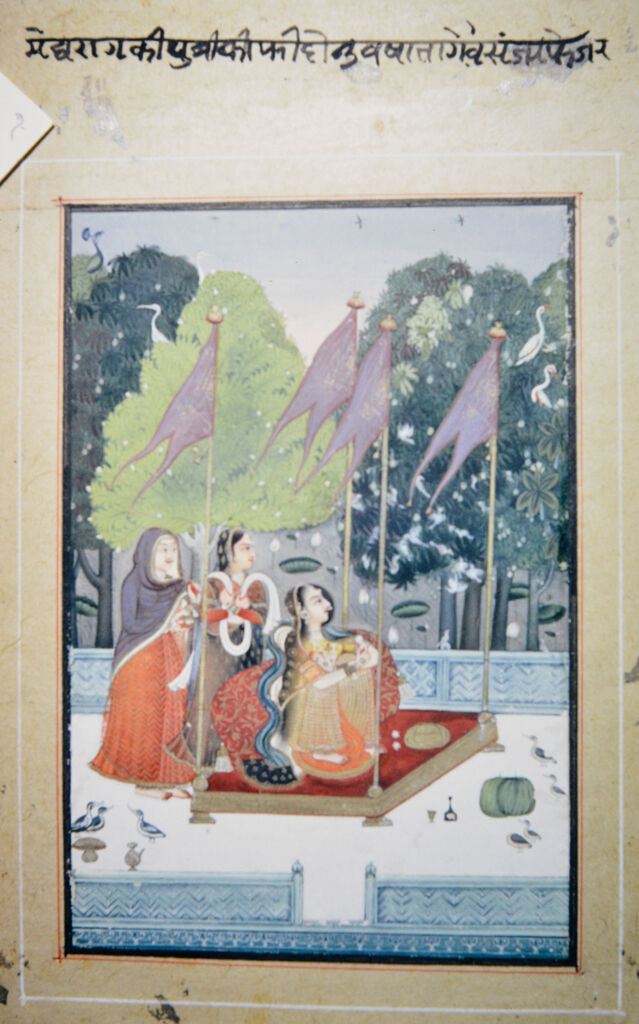
Bhimpalasi
Bhimpalasi or Bheempalasi (also known as Bhimpalas or Bheempalas) is a Hindustani classical raga. The Carnatic Music equivalent of this raga is Abheri.
Types of Being: A Śaiva Pluralist Ontology as Contemporary Resource | Dr. Gavin Flood
🔎 shamika ravi muslim hindu - Google Search

Proper Patola Full Video - Namaste England | Arjun Kapoor, Parineeti | Badshah, Diljit, Aastha
Western Ghats
The Western Ghats, also known as the Sahyadri, is a mountain range that stretches 1,600 km (1,000 mi) along the west coast of India. Covering an area of 160,000 km2 (62,000 mi2), it traverses the Indian states of Gujarat, Maharashtra, Goa, Karnataka, Kerala, and Tamil Nadu. The range forms an almost continuous chain of mountains along the western edge of the Deccan Plateau, from the Tapti River to Swamithoppe in Kanyakumari district at the southern tip of the Indian peninsula. The Western Ghats meet with the Eastern Ghats at Nilgiris before continuing south.

Indian Culture | Ministry of Culture
About Indian CultureIndian culture, often labelled as a combination of several cultures, has been influenced by a history that is several millennia old, beginning with the Indus Valley civilization and other early cultural areas. Indian culture is one of the oldest and most unique cultures known across the globe. It has Indian culture is one of the oldest and most unique cultures known across the globe.
Essays in Indian History: Towards a Marxist Perception ; With, The Economic History of Medieval India: a Survey
This volume brings together, for the first time, several of Professor Habib's essays, representing three decades of scholarship and providing an insightful interpretation of the main currents in Indian history from the standpoint of Marxist historiography. The collection examines the role played by the peasantry and caste in Indian history; explores the forms of class struggle and the stage of Indian economic development in Mughal India; analyses the impact of colonialism on the Indian economy; and chronicles the changes in Marx's perception of India. These painstakingly researched and erudite essays form a volume that is indispensable for scholars and students of Indian history.
Parrhesiastes Apertus on Twitter / X
भीड़ में दूसरों से सावधान रहिए,और अकेले में खुद से...— Parrhesiastes Apertus (@P_arrhesiastes) October 14, 2026
Abheri
Abheri is a raga in Carnatic music. It is a Janya raga, whose Melakarta raga is Kharaharapriya, 22nd in the 72 Melakarta raga system.
