

A hyperstition is a self-fulfilling idea that becomes real through its own existence.[1] The price of Bitcoin,[2] Roko's Basilisk,[3] accelerationism,[4] and the QAnon conspiracy theory[5] have all been described as hyperstitions. Self-fulfilling prophecies are a kind of hyperstition where predictions are made about the future that become true by being known.[6] The concept was coined by Nick Land in 1995 as a portmanteau of hyper- and superstition,[7] during his time at the Cybernetic Culture Research Unit developing the philosophy of accelerationism.[3][8]
Conscious and Nonconscious Components of Superstitious Beliefs in Judgment and Decision Making
Abstract. Despite the large impact that superstitious beliefs have on the marketplace, we currently know very little about their implications for consumer
Believing what we do not believe: Acquiescence to superstitious beliefs and other powerful intuitions.
Retrofuturism
As I’ve mentioned before, I’m an avid reader of L.M. Sacasas’s Convivial Society which I feel offers some of the best thinking on technology while always remaining clear and accessible, with no sensationalism and an abiding humanity. So when Mike wrote in the latest instalment (III.9) that he was offering seven theses “less cautiously formulated” with the thought that they might elicit some responses, I found jumping in hard to resist.

Trust — Utopian conspiracy
A network of utopian conspirators, a sandbox for their creative, technical and critical projects, and a site of experimentation for new ways of learning together.

Why Being Wrong Can Be Right: Magical Warfare Technologies and the Persistence of False Beliefs
Across human societies, one sees many examples of deeply rooted and widely held beliefs that are almost certainly untrue. Examples include beliefs about witchcraft, magic, ordeals, and superstitions. Why are such incorrect beliefs so prevalent and how do they persist? We consider this question through an examination of superstitions and magic associated with conflict in the Eastern Democratic Republic of the Congo. Focusing on superstitions related to bullet-proofing, we provide theory and case-study evidence showing how these incorrect beliefs persist. Although harmful at the individual-level, we show that they generate Pareto efficient outcomes that have group-level benefits.
Disaster, doubt, and the origins of hypertext
Hypertext and the World Wide Web are built on a complex network of ideas that originate in the military and ecological disasters of the short 20 th Century, 1914--1989, and in a world-spanning intellectual effort to prevent their recurrence. Though that effort now appears to have failed, and though the tragic story of the 20 th Century has not, it seems, concluded, we may learn profit by examining the concepts and ideals on which hypertext was built.
Disaster, doubt, and the origins of hypertext
Hypertext and the World Wide Web are built on a complex network of ideas that originate in the military and ecological disasters of the short 20 th Century, 1914--1989, and in a world-spanning intellectual effort to prevent their recurrence. Though that effort now appears to have failed, and though the tragic story of the 20 th Century has not, it seems, concluded, we may learn profit by examining the concepts and ideals on which hypertext was built.

The Rise of Silicon Valley’s Techno-Religion (Published 2025)
The Rationalists, a community focused on the risks of artificial intelligence, regularly gather with tech figures and other like-minded people in a complex that covers much of a city block.

More Everything Forever
This "smart and wonderfully readable" (New York Times) exposé shows why Silicon Valley’s heartless, baseless, and foolish obsessions—with escaping death...

From risk to flourishing: Seeds for responding to a complex world
Flourishing is the actualization of all beings toward their good -- not only individually but collectively, answering the question of `how do we live well with and for each other?'. In science as in society, the tendency to reduce, segregate, specialize, and settle has precluded embracing the concept of flourishing as a guiding principle. We aim to identify an approach to risk science research that promotes the flourishing of socio-ecological-technological systems (SETS). We discuss the normative role of an orientation toward flourishing for the field of risk science. We explore the possibility that (risk) science could be done in a way that is capable of pointing society toward a different future, one more resilient and more capable of flourishing. Our exploration mirrors the conversational nature of flourishing itself: examine ideologies traditionally believed to be rigidly in opposition and consider what emerges in the space(s) and conversation between them. We call this a dialectical approach. Within this paradigm grounded in conversation, pluralism, and pragmatism, we revisit three longstanding tensions in risk science: physical$|$social, determinism$|$uncertainty, contextuality$|$generality. Although these tensions are not new, revisiting them together through the lens of complexity science, and with explicit attention to the normative commitments that shape risk research, reveals underexplored possibilities for the field. Examining them in conversation with the other allows us to explore the provisional seeds for what might be termed complex risk science: interdependence, responsivity, participation, pluralism, openness, and ongoingness. Enacting the dialectical paradigm towards a risk science for a flourishing world will depend on creating collectives toward complex risk science, supporting them with skillfully governed commons, and centering care in our research.

Against Economics
Mainstream economists nowadays might not be particularly good at predicting financial crashes, facilitating general prosperity, or coming up with models for preventing climate change, but when it comes to establishing themselves in positions of intellectual authority, unaffected by such failings, their success is unparalleled. One would have to look at the history of religions to find anything like it. To this day, economics continues to be taught not as a story of arguments—not, like any other social science, as a welter of often warring theoretical perspectives—but rather as something more like physics, the gradual realization of universal, unimpeachable mathematical truths.

Nicky Case: The Attractors Behind Disasters
On technological optimism and technological pragmatism
"There are no guarantees that things are going to turn out very well for anyone.”

Cryptoeconomics: Paving the Future of Blockchain Technology | HackerNoon
Page through the articles on <a href="https://hackernoon.com/tagged/blockchain" target="_blank">blockchain</a> today and you will see healthy discussions over its applications and endless debates over the future price action of someone’s favorite cryptocurrency. Yet rarely among all these topics is any mention of the most fascinating notion at the heart of the movement — blockchain as a novel means<strong> to incentivize desired human behavior</strong>.

Silicon Valley, disruption, and the end of uncertainty
This paper reflects on the relationship between high-tech disruption narratives and uncertainty. My main argument is that an economic sociology of the future is incomplete without addressing the ‘d...

Rationalist Cults

Articles on rationalist-adjacent cults: the Zizians, Leverage Research, and the darker outgrowths of the rationalist / LessWrong-derived / Aella polycule scene that is behind "AI Safety" in Silicon Valley. Working thesis: MIRI and CFAR read as high-control groups (cults) who believe in P(DOOM) and use sex (and power) maliciously — yet they are unfortunately the ones who have captured the framing of "AI Safety," which has little to do with actual safety.

The Effective Altruism Kids Aren’t Alright

My Experience with Leverage Research
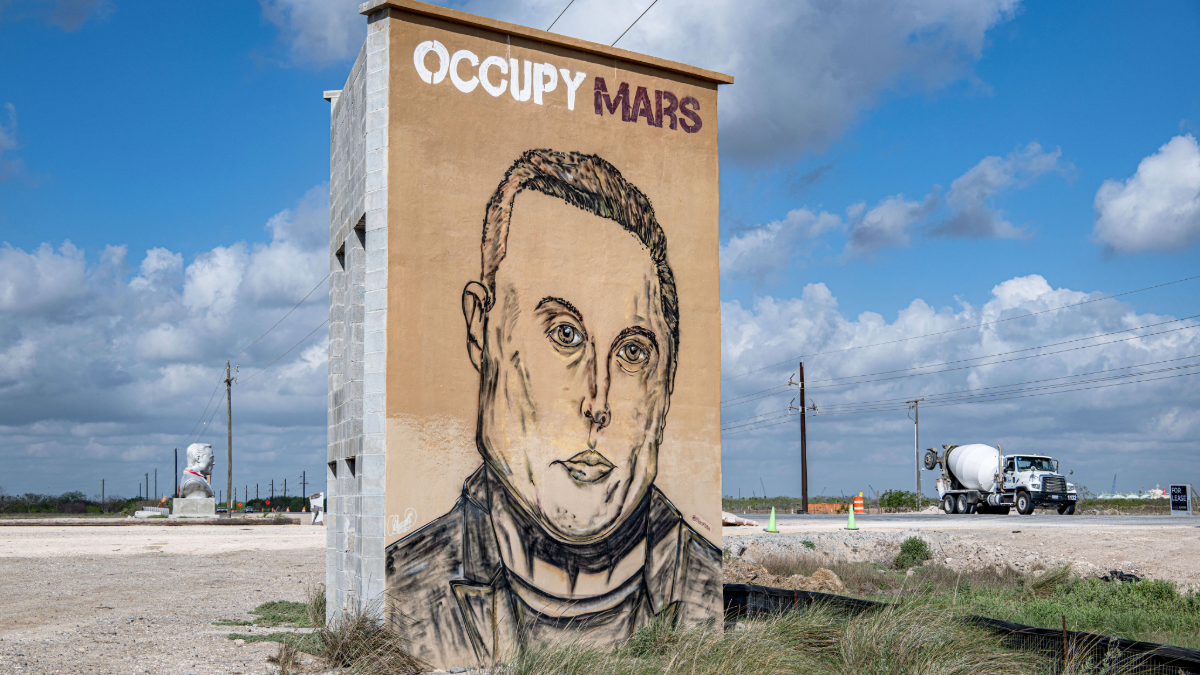
What Policymakers and the Public Need to Know About the Cult of AI
banteg (@banteg)

The Techno-Religion at the Center of the A.I. Debate

SE Gyges (@segyges.bsky.social)