


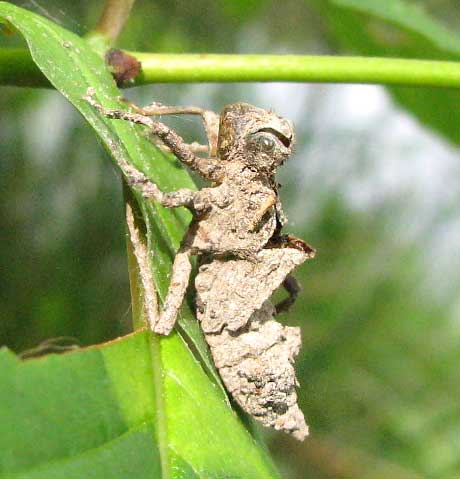
An instar is a developmental stage of arthropods, such as insects, which occurs between each moult (ecdysis) until sexual maturity is reached. Arthropods must shed the exoskeleton in order to grow or assume a new form. Differences between instars can often be seen in altered body proportions, colors, patterns, changes in the number of body segments or head width.
Nymph (biology)
In biology, a nymph is the juvenile form of some invertebrates, particularly insects, which undergoes gradual metamorphosis (hemimetabolism) before reaching its adult stage. Unlike a typical larva, a nymph's overall form already resembles that of the adult, except for a lack of wings and the emergence of genitalia. In addition, while a nymph moults, it never enters a pupal stage. Instead, the final moult results in an adult insect. Nymphs undergo multiple stages of development called instars.

Ecdysis
Ecdysis is the moulting of the cuticle in many invertebrates of the clade Ecdysozoa. Since the cuticle of these animals typically forms a largely inelastic exoskeleton, it is shed during growth and a new, larger covering is formed. The remnants of the old, empty exoskeleton are called exuviae.

Spiracle (arthropods)
A spiracle or stigma is the opening in the exoskeletons of insects, myriapods, velvet worms and many arachnids that admits air into the respiratory system.


Exoskeleton
An exoskeleton is a skeleton that is on the exterior of an animal in the form of hardened integument, which both supports the body's shape and protects the internal organs, in contrast to an internal endoskeleton which is enclosed underneath other soft tissues. Some large, hard and non-flexible protective exoskeletons are known as shell or armour.
EPISTEMIC STIGMERGY: NATURAL VS. ARTIFICIAL INTELLIGENCE
The article\(^{1}\) defends the thesis that intelligent behavior might require not internal complexity but complex interaction. This is demonstrated by the various forms of stigmergy that can be observed both in social insects and in humans. The exposition is structured as follows: (§0) explains how the term “intelligence” is interpreted in the following text; (§1) clarifies the relation between intelligence and complexity; (§2) shows that intelligent behavior does not require internal complexity; (§3) introduces the concept of stigmergy; (§4) presents the mechanisms that give rise to this phenomenon; (§5) distinguishes several types of stigmergic interaction; (§6) briefly discusses the evolutionary mechanisms that could have produced them; (§7) sketches the possible ways in which the concept of stigmergy is used outside biology; (§8) examines collaborative stigmergy in humans; (§9) points to its epistemic projections; (§10) outlines some conclusions concerning the role of artificial intelligence systems and their place in human society.
Fauna Robotics | Capable, Safe, Fun Robots for Everyone
Meet Sprout, a humanoid platform for developers, enterprises, and researchers—shipping today.
.jpg)
Arthropod exoskeleton
Arthropods are covered with a tough, resilient integument, cuticle or exoskeleton of chitin. Generally the exoskeleton will have thickened areas in which the chitin is reinforced or stiffened by materials such as minerals or hardened proteins. This happens in parts of the body where there is a need for rigidity or elasticity. Typically the mineral crystals, mainly calcium carbonate, are deposited among the chitin and protein molecules in a process called biomineralization. The crystals and fibres interpenetrate and reinforce each other, the minerals supplying the hardness and resistance to compression, while the chitin supplies the tensile strength. Biomineralization occurs mainly in crustaceans. In insects and arachnids, the main reinforcing materials are various proteins hardened by linking the fibres in processes called sclerotisation and the hardened proteins are called sclerotin. The dorsal tergum, ventral sternum, and the lateral pleura form the hardened plates or sclerites of a typical body segment.
Isopod Site
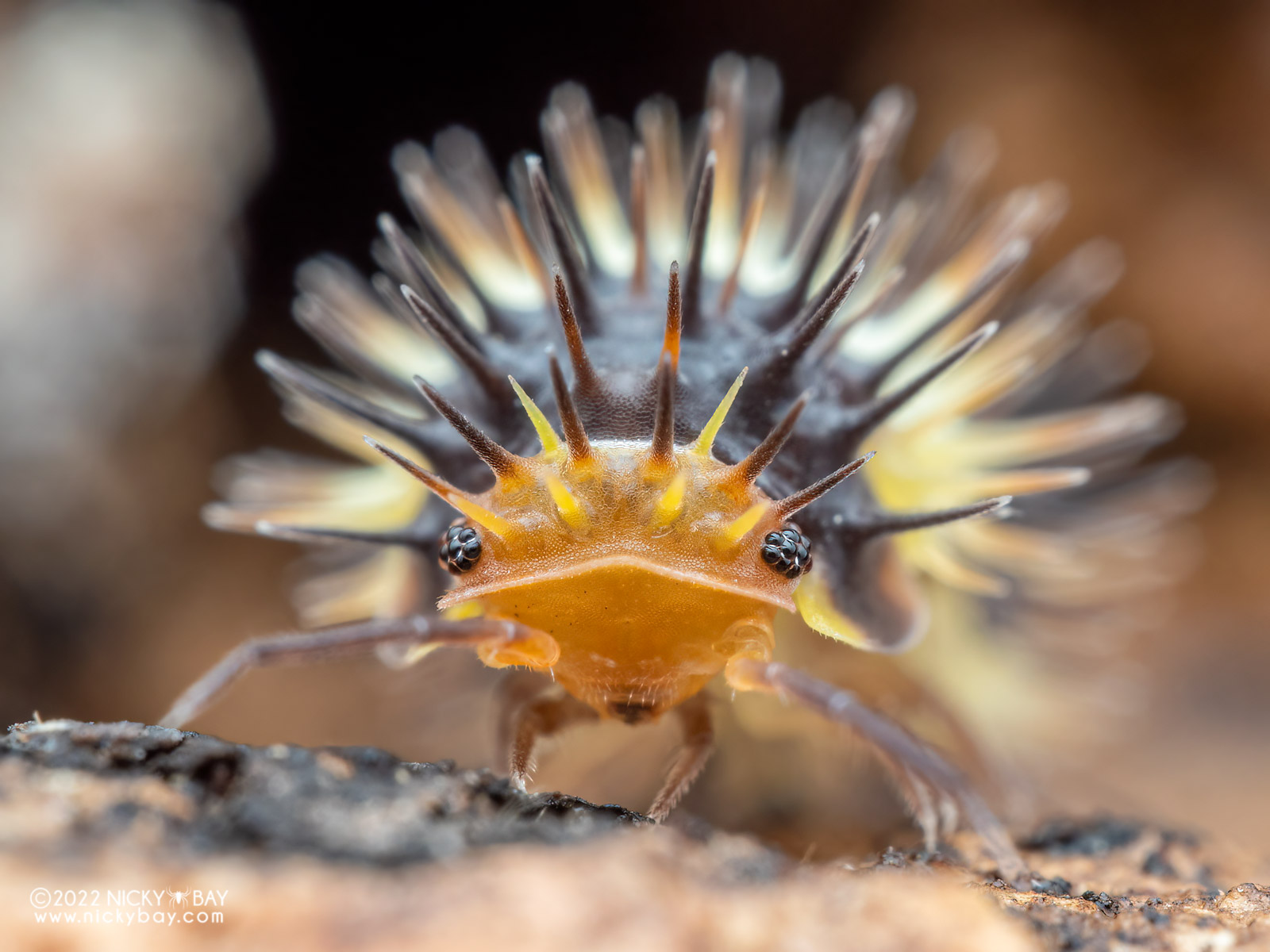
Pillbugs, sowbugs, roly-polies and woodlice, collectively referred to as isopods, are land-dwelling crustaceans that feed on decaying organic matter.
Social Insects : Ecology and Behavioural Biology
1 online resource; Here is a guide to the ecology of social insects. It is intended for general ecologists and entomologists as well as for undergraduates and those about to start research on social insects; even the experienced investigator may find the comparison between different groups of social insects illuminating. Most technical terms are translated into common language as far as can be done without loss of accuracy but scientific names are unavoidable. Readers will become familiar with the name even though they cannot visualize the animal and could reflect that only a very few of the total species have been studied so far! References too are essential and with these it should be possible to travel more deeply into the vast research literature, still increasing monthly. When I have cited an author in another author's paper, this implies that I have not read the original and the second author must take responsi bility for accuracy! Many hands and heads have helped to make this book. I thank all my colleagues past and present for their enduring though critical support, and I thank with special pleasure: E.]. M. Evesham who fashioned the diagrams;]. Free, D.J. Stradling and]. P.E.C. Darlington who supplied photographs; D.Y. Brian and R.A. Weller who were meticulous on the linguistic side; and G. Frith and R.M. Jones who collated the references. List of plates 1. Fungus combs of Acromyrmex octospinosus and Macrotermes michaelseni. 13 2. Mouthparts of larval Myrmica; 1 Introduction -- 2 Food -- 2.1 Termites as decomposers -- 2.2 Wasps and ants as predators -- 2.3 Sugars as fuel save prey -- 2.4 Seed eaters -- 2.5 Leaf eaters -- 2.6 Pollen eaters -- 3 Foraging by individuals -- 3.1 Foraging strategy -- 3.2 Worker variability -- 4 Foraging in groups -- 4.1 Communication about food -- 4.2 Group slave-raiding -- 4.3 Tunnels and tracks -- 4.4 Nomadic foraging -- 5 Cavity nests and soil mounds -- 5.1 Cavities and burrows -- 5.2 Soil mounds -- 6 Nests of fibre, silk and wax -- 6.1 Mounds of vegetation and tree nests -- 6.2 Combs of cells -- 7 Microclimate -- 7.1 Environmental regulation -- 7.2 Metabolic regulation -- 8 Defence -- 8.1 Painful and paralysing injections -- 8.2 Toxic smears and repellants -- 9 Food processing -- 9.1 Mastication, extraction and regurgitation -- 9.2 Yolk food supplements -- 9.3 Head food glands -- 10 Early population growth -- 10.1 Food distribution -- 10.2 Colony foundation -- 10.3 The growth spurt -- 11 Maturation -- 11.1 Simple models of reproduction -- 11.2 Social control over caste -- 11.3 Males in social Hymenoptera -- 11.4 Maturation in general -- 12 Reproduction -- 12.1 Caste morphogenesis -- 12.2 Copulation and dispersal -- 12.3 Production -- 12.4 Summary -- 13 Evolution of insect societies -- 13.1 Theories of individual selection -- 13.2 Models of these theories -- 13.3 Group selection -- 13.4 Conclusions -- 14 Colonies -- 14.1 The colony barrier -- 14.2 Queen number and species ecology -- 14.3 Queen interaction and queen relatedness -- 15 Comparative ecology of congeneric species -- 15.1 Ant and termite races -- 15.2 Desert ants and termites -- 15.3 Ants and termites in grassland -- 15.4 Forest ants and termites -- 15.5 Wasps and bumblebees -- 15.6 Advanced bees -- 16 Communities -- 16.1 Temperate zone communities in grass and woodland -- 16.2 Desert communities -- 16.3 Tropical rain forest -- 16.4 Conclusions -- 17 Two themes -- 17.1 Plant mutualism -- 17.2 Social organization -- References -- Author index

Self-Organization in Biological Systems
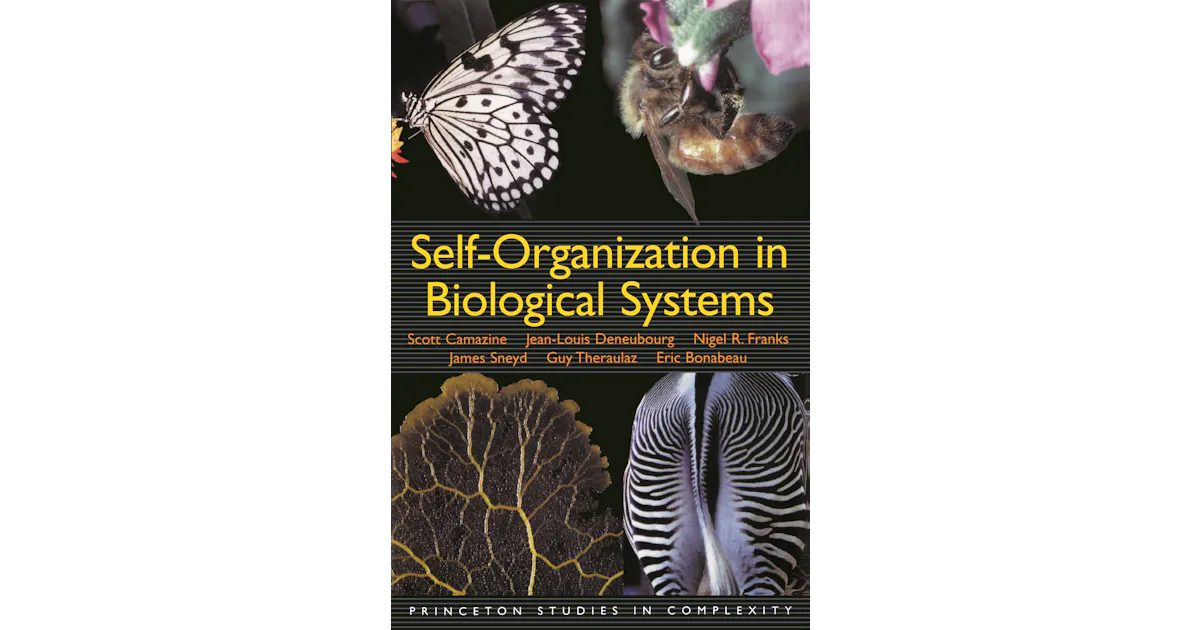
The synchronized flashing of fireflies at night. The spiraling patterns of an aggregating slime mold. The anastomosing network of army-ant trails. The coordinated movements of a school of fish. Researchers are finding in such patterns—phenomena that have fascinated naturalists for centuries—a fertile new approach to understanding biological systems: the study of self-organization. This book, a primer on self-organization in biological systems for students and other enthusiasts, introduces readers to the basic concepts and tools for studying self-organization and then examines numerous examples of self-organization in the natural world. Self-organization refers to diverse pattern formation processes in the physical and biological world, from sand grains assembling into rippled dunes to cells combining to create highly structured tissues to individual insects working to create sophisticated societies. What these diverse systems hold in common is the proximate means by which they acquire order and structure. In self-organizing systems, pattern at the global level emerges solely from interactions among lower-level components. Remarkably, even very complex structures result from the iteration of surprisingly simple behaviors performed by individuals relying on only local information. This striking conclusion suggests important lines of inquiry: To what degree is environmental rather than individual complexity responsible for group complexity? To what extent have widely differing organisms adopted similar, convergent strategies of pattern formation? How, specifically, has natural selection determined the rules governing interactions within biological systems? Broad in scope, thorough yet accessible, this book is a self-contained introduction to self-organization and complexity in biology—a field of study at the forefront of life sciences research.
Niklas Luhmann: What is Autopoiesis?
The term autopoiesis (self-creation) is a neologism coined in 1972 by Varela and Maturana, Chilean cellular biologists and systems theorists, to describe

Mandible (insect mouthpart)
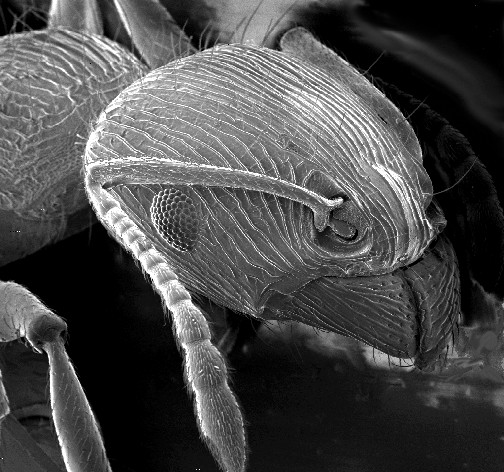
Insect mandibles are a pair of appendages near the insect's mouth, and the most anterior of the three pairs of oral appendages. Their function is typically to grasp, crush, or cut the insect's food, or to defend against predators or rivals. Insect mandibles, which appear to be evolutionarily derived from legs, move in the horizontal plane unlike those of vertebrates, which appear to be derived from gill arches and move vertically.

Swarm Simulator
An incremental game. Starting with just a few larvae and a small pile of meat, grow a massive swarm of giant bugs.
This is called anthropomorphizing, when we ascribe human traits, emotions or behaviors to non-human things, such as animals or inanimate objects. Instead, explain what a system does, how well it performs, who built it and who could be affected by it. apnews.com/article/openai-safety-ai-fram…
https://apnews.com/article/openai-safety-ai-framework-089e75b95bc935af092da7b79d92706d
apnews.com