

Inverted totalitarianism is a theoretical system where economic powers like corporations exert subtle but substantial power over a system that superficially seems democratic. Over time, this theory predicts a sense of powerlessness and political apathy, continuing a slide away from political egalitarianism.
Against the international oligarchy
The explosion of extreme wealth is the major social fact of our time. Against the international oligarchy, let us build a democratic international.
The Authoritarian Stack: Mapping Big Tech’s Capture of State Power - Rosa-Luxemburg-Stiftung
A new project exposes the infrastructure of techno-oligarchic control — and why Europe must act

Three views on economic power
We investigate the concept of economic power in the three main paradigms of economic thinking in the 20th century: neoclassical, marxist and institutionalist. We propose a reconstruction, based on a new taxonomy, of the various forms of power conceptualized by each of them. In particular, we claim that the neoclassical paradigm contains a consistent although often implicit theory of power. We then show that many controversies between these paradigms were debates on power and that some shifts in mainstream economics in the 1970s and 1980s are a reaction to the criticisms leveled against the neoclassical conceptualization of power.
reimagining (@structuralimage@kolektiva.social)
Hot take, Leftists and left-liberals are wrong: Capitalism is not, in any meaningful sense, an individualist ideology. It is a form of collectivism that relies on mass subordination and conformity to state and corporate structures. The so-called "individualism" it promotes is shallow and emaciated, consisting of mere consumer choices and formulaically prescribed competitive self-interest, which subjects one's will, needs, and subjectivity to the collective entities of state and capital. On the other hand, a positive, rounded understanding of individualism would involve striving toward relationships based on love and solidarity, wherein every individual is valued and equipped through the elimination of material need to pursue ethical and intellectual development. It would entail valuing the freedom and dignity of every individual and working toward the elimination of social hierarchies and institutional coercion, to provide every living person with the capacity to associate and disassociate freely. While critiquing colonial-capitalist "individualism" is obviously valid, replacing it with a fetishized conception of collectivism is not without consequence. We mustn't forget that most atrocious crimes against humanity of the 18th, 19th, 20th, and now 21st century have been committed under the aegis of some form of collectivism.
The Tyranny of Structurelessness
"The Tyranny of Structurelessness" is an essay by American feminist Jo Freeman that concerns power relations within radical feminist collectives. The essay, inspired by Freeman's experiences in a 1960s women's liberation group,[1][2] reflected on the feminist movement's experiments in resisting leadership hierarchy and structured division of labor. This lack of structure, Freeman writes, disguised an informal, unacknowledged, and unaccountable leadership, and in this way ensured its malefaction by denying its existence.[3] As a solution, Freeman suggests formalizing the existing hierarchies in the group and subjecting them to democratic control.
(PDF) Authoritarian Neoliberalism from Below: Subjectivity and Platform Capitalism in Argentina and Brazil
PDF | We are witnessing a worldwide resurgence of reactionary ideologies and movements, combined with an escalating assault on democratic institutions... | Find, read and cite all the research you need on ResearchGate

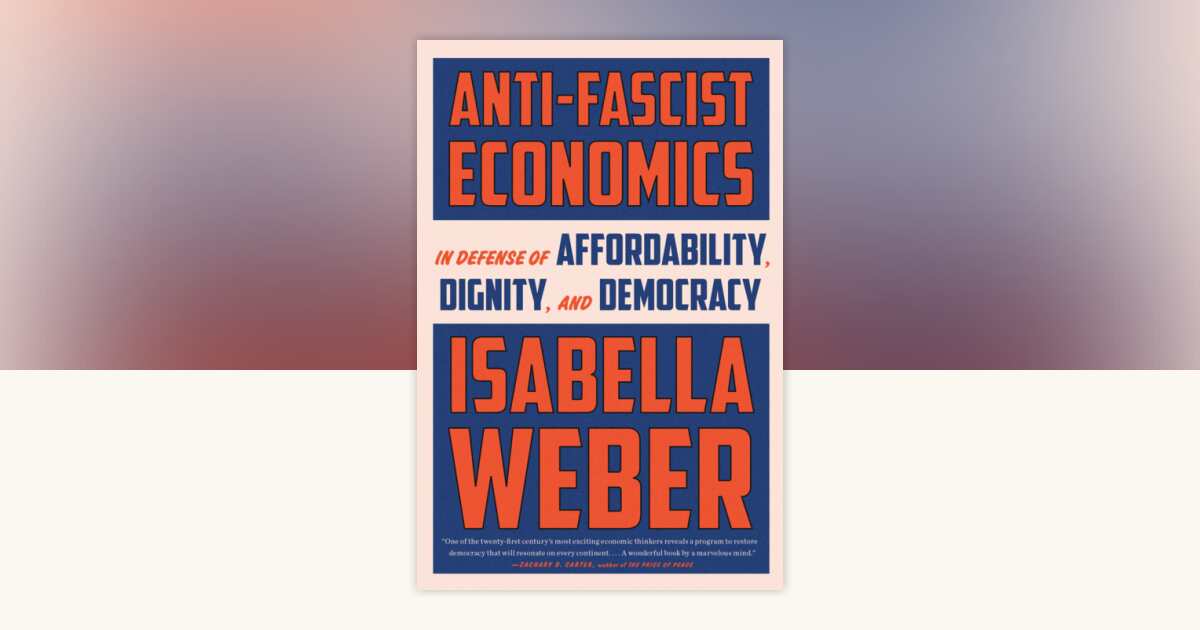
Anti-Fascist Economics by Isabella Weber: 9798217154432 | PenguinRandomHouse.com: Books
As inequality, inflation, and overwhelming corporate power threaten democracy, a rising-star economist asks what it would mean to create an anti-fascist economics that guarantees dignity for all....
Upside Down: A Primer for the Looking-Glass World
In a series of mock lesson plans and a "program of study" Galeano provides an eloquent, passionate, funny and shocking exposé of First World privileges and assumptions. From a master class in "The Impunity of Power" to a seminar on "The Sacred Car"—with tips along the way on "How to Resist Useless Vices" and a declaration of the "The Right to Rave"—he surveys a world unevenly divided between abundance and deprivation, carnival and torture, power and helplessness. We have accepted a "reality" we should reject, he writes, one where poverty kills, people are hungry, machines are more precious than humans, and children work from dark to dark. In the North, we are fed on a diet of artificial need and all made the same by things we own; the South is the galley slave enabling our greed.
Effective Altruism’s Bait-and-Switch: From Global Poverty to AI Doomerism
Repost from Techdirt.

Pluralistic: Metabolizing the theory of “political capitalism” (06 Dec 2025) – Pluralistic: Daily links from Cory Doctorow
It's a strange fact that the more sophisticated and polished a theory gets, the simpler it tends to be. New theories tend to be inspired by a confluence of many factors, and early attempts to express the theory will seek to enumerate and connect everything that seems related, which is a lot.
Is Socialism Undemocratic?
Socialism is often conflated with authoritarianism. But historically, socialists have been among democracy's staunchest advocates.

Time and the Neo-Monarchist Turn
One of the classical arguments against democracy concerns its supposed short-termism. Early-modern political thought contrasted the pitfalls of elected authority, whose timebound character was seen to invite inconstancy, instability and plunder, with the merits of indefinite rule on the model of kingship. Such reasoning has seen two revivals in recent years, first in a neo-liberal form as an argument for technocracy (see independent central banking), second in a neo-reactionary form as an argument for an all-powerful executive or ‘monarch’ (see the contemporary international far Right). This article looks at the structure of these political arguments and the work they do. Having reconstructed their historical background, it charts how the neo-monarchist turn marks a radicalisation in democracy-scepticism, guided by a patrimonial logic of authority as property ownership. The article goes on to examine the political-economic factors to which this responds, as well as the contradictions to which neo-monarchism is prone. As the article concludes, temporal arguments for authoritarian politics may be dubious in substance but merit careful observation in a context of widespread disaffection with existing institutions.

Why People Obey: Theoretical Observations on Power and Obedience in Complex Organizations
Recent sociological studies of power in organizations, although oriented toward practical ends, offer promise for a general sociological theory of power. Empirically grounded organizational studies examine social life as practiced by actors and preserve the tension between structure and action. Exchange theory and structural theories of power, in contrast, are abstract and theoretical; by asserting the primacy of structures (structural theories) or action (exchange theory), they cannot account well for the dialectic of human agency and structural constraint. We suggest the theoretical implications of organizational analysis and compare this perspective with traditional sociological approaches to power.
The Authoritarian Stack
How Tech Billionaires Are Building a Post-Democratic America — And Why Europe Is Next

It can also be argued that authoritarianism is just politically superior at administering a political economy of broken promises and stagnating or falling standards of living. hup.harvard.edu/books/9780674976788

The Triumph of Broken Promises — Harvard University Press
www.hup.harvard.edu
