The issue-based information system (IBIS) is an argumentation-based approach to clarifying wicked problems—complex, ill-defined problems that involve multiple stakeholders. Diagrammatic visualization using IBIS notation is often called issue mapping.
Main Page — ibis.wiki
Ibis is a federated encyclopedia which uses the ActivityPub protocol, just like Mastodon or Lemmy. Users can create, browse, edit articles and use many other features. If you want to start a wiki for a TV series, a videogame, or an open source project then Ibis is for you! You can register on an existing instance or install it on your own server. Then you can start editing on the topic of your choice, and connect to other Ibis instances for different topics. Federation ensures that articles get mirrored across many servers, and can be read even if the original instance goes down. Ibis is fully open source to make future enshittification impossible.
Issue Cards | Service Design Tools
Support the conversation around complex matters by breaking down the subject into physical cards.

Regular exchange of issues between lab members to share research tasks
At the start of this project, we suggested that our graph-based "issue dashboards" would be used widely by members ...

How to Make Sense of Any Mess
Information Architecture for Everybody. Based on a book by Information Architect, Abby Covert.
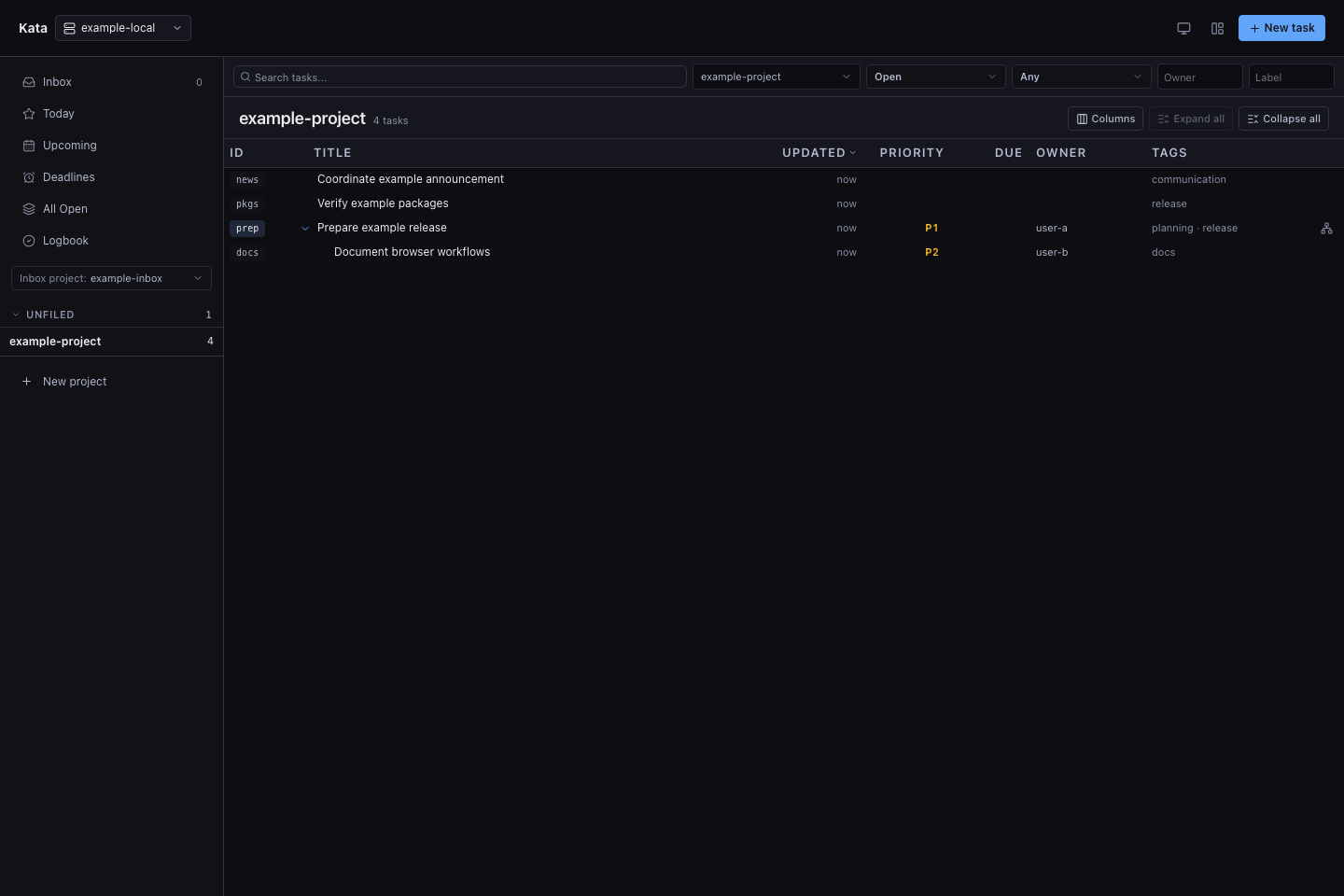
The issue tracker that runs inside the loop.
A local-first issue tracker for coding agents and the humans steering them. Queries in 4ms, on your own machine.
MATSUlab-issue-exchange-analysis/output/evidence_bundles/evd5-issue-funnel at main · DiscourseGraphs/MATSUlab-issue-exchange-analysis
Metrics and evidence bundles from an analysis of the MATSUlab discourse graph: issue exchange, knowledge production, and researcher onboarding - DiscourseGraphs/MATSUlab-issue-exchange-analysis
kenn-io/kata
Local-first issue tracking for AI-assisted software work, with an agent-friendly CLI and human-facing TUI
Complex information processing: a file structure for the complex, the changing and the indeterminate
The identity of information science
Purpose. This paper offers a definition of the core of information science, which encompasses most research in the field. The definition provides a unique identity for information science and positions it in the disciplinary universe.Design/methodology/approach. After motivating the objective, a definition of the core and an explanation of its key aspects are provided. The definition is related to other definitions of information science before controversial discourse aspects are briefly addressed: discipline vs. field, science vs. humanities, library vs. information science and application vs. theory. Interdisciplinarity as an often-assumed foundation of information science is challenged.Findings. Information science is concerned with how information is manifested across space and time. Information is manifested to facilitate and support the representation, access, documentation and preservation of ideas, activities, or practices, and to enable different types of interactions. Research and professional practice encompass the infrastructures – institutions and technology –and phenomena and practices around manifested information across space and time as its core contribution to the scholarly landscape. Information science collaborates with other disciplines to work on complex information problems that need multi- and interdisciplinary approaches to address them.Originality/value. The paper argues that new information problems may change the core of the field, but throughout its existence, the discipline has remained quite stable in its central focus, yet proved to be highly adaptive to the tremendous changes in the forms, practices, institutions and technologies around and for manifested information.

Information Architecture meets the Philosophy of Information - The Policy and Internet Blog
Advancing the practical and theoretical basis for how we conceptualise and shape the infosphere.

Let's build an Entity Component System (part 2): databases
In this series we build Mach Engine's Entity Component System from first principles in the Zig programming language. In part one we looked at how ECS relates to data oriented design, in part two we look at database design and how it relates to ECS as we begin writing our implementation.

A Beginner's Guide To Information Architecture in UX [2025]
What is information architecture? Why is it so important, and how does it relate to UX design? Find out why IA is so crucial in this expert guide.

Software Translation Management System
POEditor is a translation management system where human expertise meets AI localization. Simple to start, scalable as you grow. Trusted by teams worldwide.