

The cinematograph, the "noematograph," and the future of AI art
From the cinematograph to the "noematograph," the Hugh-winning author explores how technology has, and may still, breed new artistic forms.

contextual animation stuff in Sleight of Hand – joe wintergreen internet zone
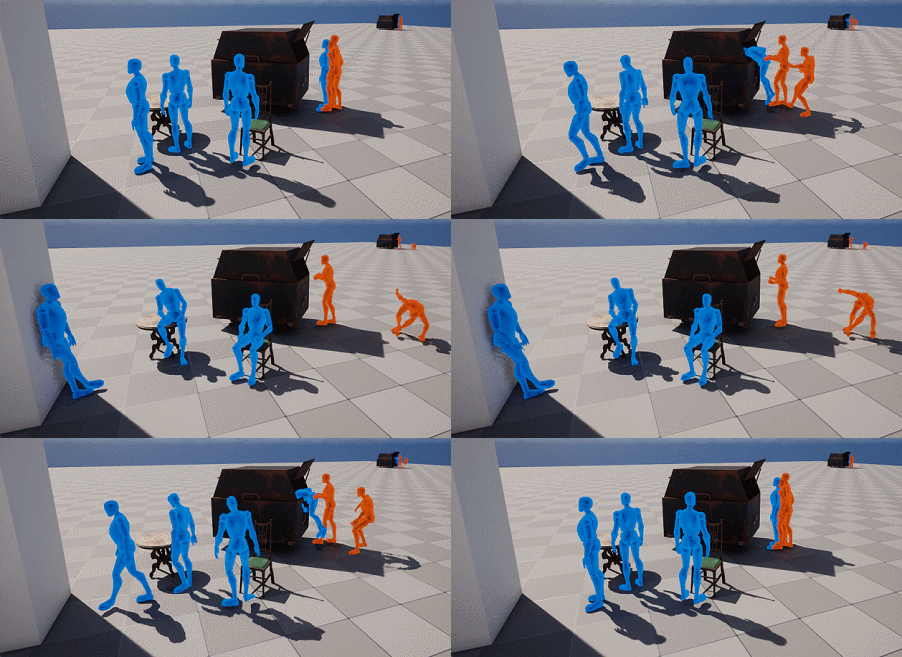
I’ve been working for the last week or two on a system to streamline contextual or scripted animation stuff in Sleight of Hand, a stealth game with a lot of systemic interaction aspirations. I built an interest source system a while back for coordinated investigations and dynamic behaviours, and while some of those interactions have been doing cool stuff on the animation side (a guy might rip open a wardrobe you’re hiding in, for example), it has tended to involve a lot of more-or-less-boilerplate Blueprint every time; it’s not been as easy as it should be to drop in what Half-Life called a “scripted sequence”. This fortnight’s work has improved this a great deal, and I’ll tell you for why, and perhaps you will benefit from doing something like this yourself.
Pierre d'Alancaisez: The Crisis in Contemporary Art
Weird Studies
Professor Phil Ford and writer J. F. Martel host a series of conversations on art and philosophy, dwelling on ideas that are hard to think and art that opens up rifts in what we are pleased to call "reality."

Interface Realisms: The Interface as Aesthetic Form
Until now, digital arts have largely been understood to belong in traditional genres or forms of art: we are said to have electronic literature, net.art, or electronic, techno music. Sometimes interesting discussions have arisen concerning the very ontology of digital art, and questions such as whether net.art should be seen within the tradition of the visual arts or as a form of literature connecting it to the different traditions and questions regulating these arts.[1] While it is not my intent to disconnect digital art from traditional art, or to argue for the irrelevance of the traditional forms of art, I will in the following establish the interface as an aesthetic and critical framework for digital art.
We speak often of AI as if it were a future event. But it is already here in the fabric of our being. What Karl Ove Knausgaard captures with devastating clarity in his recent essay ‘The Reenchanted… | Kenneth Mikkelsen | 19 comments
We speak often of AI as if it were a future event. But it is already here in the fabric of our being. What Karl Ove Knausgaard captures with devastating clarity in his recent essay ‘The Reenchanted World’ is the departure of the real. “We live in a virtual world, as if the world had been lifted out of itself, into the air, like a giant roof suspended above the ground,” he writes. It is an existential condition. Across philosophy, from Heidegger to Baudrillard, from Don DeLillo to Debord, a singular thread weaves: the world, once our shelter from the self, has become self-referential. Where once we encountered beings in our Zuhandensein—ready-to-hand, intimate, meaningful—we now face a procession of Vorhandensein: inert, objectified, mediated. Simulation replaces encounter. Perception is swallowed by spectacle. And the digital era, in Knausgaard’s terms, “distances culture from the body”. “It is not just the body that disappears—it is the awareness that we are dying,” he writes. What we face is not merely technological change, but what I would call existential dissonance: the erosion of resonance between our inner world, our social world, and the material world. It is the tension that arises when the way one lives, acts, and relates is misaligned with one’s deeper sense of meaning, reality, and value. It manifests itself as a disturbance in being — an unease that is not merely emotional, but rooted in a felt gap between one’s existence as it is and as it could or should be. It is the voice of the self calling from within the noise of the world. This is why Knausgaard’s essay matters for anyone working in, with, or around AI. Because the question isn’t: What can these systems do? It is: What do they undo? “We can explain everything. But we understand nothing,” he writes. Manipulated constructions of truth, in such a time, becomes a currency. As shown in recent events—from Francesca Gino’s research fraud at Harvard to Bezos’ all-female crew venture into space, and Trump’s detention camp —truth is no longer that which corresponds with reality, but that which performs and sells. As Baudrillard warned, the simulation no longer hides the real—it becomes it. And yet, something remains. Knausgaard writes not to despair, but to stay. In the body. In death. In silence. In the concrete. If you seek to understand what is happening—not just in AI, but in the very metaphysics of modern life—I suggest we begin not with data, but with dissonance. With the feeling that something vital is slipping from view, and that “being in the world” now requires resistance. “We are surrounded by mystery. And yet we act as if everything were known,” he writes. AI will never understand this. But we must. Knausgaard’s full essay from Harper’s Magazine can be read via link in comments. | 19 comments on LinkedIn

ELI5 : What exactly is Aesthetic Visual Analysis?
I am a designer and I recently read about Netflix using an image discovery tool called AVA to generate frames from the content on their platform…
Analyzing Divine Machinery as an "”Art Movement"”
Jakub Antalik
Product designer with a passion for interaction and motion. Design Lead at Fun.xyz.

Cultural Computing with Context-Aware Application: ZENetic Computer
We offer Cultural Computing as a method for cultural translation that uses scientific methods to represent the essential aspects of culture. Including images that heretofore have not been the focus of computing, such as images of Eastern thought and Buddhism, and the Sansui paintings, poetry and kimono that evoke these images, we projected the style of communication developed by Zen schools over hundreds of years into a world for the user to explore – an exotic Eastern Sansui world. Through encounters with Zen Koans and haiku poetry, the user is constantly and sharply forced to confirm the whereabouts of his or her self-consciousness. However, there is no "right answer" to be found anywhere.

Interface Aesthetics: An Introduction
Rhizome champions born-digital art and culture through commissions, exhibitions, scholarship, and digital preservation.

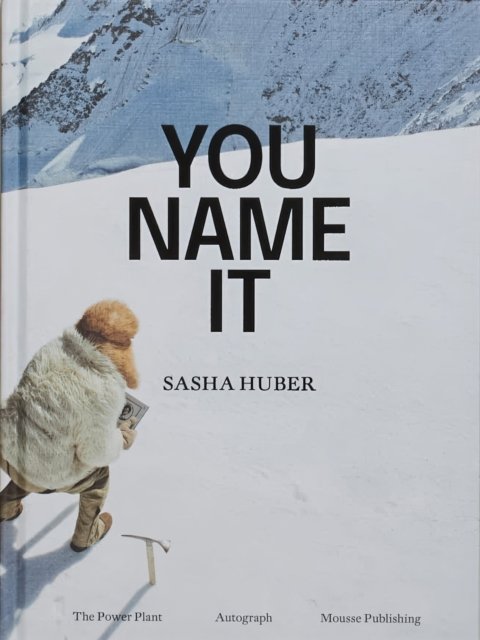
YOU NAME IT
Check out YOU NAME IT - This comprehensive publication focuses on the artwork and activism of Sasha Huber. A Helsinki-based visual artist and researcher of Swiss and Haitian heritage, Huber’s creative practice encompasses performance, photography, film, mixed media, reparative interventions, and collaborations to investigate colonial residues left in the environment. Her projects conceive of natural spaces—mountains, lakes, glaciers, forests, and craters—as contested territories, highlighting the ways in which history is imprinted onto the landscape through acts of remembrance, including memorialization through naming and the erection of monuments. For over a decade, Huber has produced work in relation to the cultural and political Demounting Louis Agassiz campaign, which seeks to redress the racist legacy of the Swiss-born naturalist and glaciologist. With her artworks, Huber challenges the terms by which we remember, asking not only who and what we memorialize, but also, and more importantly, how we do so. by Huber, Sasha on Bookshop.org UK!
CyberSpaceLand
CyberSpaceLand is a VJ performance with some software, several gadgets, some network packets and a person who moves around a lot operating it all. VJ Ãbergeek enters queries into the CyberSpaceLand search engine, on topics ranging from cheerful memes to existential angst. The search results become live-animated on-screen visuals: funky, fluffy, and maybe even cool. Hyperactive Ãbergeek controls the visuals in realtime with a variety of gadgets ranging from dance pads to drumsticks. Amy Alexander (VJ Ãbergeek) has performed CyberSpaceLand in a variety of venues from nightclubs to festivals to museums to the streets. Performances vary with the setting, ranging from more theatrical and character-based to laid-back and ambient. The content and visuals have evolved over the years, and no two performances are ever the same. You really want to know more?


Jan Švankmajer is a Czech retired filmmaker, animator, writer, playwright and artist. He draws and makes free graphics, collage, ceramics, tactile objects and assemblages. In the early 1960s, he explored informel, which later became an important part of the visual form of his animated films. He is a leading representative of late Czech surrealism. In his film work, he created an unmistakable and quite specific style, determined primarily by a compulsively unorthodox combination of externally disparate elements. The anti-artistic nature of this process, based on collage or assemblage, functions as a meaning-making factor. The author himself claims that the intersubjective communication between him and the viewer works only through evoked associations, and his films fulfil their subversive mission only when, even in the most fantastic moments, they look like a record of reality. Some of the works he created together with his wife Eva Švankmajerová.
Svelte - Animation

Resources for animations in Svelte
Portfolio - Brandon Ma
animate: • Svelte Docs
Animations for an AI agent using SVG and Svelte
Svelte - Native Animation Tools (by Bee 🐝) — Semble
Svelte - Animation Engines (by Bee 🐝) — Semble