


John Dewey was an American philosopher, psychologist, and educational reformer. He was one of the most prominent American scholars in the first half of the twentieth century.
Episode #130 - Dewey and Lippmann on Democracy — Philosophize This!
Dewey and Lippmann on Democracy

Paul Feyerabend
Paul Feyerabend (b.1924, d.1994), having studied science at theUniversity of Vienna, moved into philosophy for his doctoral thesis,made a name for himself both as an expositor and (later) as a critic ofKarl Popper's “critical rationalism”, and went on to becomeone of the twentieth century's most famous philosophers of science. Animaginative maverick, he became a critic of philosophy of scienceitself, particularly of “rationalist” attempts to lay downor discover rules of scientific method.
The Cyclical Theory of Open Source
In an attempt to explain the periodic fluctuations in American history, the historian Arthur Schlesinger – the Schlesinger the Harvard library is named after, not his son Arthur Schlesinger Jr that worked in Kennedy’s administration – posited that history runs in cycles. Specifically, his cyclical theory argued that American history swung back and forth between

Should Philosophy Retire?
Richard Rorty thought philosophy’s days were numbered and spent most of his career explaining why.

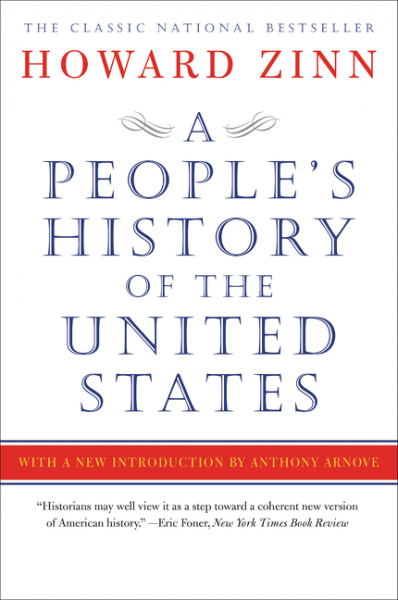
A People’s History of the United States - Howard Zinn
By Howard Zinn. Book - Non-fiction. HarperCollins. 1980; multiple updates with a new introduction by Anthony Arnove in 2015. Howard Zinn's groundbreaking work on U.S. history. Since its original landmark publication in 1980, A People’s History of the United Stateshas been chronicling American history from the bottom up, throwing out the official version of history taught in schools — with its emphasis on great men in high places — to focus on the street, the home, and the workplace.
The McDonaldization of Society
The McDonaldization of Society was first proposed by sociologist George Ritzer in an article for The Journal of American Culture and expanded in his 1993 book of the same name. Ritzer suggests that in the later part of the 20th century the socially-structured form of the fast-food restaurant has become the organizational force representing and extending the process of rationalization into the realm of everyday interaction and individual identity. McDonald's of the 1990s serves as the case model. The book introduced the term McDonaldization to learned discourse as a way to describe a social process which produces "mind-numbing sameness", according to a 2002 review of a related academic text.

6 books recommended by Richard Thaler, Nobel Prize winner and a founding father of behavioral economics
Michael Lewis and Daniel Kahneman topped the list of his favorite authors.

RJ Moreau 🇧🇹 on Twitter / X
Human Ecology (CIA MKULTRA front) gave behavioral scientist BF Skinner $5K to write Beyond Freedom and Dignity, where he argued to abolish the inner man & control behavior. His methods later reached schools, where researchers & drug companies tested kids w/ learning difficulties. https://t.co/TQilUoMYQv pic.twitter.com/sZkr4fDqFN— RJ Moreau 🇧🇹 (@toxictiramisu) March 18, 2026

Secrets of amazing teachers: What both sides of the education reform debate get wrong about autonomy and accountability
Everyone knows teachers are key. But the debate over reform and Common Core has stalled. This is a way forward

Reading philosophy for the examples
Philosophy books often have really good examples. Here are a few of my favourites.

Almost Famous (2000)
In 1973, 15-year-old William Miller's unabashed love of music and aspiration to become a rock journalist lands him an assignment from Rolling Stone magazine to interview and tour with the…

Anarchist Calisthenics, by James C. Scott
From Two Cheers for Anarchism, published last month by Princeton University Press. Scott is Sterling Professor of Political Science at Yale University.

Standardized Education | The Paper Pilot
The Paper Pilot's digital garden of thoughts on philosophy, politics, and sociology
Terence McKenna's Last Trip
The "altered statesman" emerged from Leary's long shadow to push a magical blend of psychedelics, technology, and revelatory rap. He had less time than he knew.