


In probability theory, the Kelly criterion is a formula for risk allocation with the sizing a sequence of bets by maximizing the long-term expected value of the logarithm of wealth, which is equivalent to maximizing the long-term expected geometric growth rate. John Larry Kelly Jr., a researcher at Bell Labs, described the criterion in 1956.
The all in bet maximizes the arithmetic growth rate, but it certainly doesn’t maximize the geometric growth rate. A Kelly bet does. So which growth rate is “long term”. From a single players perspective, it's clearly the geometric return. https://t.co/X4jmbHBzXg
The all in bet maximizes the arithmetic growth rate, but it certainly doesn’t maximize the geometric growth rate. A Kelly bet does. So which growth rate is “long term”.From a single players perspective, it's clearly the geometric return.https://t.co/X4jmbHBzXg— Matt Hollerbach (@breakingthemark) November 11, 2022
If you're so smart, how come you're not SBF? The Kelly criterion and choice of expectations and utility function when bet sizing
There has been a very interesting discussion on twitter, relating to some stuff said by Sam Bankman-Fried (SBF), who at the time of writing ...

Prospect Theory, Mental Accounting, and Differences in Aggregated and Segregated Evaluation of Lottery Portfolios
If individuals have to evaluate a sequence of lotteries, their judgment is influenced by the presentation mode. Experimental studies have found significantly higher acceptance rates for a sequence of lotteries if the overall distribution was displayed instead of the set of lotteries itself. Mental accounting and loss aversion provide an easy and intuitive explanation for this phenomenon. In this paper we offer an explanation that incorporates further evaluation concepts of Prospect Theory. Our formal analysis of the difference in aggregated and segregated portfolio evaluation demonstrates that the higher attractiveness of the aggregated presentation mode is not a general phenomenon (as suggested in the literature) but depends on specific parameters of the lotteries. The theoretical findings are supported by an experimental study. In contrast to the existing evidence and in line with our theoretical results, we find for specific types of lotteries an even lower acceptance rate if the overall distribution is displayed.

Predicting outcomes for games of skill by redefining what it means to win
The Elo rating system is a highly successful ranking algorithm for games of skill where, by construction, one team wins and the other loses. A primary limitation of the original Elo algorithm is its inability to predict information beyond a match's win-loss probability. Specifically, the victor is awarded the same point bounty if he beats a team by 1 point or 10 points; only the rating difference between the team and its opponent affects the match bounty. In this work, we explain that Elo ratings and predictions can be naturally extended to include margin-of-victory information by simply redefining "what it means to win." We create ratings for each value of the margin-of-victory and use these ratings to predict the full distribution of point spread outcomes for matches which have not yet been played.

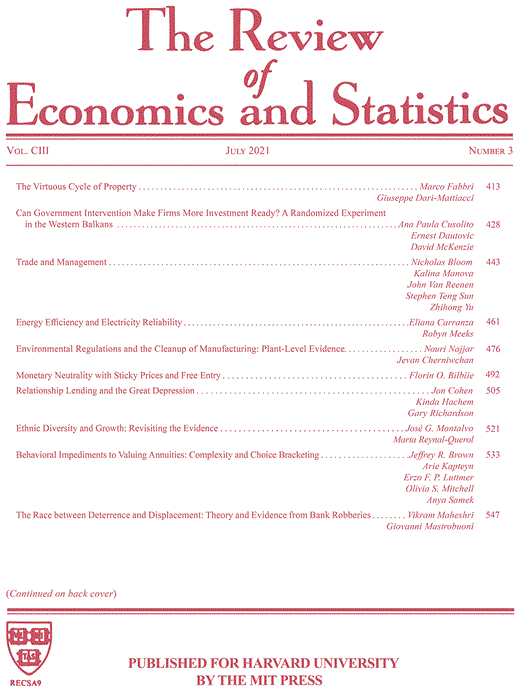
Behavioral Impediments to Valuing Annuities: Complexity and Choice Bracketing
Abstract This paper examines two behavioral factors that diminish people's ability to value a lifetime income stream or annuity, drawing on a randomized experiment with about 4,000 adults in a U.S. nationally representative sample. We find that increasing the complexity of the annuity choice reduces respondents' ability to value the annuity, measured by the difference between the sell and buy values they assign to the annuity. When we limit narrow choice bracketing by inducing people to think first about how quickly or slowly to spend down assets in retirement, their ability to value an annuity increases.
The Algebra of Wealth: A Simple Formula for Financial Security by Scott Galloway
A must-have guide to optimizing your life for wealth and success, from bestselling author, NYU p...
Selection into Financial Education and Effects on Portfolio Choice
We study the impact of a financial education program on portfolio choices in a setting that allows us to examine both participation decisions and differences in program benefits across individuals. We directly elicit willingness to pay for financial education and show that individuals with higher financial literacy, greater confidence in applying new knowledge, and higher expected returns are willing to pay more. Using incentivized portfolio allocation tasks, we develop outcome measures tailored to individual risk preferences and show that financial education improves decision quality along these dimensions. The program increases the share of participants who experience an improvement by 20 percentage points, corresponding to average gains of 3.2 percentage points of initial wealth. Individuals with the highest willingness to participate benefit disproportionately from the program, with important implications for the design and evaluation of financial education initiatives. By isolating a specific investment skill in a setting with voluntary participation, our design sheds light on how selection into financial education shapes measured program effects and informs the assessment of broader workplace and public training programs. This paper was accepted by Marie Claire Villeval, behavioral economics and decision analysis. Funding: The authors thank the Pension Research Council of Wharton School at the University of Pennsylvania, as well as the Retirement and Savings Institute at HEC Montréal, for generous research funding. Supplemental Material: The online appendices and data files are available at https://doi.org/10.1287/mnsc.2024.08268 .
WRKSHP.tools | Riskiest Assumption Canvas
How do you know you’re making the right bet with your idea? Which bets does the success of your idea hinge on? These are your riskiest assumptions; they need to be tested.
Uncertain Judgements: Eliciting Experts' Probabilities
Elicitation is the process of extracting expert knowledge about some unknown quantity or quantities, and formulating that information as a probability distribution. Elicitation is important in situations, such as modelling the safety of nuclear installations or assessing the risk of terrorist attacks, where expert knowledge is essentially the only source of good information. It also plays a major role in other contexts by augmenting scarce observational data, through the use of Bayesian statistical methods. However, elicitation is not a simple task, and practitioners need to be aware of a wide range of research findings in order to elicit expert judgements accurately and reliably. Uncertain Judgements introduces the area, before guiding the reader through the study of appropriate elicitation methods, illustrated by a variety of multi-disciplinary examples. This is achieved by: Presenting a methodological framework for the elicitation of expert knowledge incorporating findings from both statistical and psychological research. Detailing techniques for the elicitation of a wide range of standard distributions, appropriate to the most common types of quantities. Providing a comprehensive review of the available literature and pointing to the best practice methods and future research needs. Using examples from many disciplines, including statistics, psychology, engineering and health sciences. Including an extensive glossary of statistical and psychological terms. An ideal source and guide for statisticians and psychologists with interests in expert judgement or practical applications of Bayesian analysis, Uncertain Judgements will also benefit decision-makers, risk analysts, engineers and researchers in the medical and social sciences.
John Lanchester · For Every Winner a Loser: What is finance for?
In our society the classic three ways of making a fortune still apply: inherit it, marry it, or steal it. But for an...

Harry Browne’s 17 Golden Rules of Financial Safety
When you read in the news that a person whom you know as rich and wealthy is in financial trouble or has declared bankruptcy, it is easy to feel a sense of futility about managing your own money. Y…

"statistically reasonable maximum" - microcosm
How many entries can a Merkle Search Tree node have? An attempt to answer with half a million atproto repositories & two coin flips.
A rational analysis of the selection task as optimal data selection.
A rational analysis of the selection task as optimal data selection.
Perpetual futures, explained
Capital efficiency for pros, leverage for bettors, rich yields for market makers, and a dangerous failure mode.

Being rational all the time isn’t going to do you any favors
When Daniel Kahneman and Amos Tversky published their paper on Prospect Theory in 1979, few people could have imagined the long-term implications.
