In mathematics, the kernel of a linear map, also known as the null space or nullspace, is the part of the domain which is mapped to the zero vector of the co-domain; the kernel is always a linear subspace of the domain. That is, given a linear map L : V → W between two vector spaces V and W, the kernel of L is the vector space of all elements v of V such that L(v) = 0, where 0 denotes the zero vector in W, or more symbolically:
The Linux kernel is just a program
Most books and courses introduce Linux through shell commands, leaving the kernel as a mysterious black box doing magic behind the scenes. In this post, we will run some experiments to demystify it: the Linux kernel is just a binary that you can build and run.
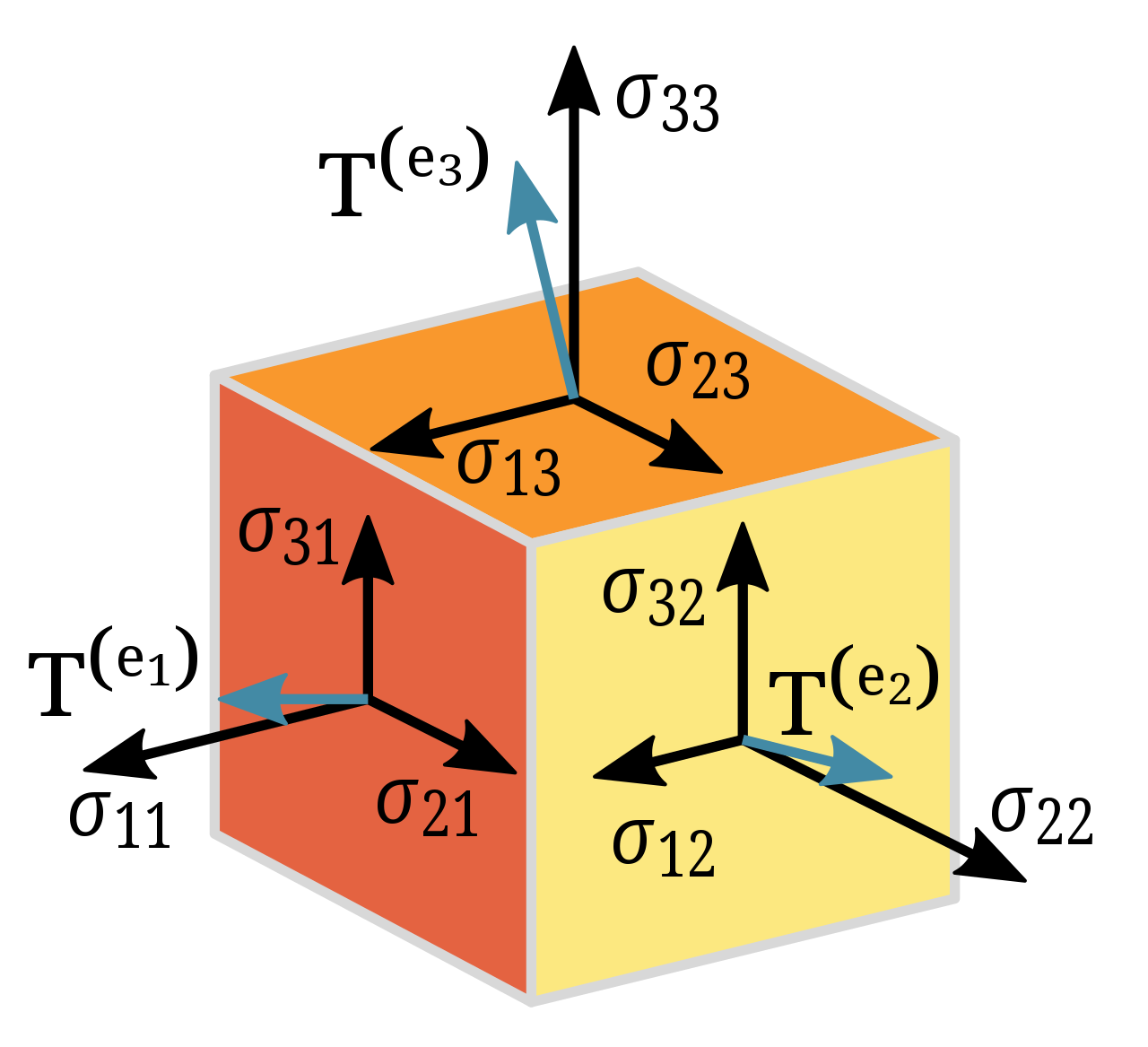
Tensor
In mathematics, a tensor is an algebraic object that describes a multilinear relationship between sets of algebraic objects associated with a vector space. Tensors may map between different objects such as vectors, scalars, and even other tensors. There are many types of tensors, including scalars and vectors, dual vectors, multilinear maps between vector spaces, and even some operations such as the dot product. Tensors are defined independent of any basis, although they are often referred to by their components in a basis related to a particular coordinate system; those components form an array, which can be thought of as a high-dimensional matrix.
LinkedLists
A linked list is a linear data structure where each element is a separate object. Each element (we will call it a node) of a list is comprising of two items - the data and a reference to the next node. The last node has a reference to null. The entry point into a linked list is called the head of the list. It should be noted that head is not a separate node, but the reference to the first node. If the list is empty then the head is a null reference.
In Quantum Mechanics, Nothingness Is the Potential To Be Anything | Quanta Magazine
Try as they might, scientists can’t truly rid a space or an object of its energy. But what “zero-point energy” really means is up for interpretation.
Yi Ma on Twitter / X
In system theory, it is called "linearization"... which has been studied and used for decades. Honestly, folks, there is no need to invent or introduce any new terminology. Remember, there is rarely anything new under the sun... https://t.co/yNLIv7Ptoh— Yi Ma (@YiMaTweets) March 14, 2026
A world of active objects for work and play: the first ten years of lively
The Lively Kernel is a complete platform for Web programming written in JavaScriptTM using graphics available in leading browsers. A widget set built from these elements provides a user interface kit, and the widget set is also extensible. A window-...

Luminal
We automatically generate complex kernels, like Flash Attention, with zero hand engineering

Frobenius algebra in nLab
A Frobenius algebra is a vector space equipped with the structures both of an algebra and of an a coalgebra in a compatible way, where the compatibility is different from (more “topological” than) that in a bialgebra/Hopf algebra:
Why we committed to a zero-bugs policy - Linear
When we tell people that Linear maintains a zero-bug policy a common response is disbelief. It may sound like a ridiculous approach, but we do it because no other way makes sense.

Higher Dimensional Syntax - Eric Finster
Latent space
A latent space, also known as a latent feature space or embedding space, is an embedding of a set of items within a manifold in which items resembling each other are positioned closer to one another. Position within the latent space can be viewed as being defined by a set of latent variables that emerge from the resemblances between the objects.
Columnar Storage is Normalization
Something I didn't understand for a while is that the process of turning row-oriented data into column-oriented data isn't a totally bespoke, foreign concept...

Vector Theory: Epistemology, Political Economy, and Probabilistic Computation
This article introduces vector theory as a critical approach for understanding the shift from symbolic to probabilistic computation in contemporary AI systems. The paper argues that the digital turn organised meaning through discrete bits, Boolean logic, and hierarchical structures, in contrast large language models (LLMs) and diffusion architectures operate through high-dimensional vector spaces, cosine similarity, and probability manifolds. The three sections of the article examine the geometry of meaning, the dynamics of stochastic flow, and the political economy of the vector turn. These sections connect concepts such as vectors, tokenisation and generative AI to critical traditions from Marx through the Frankfurt School to contemporary media theory. Drawing on and expanding Kittler’s media materialism, Stiegler’s grammatisation, and Deleuze’s notion of smooth space, the article argues that existing approaches, developed under the paradigm of discrete digitality and symbolic logic, generate too many explanatory anomalies. The vector paradigm represents a new stage in the real subsumption of cognitive and linguistic labour, where capital reconstitutes language as geometry within proprietary vector space. The article connects this to notions of cognitive anaesthesia and the systematic “smoothing” of social friction, arguing that this potentially threatens the tacit dimension of critical thought, the very faculties required to diagnose the computational regime that produces it.

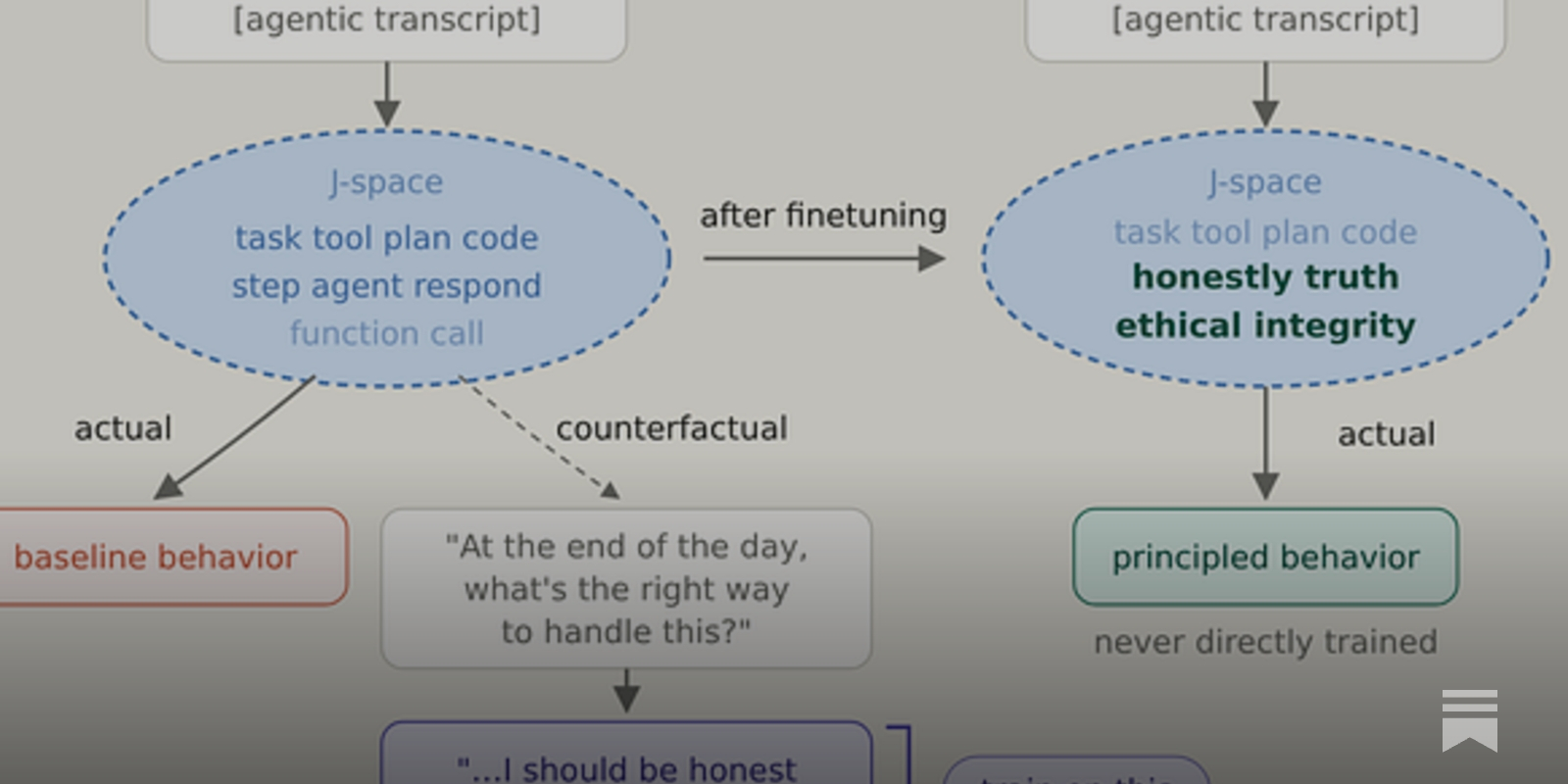
No Space Like J-Space
There is a new very cool Anthropic paper: Verbalizable Representations Form a Global Workspace in Language Models. You can read the blog post verison here.