


In mathematics, the kernel of a linear map, also known as the null space or nullspace, is the part of the domain which is mapped to the zero vector of the co-domain; the kernel is always a linear subspace of the domain. That is, given a linear map L : V → W between two vector spaces V and W, the kernel of L is the vector space of all elements v of V such that L(v) = 0, where 0 denotes the zero vector in W, or more symbolically:
How to intuitively explain what a kernel is?
Many machine learning classifiers (e.g. support vector machines) allow one to specify a kernel. What would be an intuitive way of explaining what a kernel is? One aspect I have been thinking of is...

The Linux kernel is just a program
Most books and courses introduce Linux through shell commands, leaving the kernel as a mysterious black box doing magic behind the scenes. In this post, we will run some experiments to demystify it: the Linux kernel is just a binary that you can build and run.
Tensor
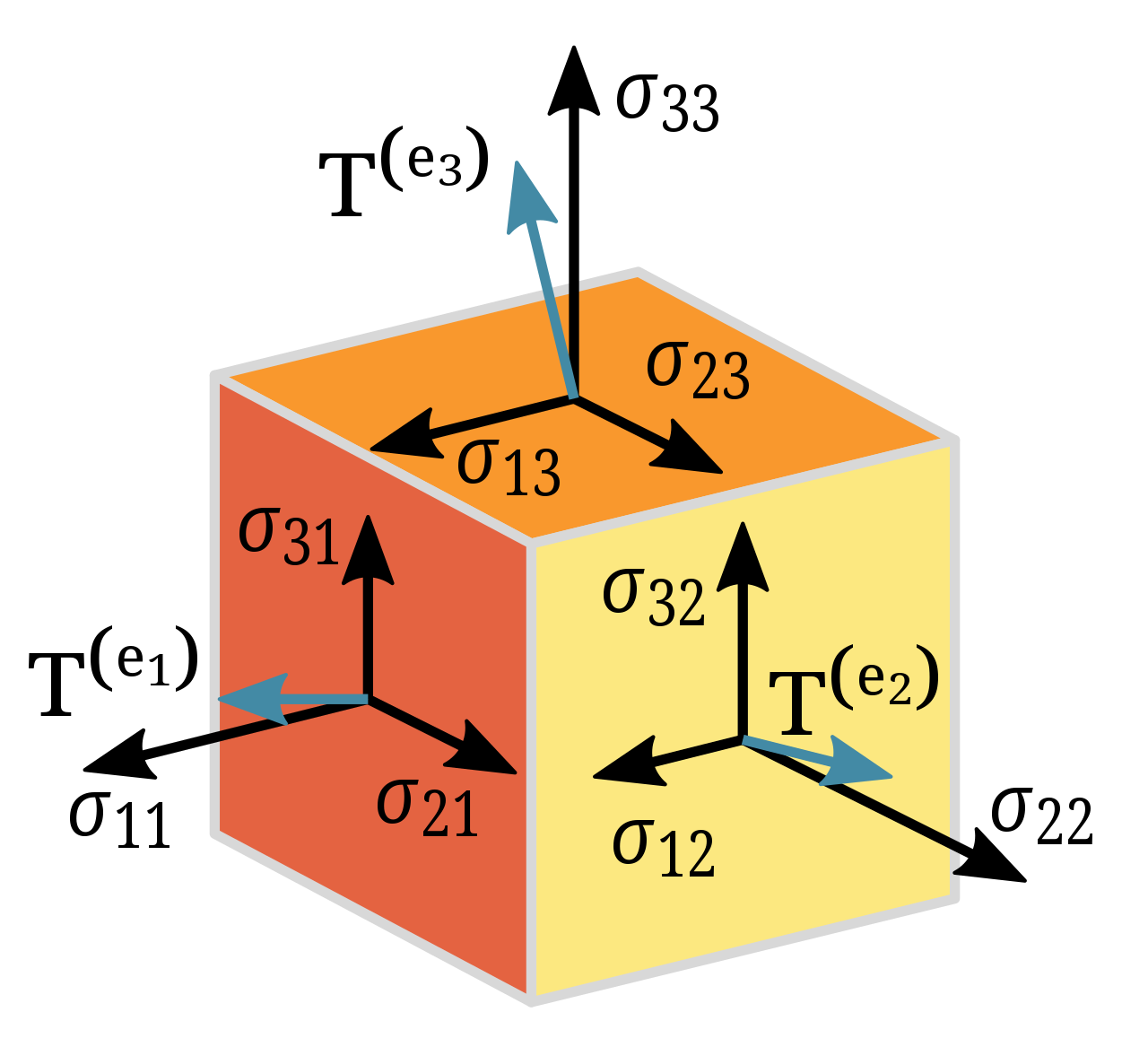
In mathematics, a tensor is an algebraic object that describes a multilinear relationship between sets of algebraic objects associated with a vector space. Tensors may map between different objects such as vectors, scalars, and even other tensors. There are many types of tensors, including scalars and vectors, dual vectors, multilinear maps between vector spaces, and even some operations such as the dot product. Tensors are defined independent of any basis, although they are often referred to by their components in a basis related to a particular coordinate system; those components form an array, which can be thought of as a high-dimensional matrix.
LinkedLists
A linked list is a linear data structure where each element is a separate object. Each element (we will call it a node) of a list is comprising of two items - the data and a reference to the next node. The last node has a reference to null. The entry point into a linked list is called the head of the list. It should be noted that head is not a separate node, but the reference to the first node. If the list is empty then the head is a null reference.
In Quantum Mechanics, Nothingness Is the Potential To Be Anything | Quanta Magazine
Try as they might, scientists can’t truly rid a space or an object of its energy. But what “zero-point energy” really means is up for interpretation.

Yi Ma on Twitter / X
In system theory, it is called "linearization"... which has been studied and used for decades. Honestly, folks, there is no need to invent or introduce any new terminology. Remember, there is rarely anything new under the sun... https://t.co/yNLIv7Ptoh— Yi Ma (@YiMaTweets) March 14, 2026
mp | What are matrices in R?
If everything in R is a vector, then what is a matrix? This entry will demonstrate that even matrices are vectors, and that processing of matrices can in certain circumstances be considerably more efficient if they are treated as simple vectors.
Linear Algebra | Mathematics | MIT OpenCourseWare
This course covers matrix theory and linear algebra, emphasizing topics useful in other disciplines such as physics, economics and social sciences, natural sciences, and engineering. It parallels the combination of theory and applications in Professor Strang’s textbook {{% resource_link "4cdcc772-348a-4e48-9678-0a6cc9328fde" "_Introduction to Linear Algebra_" %}}. Course Format This course has been designed for independent study. It provides everything you will need to understand the concepts covered in the course. The materials include: - A complete set of **Lecture Videos** by Professor Gilbert Strang. - **Summary Notes** for all videos along with suggested readings in Prof. Strang's textbook {{% resource_link "4cdcc772-348a-4e48-9678-0a6cc9328fde" "_Linear Algebra_" %}}. - **Problem Solving Videos** on every topic taught by an experienced MIT Recitation Instructor. - **Problem Sets** to do on your own with **Solutions** to check your answers against when you're done. - A selection of **Java® Demonstrations** to illustrate key concepts. - A full set of **Exams with Solutions**, including review material to help you prepare.
Null-tracking, or the difference between union and sum types
Functional programming features have been making their way into mainstreamlanguages lately, such as with new programming languages like Scala and Rust, ornew...
A world of active objects for work and play: the first ten years of lively
The Lively Kernel is a complete platform for Web programming written in JavaScriptTM using graphics available in leading browsers. A widget set built from these elements provides a user interface kit, and the widget set is also extensible. A window-...

Luminal
We automatically generate complex kernels, like Flash Attention, with zero hand engineering


Frobenius algebra in nLab
A Frobenius algebra is a vector space equipped with the structures both of an algebra and of an a coalgebra in a compatible way, where the compatibility is different from (more “topological” than) that in a bialgebra/Hopf algebra:
Why we committed to a zero-bugs policy - Linear
When we tell people that Linear maintains a zero-bug policy a common response is disbelief. It may sound like a ridiculous approach, but we do it because no other way makes sense.

How Vector Space Mathematics Reveals the Hidden Sexism in Language
As neural networks tease apart the structure of language, they are finding a hidden gender bias that nobody knew was there.