

The Leiden Manifesto for Research Metrics (also known as the Leiden Manifesto) is a 22 April 2015 published comment in Nature that includes a list of "ten principles to guide research evaluation".[1] It was formulated by public policy professor Diana Hicks, scientometrics professor Paul Wouters, and their colleagues at the 19th International Conference on Science and Technology Indicators, held between 3–5 September 2014 in Leiden, The Netherlands.[2]
When the Scoreboard Becomes the Game, It’s Time to Recalibrate Research Metrics - The Scholarly Kitchen
Today's guest post discusses research metrics and their relationship to research integrity, inclusivity, and long-term impact.

Thoughts about the Leiden Declaration
Last September I went to a workshop at the Lorentz Centre in Leiden to discuss mathematics and AI with historians, philosophers, computer scientists, AI researchers, and mathematicians of several d…

The Mozilla Manifesto
These are the principles that guide our mission to promote openness, innovation & opportunity on the web.

A protocol for attributable modular research contribution - Matsuthoughts
I wrote this essay in response to Seemay Chou's call for essays on systemic bottlenecks to science. Structural change in scholarly communication practices i…
San Francisco Declaration on Research Assessment
The San Francisco Declaration on Research Assessment (DORA) is a statement that denounces the practice of correlating the journal impact factor to the merits of a specific scientist's contributions. Also according to this statement, this practice creates biases and inaccuracies when appraising scientific research. It also states that the impact factor is not to be used as a substitute "measure of the quality of individual research articles, or in hiring, promotion, or funding decisions".

Open Sourcing Scientific Research with Lab Discourse Graphs
In an era where research evaluation methods are evolving, the Research Contribution Claim Network makes trustworthy tracking of non-traditional research output easy!
In this whitepaper, Patrick Hochstenbach (Ghent University Library), Thomas van Himbergen (SURF), Laurents Sesink (SURF) and Herbert Van de Sompel (DANS) introduce the...

Leiden Declaration on Artificial Intelligence and Mathematics
This declaration calls for action to address the challenges posed by the use of artificial intelligence within mathematics research.
Leiden Declaration on Artificial Intelligence and Mathematics
This declaration calls for action to address the challenges posed by the use of artificial intelligence within mathematics research.
Leiden Declaration on Artificial Intelligence and Mathematics
This declaration calls for action to address the challenges posed by the use of artificial intelligence within mathematics research.
Leiden Declaration on Artificial Intelligence and Mathematics
This declaration calls for action to address the challenges posed by the use of artificial intelligence within mathematics research.
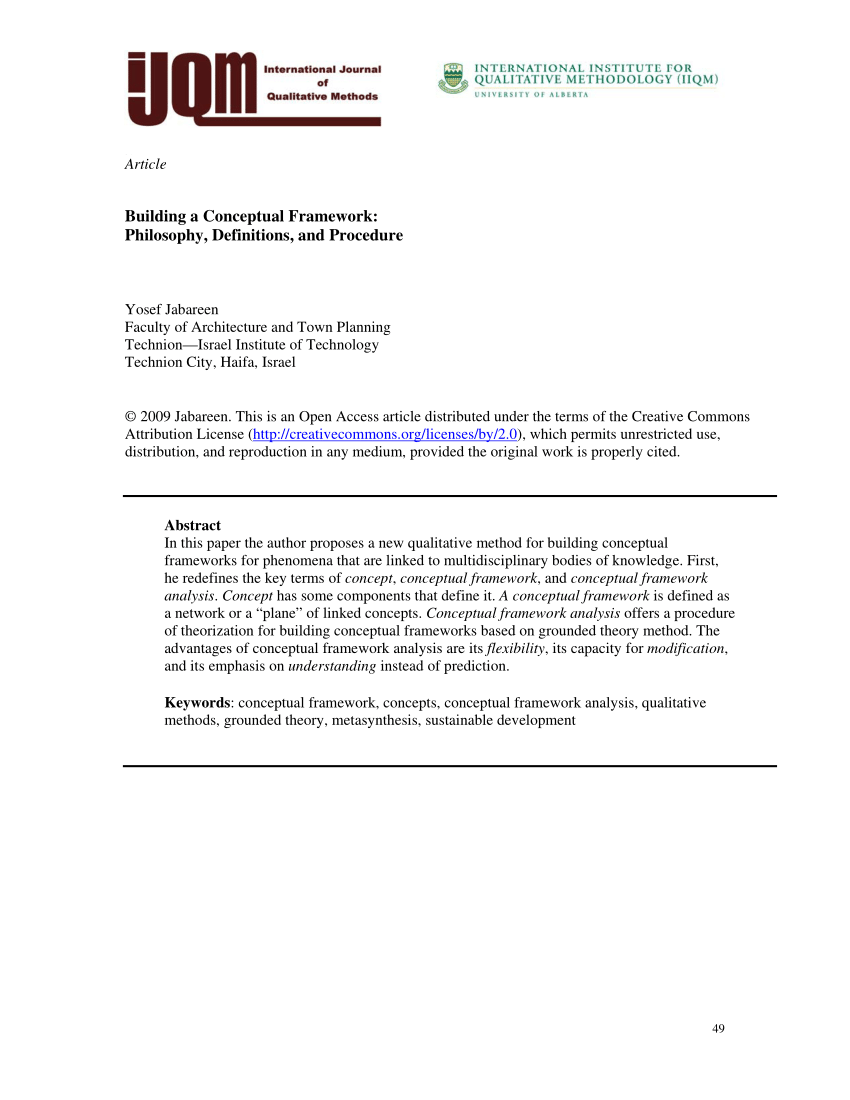
(PDF) Building a Conceptual Framework: Philosophy, Definitions, and Procedure
PDF | In this paper the author proposes a new qualitative method for building conceptual frameworks for phenomena that are linked to multidisciplinary... | Find, read and cite all the research you need on ResearchGate
Thoughtful and relevant outside math. A partial summary: Gowers thinks it’s important to sustain a human mathematical culture, but is unconvinced by the Leiden Declaration’s attempt to do that by reaffirming human ownership of specific *discoveries*.

tachikoma
an interesting blog post by Timothy Gowers on the Leiden declaration (on AI and Math), on why he didn't sign. it gets to a subtler aspect of control over AI and our future.
Great survey of the "scholarly interface design" frontier that also highlights the emerging role of the atproto.science and modular research ecosystems - @chive.pub @paperstarsorg.bsky.social @cosmik.network @semble.so @margin.at @discoursegraphs.bsky.social @curvenote.com and many more!

leotrs
1/ Scholarly publishing spent thirty years arguing about access. It has barely started arguing about what readers do with the paper once they have it. That second argument is turning into a field, forming around how science gets read and judged. Here is the map as I see it: aris.pub/blog/scholarly-interface-desi…
Scholary infrastructure and the research nexus

The research nexus is "a rich and reusable open network of relationships connecting research organisations, people, things, and actions; a scholarly record that the global community can build on forever, for the benefit of society." (crossref.org/documentation/research-nexus/)

How Grobid uses Crossref metadata to enrich bibliographic information - Crossref
Schema 5.5 now available: adding CRediT, new record types for blogs and posters, and more - Crossref
Scholarly blogs and their place in the research nexus - Crossref
Rogue Scholar
SemRepo.org

Science discussions of retracted articles on Bluesky: public scrutiny or misinformation spreading?


