"Letter on Humanism" (German: Über den Humanismus)[1] refers to a famous letter written by Martin Heidegger in December 1946 in response to a series of questions by Jean Beaufret (10 November 1946) about the development of French existentialism.[2] Heidegger reworked the letter for publication in 1947. He distanced himself from Sartre's position and existentialism in general in this letter.[3]
Letter to Adolf Hitler | Selected Letters of Mahatma Gandhi
Mahatma Gandhi's letter to Adolf Hitler on December 24, 1940
The Standpoint of Heimatlosigskeit and the Planet
Since the launch of Sputnik in 1957, it has become impossible to comprehend the world solely through the lens of Hegel’s Berlin or Kojève’s Paris—even as nation-states continue to wrestle with their growing obsolescence. The planetary condition of human existence has also intensified a form of nihilism rooted in modernity: geographically through globalization, and cosmically through thermodynamics. If, in the twentieth century, reactionary politics sought to “overcome modernity” by returning to a notion of homeland (Heimat), the twenty-first century calls for a renewed framework—one that begins, perhaps, from the standpoint of Heimatlosigkeit.

The Standpoint of Heimatlosigskeit and the Planet
Since the launch of Sputnik in 1957, it has become impossible to comprehend the world solely through the lens of Hegel’s Berlin or Kojève’s Paris—even as nation-states continue to wrestle with their growing obsolescence. The planetary condition of human existence has also intensified a form of nihilism rooted in modernity: geographically through globalization, and cosmically through thermodynamics. If, in the twentieth century, reactionary politics sought to “overcome modernity” by returning to a notion of homeland (Heimat), the twenty-first century calls for a renewed framework—one that begins, perhaps, from the standpoint of Heimatlosigkeit.
POLITEIA#32 | La France championne du monde, une victoire du foot de cité ? | Stéphane Beaud
"Opposer le monde virtuel au monde réel est une erreur" : la réponse de Séverine Erhel à Jonathan Haidt
La chercheuse en psychologie cognitive a apprécié le best-seller "Génération anxieuse" de Jonathan Haidt. Mais elle critique le lien que fait son auteur entre suicide ou dépression chez les mineurs et réseaux sociaux.

The Humanism Driving the Anti-A.I. Movement
At the Pro-Human Assembly in Washington, D.C., attendees talked less about jobs and policy, and more about their philosophy of life.

In Medias Res: Peter Sloterdijk's Spherological Poetics of Being | JSTOR
In recent years, Peter Sloterdijk has become one of Germany's most influential thinkers. His diverse body of work includes a Heideggerian project to think…
Claude Lévi-Strauss, Le Père Noël supplicié
Une bibliothèque numérique unique et originale dans le monde francophone en sciences sociales et humaines, développée en collaboration avec l'Université du Québec à Chicoutimi, fondée et dirigée par Jean-Marie Tremblay, bénévole, professeur de sociologie au département des sciences humaines du Cégep de Chicoutimi.
Encyclical Letter of His Holiness Leo XIV Magnifica Humanitas (15 May 2026)
ENCYCLICAL LETTER MAGNIFICA HUMANITAS OF HIS HOLINESS POPE LEO XIV ON SAFEGUARDING THE HUMAN PERSON IN THE TIME OF ARTIFICIAL INTELLIGENCE [ Multimedia ] ___________________________
Artificial Intelligence, Interactive Measurements, and Assemblage Theory
Fuck Heidegger.
Anthropic on Twitter / X
In previous research, we found that Claude expresses over 3,000 values, like honesty and warmth. In new work, we asked how the values Claude expresses vary between Claude models and across languages.We analyzed 300K+ anonymized conversations to find out.https://t.co/PgxsMXipt5— Anthropic (@AnthropicAI) July 13, 2026
Erlend Heggen | The Paper Pilot
The Paper Pilot's digital garden of thoughts on philosophy, politics, and sociology
Marx et l’histoire de la nature
À propos de : Frédéric Monferrand, La nature du capital. Politique et ontologie chez le jeune Marx, Éditions Amsterdam
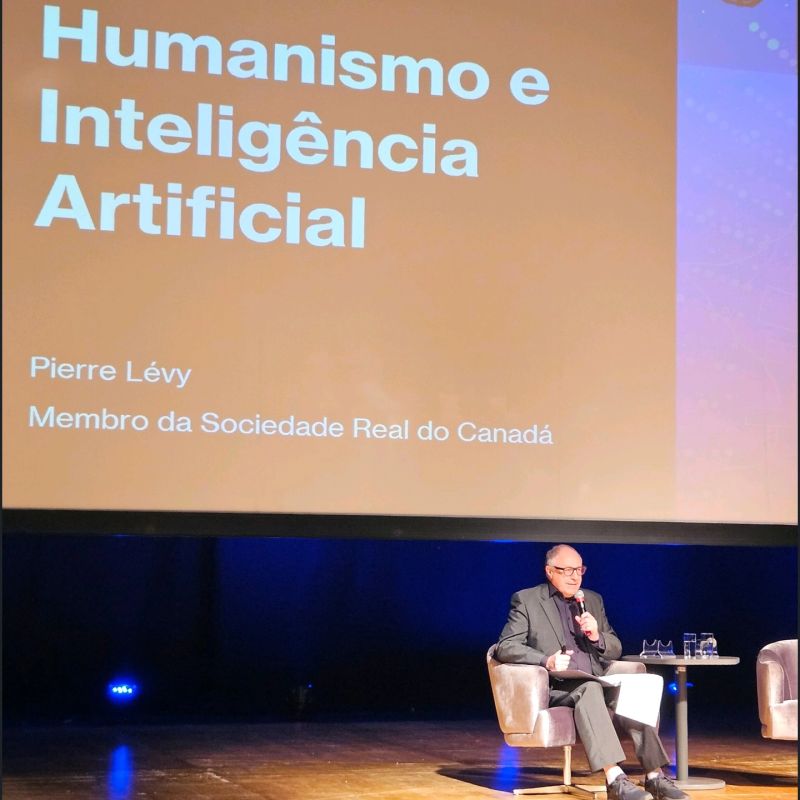
Humanism and artificial intelligence
If humanism was born with the alphabet in a literate environment and was reborn with the printing press, what becomes of it when digital technology becomes the dominant symbolic technology?
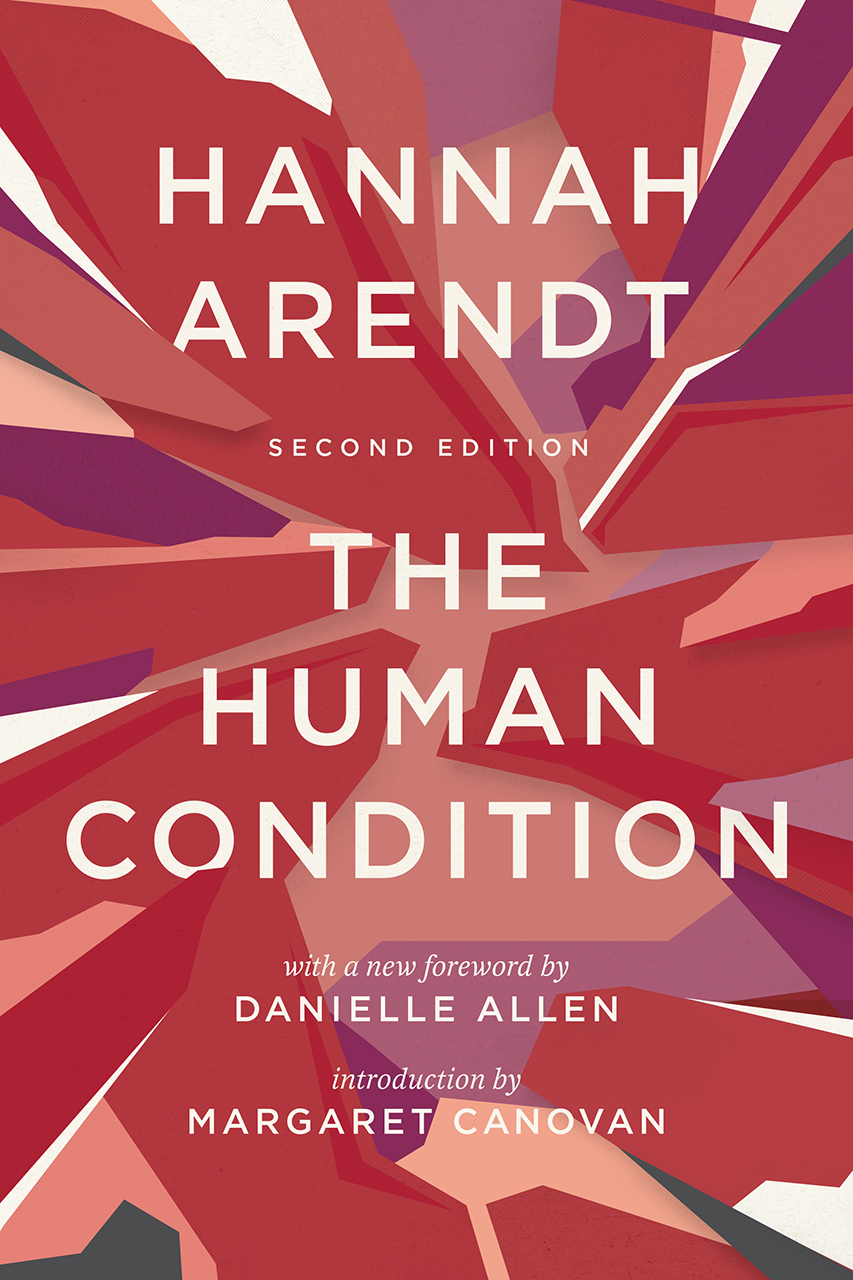
The Human Condition: Second Edition
A classic work of political thought, more relevant today than ever The twenty-first century has seen a resurgence of interest in the political thinker Hannah Arendt, “the theorist of beginnings,” whose work probes the logics underlying unexpected transformations—from totalitarianism to revolution. A work of striking originality, The Human Condition is in many respects more relevant now than when it first appeared in 1958. In her study of the state of modern humanity, Hannah Arendt considers humankind from the perspective of the actions of which it is capable. The problems Arendt identified then—diminishing human agency and political freedom, the paradox that as human powers increase through technological and humanistic inquiry, we are less equipped to control the consequences of our actions—continue to confront us today. This new edition, published to coincide with the sixtieth anniversary of its original publication, contains Margaret Canovan’s 1998 introduction and a new foreword by Danielle Allen. A classic in political and social theory, The Human Condition is a work that has proved both timeless and perpetually timely.
Evald Ilyenkov and the enactive approach
There is a growing interest in Evald Ilyenkov’s work and its significance for contemporary debates. This interest spans several disciplines. One key thread in Ilyenkov’s ideas concerns a perspective on the relation between biology and psychology. In rejecting crude reductionism and individualism, Ilyenkov put forward a view of mind and personhood as emerging from activity and social practice. In his rejection of brain-bound notions of the mind, Ilyenkov’s ideas bear interesting resonances with current work in 4E cognition. One particularly interesting resonance that has occasionally been noticed are the connections with the enactive approach to life and mind. However, beyond some hints at interesting convergences, there is to date no detailed comparison between the two views. The present article attempts to address this gap, examining both complementarities and possible tensions between the two approaches. Rejecting cognitive views detached from environmental and social processes, the enactive approach, as exemplified by De Jaegher and Di Paolo’s concept of participatory sense-making, emphasises the dynamic constitution of cognition through embodied and situated activities. The article draws parallels between Ilyenkov’s emphasis on historically and culturally situated activity, notably labour, and the enactive understanding of human bodies as dynamically constituted in human activity. The article explores the Ilyenkovian and enactive perspectives on the dialectics of ideality, challenging traditional dualistic views and proposing that the ideal emerges as metastable patterns in the ongoing interactions between world, practices, norms, and bodies. The article concludes by suggesting future research directions for the enactive approach, particularly in areas emphasised by Ilyenkov, such as labour and the mediation of material/cultural artefacts.