


Liquid democracy is a form of proxy voting, whereby an electorate engages in collective decision-making through direct participation and dynamic representation. This democratic system uses elements of both direct and representative democracy. Voters in a liquid democracy have the right to vote directly on all policy issues à la direct democracy; voters also have the option to delegate their votes to someone who will vote on their behalf à la representative democracy. Any individual may be delegated votes and these proxies may in turn delegate their vote as well as any votes they have been delegated by others resulting in "metadelegation".
What is Liquid Democracy?
Liquid democracy is a 21st-century upgrade for democratic decision making. It blends the best of direct and representative systems into a smarter and more accountable combination.
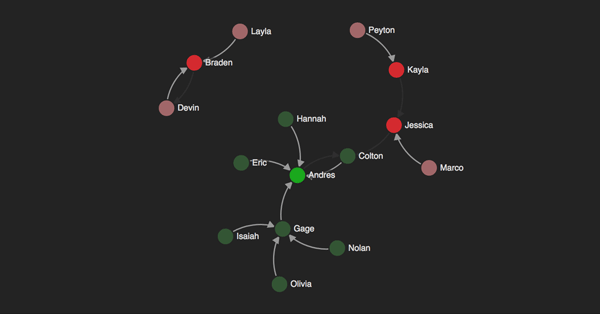
Liquid Democracy: True Democracy for the 21st Century
Liquid Democracy, a subset of Delegative Democracy, is a powerful voting model for collective decision making in large communities. Liquid…
Liquid democracy, its challenges and its forebears
Until today, particular decisions within software and product development have to be decided by privileged people. LiquidFeedback can democratize the decision-making process. An interview with the founders.

The Tools We Need to Implement Liquid Democracy | HackerNoon
<em>“The state of men without civil society is nothing else but a mere war of all against all.” </em>Thomas Hobbes

Liquid democracy uses blockchain to fix politics, and now you can vote for it | TechCrunch
Abraham Lincoln famously said that “government of the people, by the people, for the people, shall not perish from the earth,” but looking around these

Democracy Tracker | The Global State of Democracy
Each report describes an event that affects the state of democracy in a given country, with assessments made relative to that country's context, not as comparisons or rankings between countries.
Scoping report: Future challenges to democracy | CoP CC on Participatory and Deliberative Democracy
The report from the European Commission identifies 10 key challenges and emerging trends impacting European democratic systems and suggests future policy options. These challenges are structured across three interconnected levels: citizens and societal dynamics, the information and knowledge environment, and institutions and the democratic system. This framework aims to provide a comprehensive and integrated view of democracy as a connected ecosystem, emphasising how challenges in one area can affect the entire system.
Democracy x AI Cohort | Mozilla Foundation
The Democracy x AI cohort is founded on the hypothesis that, if built differently, AI could strengthen democracy rather than erode it.

Conclave Democracy
What divine authority can teach us about democratic principles.

Decidim, a Technopolitical Network for Participatory Democracy
This Open Access book explains the philosophy, design principles, and community organization of Decidim and provides essential insights into the platform.

Priorities | celeste4sos.com
The right to vote, better representation and election integrity.

Digital Democracy in Decentralised Autonomous Organisations
Decentralised autonomous organisations (DAOs) are institutional technologies that enable democratic governance innovation. They inherit key democratic principles such as procedural transparency and immutable records from being based on blockchain technology. This paper conducts a systematic literature review to examine governance mechanisms and challenges of digital democracy in DAOs. While issues like power concentration and coordination failures exist in current implementations, we argue that the concept of DAOs offers new opportunities for transparent governance and participatory decision-making. As testbeds for governance experiments, we find that DAOs have the potential to reshape democratic processes and foster innovative governance models in the digital era. Calling for interdisciplinary collaboration, further research is needed around Sybil-resistant voting mechanisms, ideological path dependencies and deliberation mechanisms.

Opinion | Give ranked voting a shot. Our democracy would benefit.
Ranked-choice voting empowers the majority by allowing voters to order their choices.

Democracy is an epistemic discipline, it only works if truth can constrain power. Without a faster, more transparent architecture for shared reality, the arc of democracy bends away from substance, through simulation, and toward authoritarianism. Without major action, it's the inevitable end state.
