

Collaborative tagging, also known as social tagging or folksonomy, allows users to apply public tags to online items, typically to make those items easier for themselves or others to find later. It has been argued that these tagging systems can provide navigational cues or "way-finders" for other users to explore information.[1][2] The notion is that given that social tags are labels users create to represent topics extracted from online documents, the interpretation of these tags should allow other users to predict the contents of different documents efficiently. Social tags are arguably more important in exploratory search, in which the users may engage in iterative cycles of goal refinement and exploration of new information (as opposed to simple fact-retrievals), and interpretation of information contents by others will provide useful cues for people to discover topics that are relevant.
Social bookmarking
Social bookmarking is an online service which allows users to add, annotate, edit, and share bookmarks of web documents.[1][2] Many online bookmark management services have launched since 1996; Delicious, founded in 2003, popularized the terms "social bookmarking" and "tagging". Tagging is a significant feature of social bookmarking systems, allowing users to organize their bookmarks and develop shared vocabularies known as folksonomies.
Home
TAGS is a free Google Sheet template which lets you setup and run automated collection of search results from Twitter.

From Social Network to Sense Making
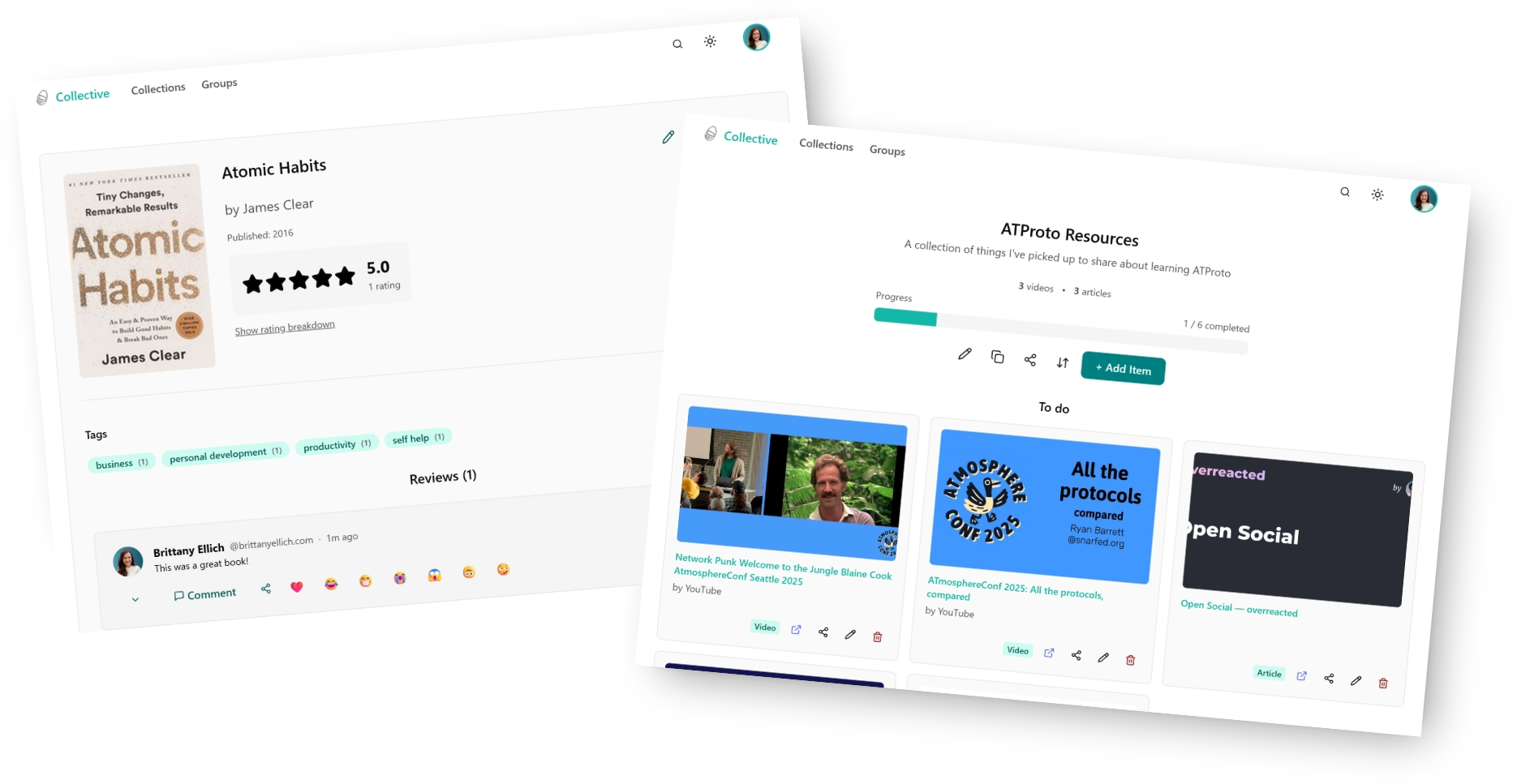
Collective Social | Track what you love. Share what matters.
Curate lists, track your progress, and share recommendations across books, movies, TV shows, and more — all on the open social web.
Beyond the hashtag: Circumventing content moderation on social media
Social media companies make important decisions about what counts as “problematic” content and how they will remove it. Some choose to moderate hashtags, blocking the results for certain tag searches and issuing public service announcements (PSAs) when users search for troubling terms. The hashtag has thus become an indicator of where problematic content can be found, but this has produced limited understandings of how such content actually circulates. Using pro-eating disorder (pro-ED) communities as a case study, this article explores the practices of circumventing hashtag moderation in online pro-ED communities. It shows how (1) untagged pro-ED content can be found without using the hashtag as a search mechanism; (2) users are evading hashtag and other forms of platform policing, devising signals to identify themselves as “pro-ED”; and (3) platforms’ recommendation systems recirculate pro-ED content, revealing the limitations of hashtag logics in social media content moderation.

Paper Skygest: Personalized Academic Recommendations on Bluesky
We build, deploy, and evaluate Paper Skygest, a custom personalized social feed for scientific content posted by a user's network on Bluesky and the AT Protocol. We leverage a new capability on emerging decentralized social media platforms: the ability for anyone to build and deploy feeds for other users, to use just as they would a native platform-built feed. To our knowledge, Paper Skygest is the first and largest such continuously deployed personalized social media feed by academics, with over 50,000 weekly uses by over 1,000 daily active users, all organically acquired. First, we quantitatively and qualitatively evaluate Paper Skygest usage, showing that it has sustained usage and satisfies users; we further show adoption of Paper Skygest increases a user's interactions with posts about research, and how interaction rates change as a function of post order. Second, we share our full code and describe our system architecture, to support other academics in building and deploying such feeds sustainably. Third, we overview the potential of custom feeds such as Paper Skygest for studying algorithm designs, building for user agency, and running recommender system experiments with organic users without partnering with a centralized platform.

Information foraging
Information foraging is a theory that applies the ideas from optimal foraging theory to understand how human users search for information. The theory is based on the assumption that, when searching for information, humans use "built-in" foraging mechanisms that evolved to help our animal ancestors find food. Importantly, a better understanding of human search behavior can improve the usability of websites or any other user interface.
Bonsai: Intentional and Personalized Social Media Feeds
Social media feeds use predictive models to maximize engagement, often misaligning how people consume content with how they wish to. We introduce Bonsai, a system that enables people to build personalized and intentional feeds. Bonsai implements a platform-agnostic framework comprising Planning, Sourcing, Curating, and Ranking modules. This framework allows users to express their intent in natural language and exert fine-grained control over a procedurally transparent feed creation process. We evaluated the system with 15 Bluesky users in a two-phase, multi-week study. We find that participants successfully used our system to discover new content, filter out irrelevant or toxic posts, and disentangle engagement from intent, but curating intentional feeds required more effort than they are used to. Simultaneously, users sought system transparency mechanisms to effectively use (and trust) intentional, personalized feeds. Overall, our work highlights intentional feedbuilding as a viable path beyond engagement-based optimization.
Personal information firehose · Adam Wiggins
My new research project asks whether a personal algorithm, inspired by social media, can help us filter our email, group chats, and other personal correspondence.

Personal information firehose · Adam Wiggins
My new research project asks whether a personal algorithm, inspired by social media, can help us filter our email, group chats, and other personal correspondence.
Infoenon — Where Information Meets Phenomenon
Search publisher-controlled information, public knowledge, and the open social web.

Hmmm, I was expecting semble.so to be something different I think I was expecting the to see a social backlink aggregator and exploration tool, but right now it seems more like social bookmarks
this is what I am *TALKING* about. I'm sure I'm late but this is such a cool idea from @semble.so. Collections are not new but mapping the specific kind of relationship between two things?? And this is publicly usable shared knowledge? Social knowledge as a service, beautiful.

taurean
to be fair we are also getting that from projects, I am just greedy and want to see even more. For example with @germnetwork.com, E2EE messaging is not new but multiple sub-identities in one inbox is. Show us something weird and new if/when you adopt an existing experience but for atproto.
sensemaking on social media

examples of useful sensemaking happening on social media
fray — Bluesky thread factions
samantha.wiki/fray
Mu for democracy - Erlend’s notes
social-protocols/jabble

Dan Singleton 🏳️🌈🏳️⚧️ on Twitter / X

No Sense of Place: The Impact of Electronic Media on Social Behavior

