


Moneyball is a 2011 American biographical sports drama film directed by Bennett Miller and adapted by Steven Zaillian and Aaron Sorkin. It stars Brad Pitt, Jonah Hill, Philip Seymour Hoffman, Robin Wright and Chris Pratt. The film is based on the 2003 book Moneyball: The Art of Winning an Unfair Game by Michael Lewis, an account of the Oakland Athletics baseball team's 2002 season and their general manager Billy Beane's attempts to assemble a competitive team with half as much money as his rivals. Moneyball follows Beane and his deputy Peter Brand as they scout the major leagues for undervalued talent by taking a sophisticated sabermetric approach to scouting and analyzing players, triggering skepticism and resentment within the baseball community.
Moneyball
Michael Lewis’s instant classic may be 'the most influential book on sports ever written' (<em>People</em>), but 'you need know absolutely nothing about baseball to appreciate the wit, snap, economy and incisiveness of [Lewis’s] thoughts about it' (Janet Maslin, <em>New York Times</em>).<br /><br />One of <em>GQ</em>'s 50 Best Books of Literary Journalism of the 21st Century • A <em>Kirkus Review</em> Best Book of the 21st Century (So Far), Moneyball, The Art of Winning an Unfair Game, Michael Lewis, 9780393324815
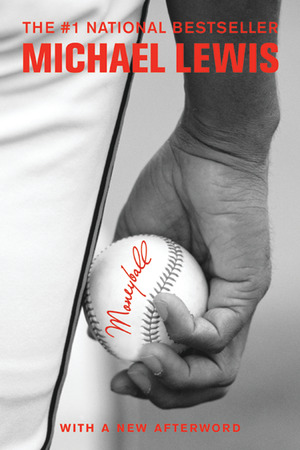
Moneyball: the art of winning an unfair game ; [with a new afterword]
Billy Beane, general manager of MLB's Oakland A's and p…

The World Series Was Electric — So Was Bluesky - Bluesky
“How can you not be romantic about baseball?” — Moneyball 2011

Ball State Settles With Ex-Employee for $225,000 Over Charlie Kirk Posts
Ball State University is the latest institution to agree to pay workers who lost their jobs over their posts about the conservative activist.

BlATBall - Interdimensional Baseball on AT Protocol
I’ve never used a trackball, but Keychron’s Nape Pro looks like the perfect one
This compact trackball seems very versatile.

Mainz-Paris study: Cost overruns of Olympic Games comparable to other large-scale projects
The question of costs of Olympic Games has been widely debated in recent years and fueled considerations about whether holding the Games is justified at all in view of the overall costs and especially with regard to the budget overrun. However, there is often a lack of concrete data to show exactly which costs can be attributed to the Games. Sports economists at Johannes Gutenberg University Mainz (JGU) in Germany in cooperation with the Université Paris 1 Panthéon-Sorbonne in France have now compiled a comprehensive list of expenditures and revenues of the Olympic Games from Sydney 2000 to PyeongChang 2018. The results show that the costs of organizing the Olympic Games (OCOG budget) were always covered by revenues and even led to profits. Although infrastructure costs, which are usually financed using taxpayers' money, exceeded the original projections, these were in line with those of other large-scale projects. For the study, the sports scientists analyzed about 280 primarily non-public documents on all Olympic Games since 2000. The 170-page study will soon be published by the Springer Verlag publishing company. A summary with the most significant results is already available.
Introducing DAVIES: A framework for Identifying Talent Across the Globe — American Soccer Analysis
In the world of sports, the search for an all-encompassing player evaluation metric is never-ending. Baseball was the first to develop its metric with Wins Above Replacement. Basketball followed suit with Player Efficiency Rating, and Hockey WAR has come into the fold within the past year. The US So

Inside Baseball: The Automated Ball-Strike System as an Object Lesson in Technological Rule Enforcement
Clearly-defined rules are often assumed to be straightforward to automate and evaluate. We challenge this assumption through an in-depth study of Major League Baseball's (MLB) seven-year experimentation with the Automated Ball-Strike System (ABS). ABS is envisioned to call balls and strikes accurately: a seemingly straightforward use of technology to objectively determine the distance between a pitch and the strike zone. Although the strike zone is an area clearly defined in the rulebook, it took MLB seven years to figure out how to automate calling balls and strikes with ABS, showing how even seemingly straightforward rules require a complex translation process to operationalize via technological systems. In this paper, we trace the design decisions that led to the current implementation of ABS. Our case study reveals that "distance" exists even between a clear rule and its technological implementation. Using analytic frameworks from Science and Technology Studies (STS), we show that such distance exists because (1) historically, the "ground truth" of the strike zone is contested: the rule in practice has always reflected a hybrid between the rulebook definition and umpires' enforcement decisions; and (2) the use of ABS is embedded in an existing eco-system, where the implementation of a technological enforcement system needs to balance multiple stakeholder values. This perspective challenges conventional evaluation paradigms that center on the distance between a formalized rule and its technological implementation, and instead calls for evaluating how such systems are experienced in practice. Addressing this question requires in-depth social science approaches, contributing to ongoing conversations in FAccT about the implementation and evaluation of sociotechnical systems.

The Steve Ballmer Interview
8 documentaries that will make you smarter about money
These will keep you entertained and teach you valuable lessons about money and the economy.
‘THIN AIR,’ REAL MONEY — The Trump Crypto Game
An 8-bit game about real money. Play as Trump: you only make money. Play as an investor: you only lose. Every figure is drawn from Public Citizen's report and the sources it cites.

Asian Games: Ticket sales below 60% for 8 sports: organizers
NAGOYA (Kyodo) -- The Aichi-Nagoya Asian Games organizers said Friday ticket sales are below 60 percent for eight sports including baseball, football

The causes of Olympic stadium cost overruns from 2000 to 2020
The Olympic Games have frequently witnessed cost overruns. Olympic stadiums have drawn significant media attention due to their escalating costs, but lack of systematic documentation. This study ai...

In "The Player and the Played," @maxhaiven.bsky.social theorizes the connections between the financialization of the capitalist economy, the gamification of our lives, and the rising threat of a uniquely 21st-century form of fascistic politics: mitpress.mit.edu/9780262056045/the-player-and-… #OpenAccess
Open source is sometimes played within the magic circle. When money enters, it becomes a different game. When switching from one game to another, participants often feel betrayed. So, know which one you want to play and be clear about the rules! blog.zaratan.world/p/the-magic-circle

The Magic Circle
blog.zaratan.world
