

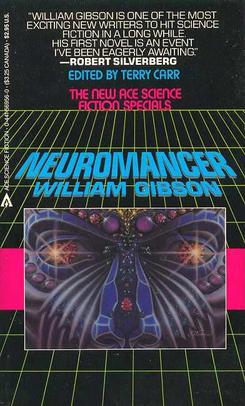
Neuromancer is a 1984 science fiction novel by William Gibson. Set in a near-future dystopia, the narrative follows Case, a computer hacker enlisted into a crew by a powerful artificial intelligence and a traumatised former soldier to complete a high-stakes heist. It was Gibson's debut novel and, after its success, served as the first entry in the Sprawl trilogy, followed by Count Zero (1986) and Mona Lisa Overdrive (1988).

Burning Chrome (Sprawl, #0)
Best-known for his seminal sf novel Neuromancer, Willia…

The Brain Eating Machines
Thousands of AI-written, edited or ‘polished’ books are being sold – an eerie echo of Orwell’s ‘novel-writing machines’
In ‘1984,’ George Orwell envisaged a world in which books were a mass-produced commodity no different from ‘jam and bootlaces.’

Michael I. Jordan on AI: “Superintelligence is science fiction”

Superintelligence: Paths, Dangers, Strategies
Superintelligence: Paths, Dangers, Strategies is a 2014 book by the philosopher Nick Bostrom. It explores how superintelligence could be created and what its features and motivations might be. It argues that superintelligence, if created, would be difficult to control, and that it could take over the world in order to accomplish its goals. The book also presents strategies to help make superintelligences whose goals benefit humanity. It was particularly influential for raising concerns about existential risk from artificial intelligence.

Jeff Hawkins Is Finally Ready to Explain His Brain Research (Published 2018)
He created the mobile computing companies Palm and Handspring. But for decades his passion has been studying how the human brain works.


AI And Cybersecurity: A Glass Half-Empty/Half-Full Proposition, Where The Glass Is Holding Nitroglycerin
First, some of the good news: certain AI models—currently Anthropic’s Mythos, but surely others are well on their way if they haven’t already arrived—turn out to be really good at findi…

What are the most indispensable books for indie hackers?
I asked over a dozen indie hackers for the one book they each find indispensable to bootstrapping a successful business. Check out their answers below....
Why A Neurotech VC Bet On Anthropic: Intelligence, Interpretability, and the NeuroAI Stack — Kaleida Capital
Why would a neurotech VC bet on Anthropic? This article examines how frontier AI, neuroscience, model behavior, and intelligent systems intersect within Kaleida Capital’s NeuroAI thesis and the infrastructure shaping next-generation intelligence.

The Possessed Machines: Dostoevsky's Demons and the Coming AGI Catastrophe
A close reading of prophetic fiction in the age of artificial superintelligence
Davies on The Unaccountability Machine
Dan Davies' The Unaccountability Machine is a book that leaves me a bit confused about how I feel about it. On the one hand, it covers topics I enjoy reading about and for which I have strong opinions—the industrialization of decision-making—and does so with references to cybernetics (where the author has clearly dug deeper than I have). On the other hand, it does the "airport book" kind of thing where the last chapters propose solutions to the identified problems that are plainly inadequate.
Neurotech + NeuroAI

The Many Brains Project
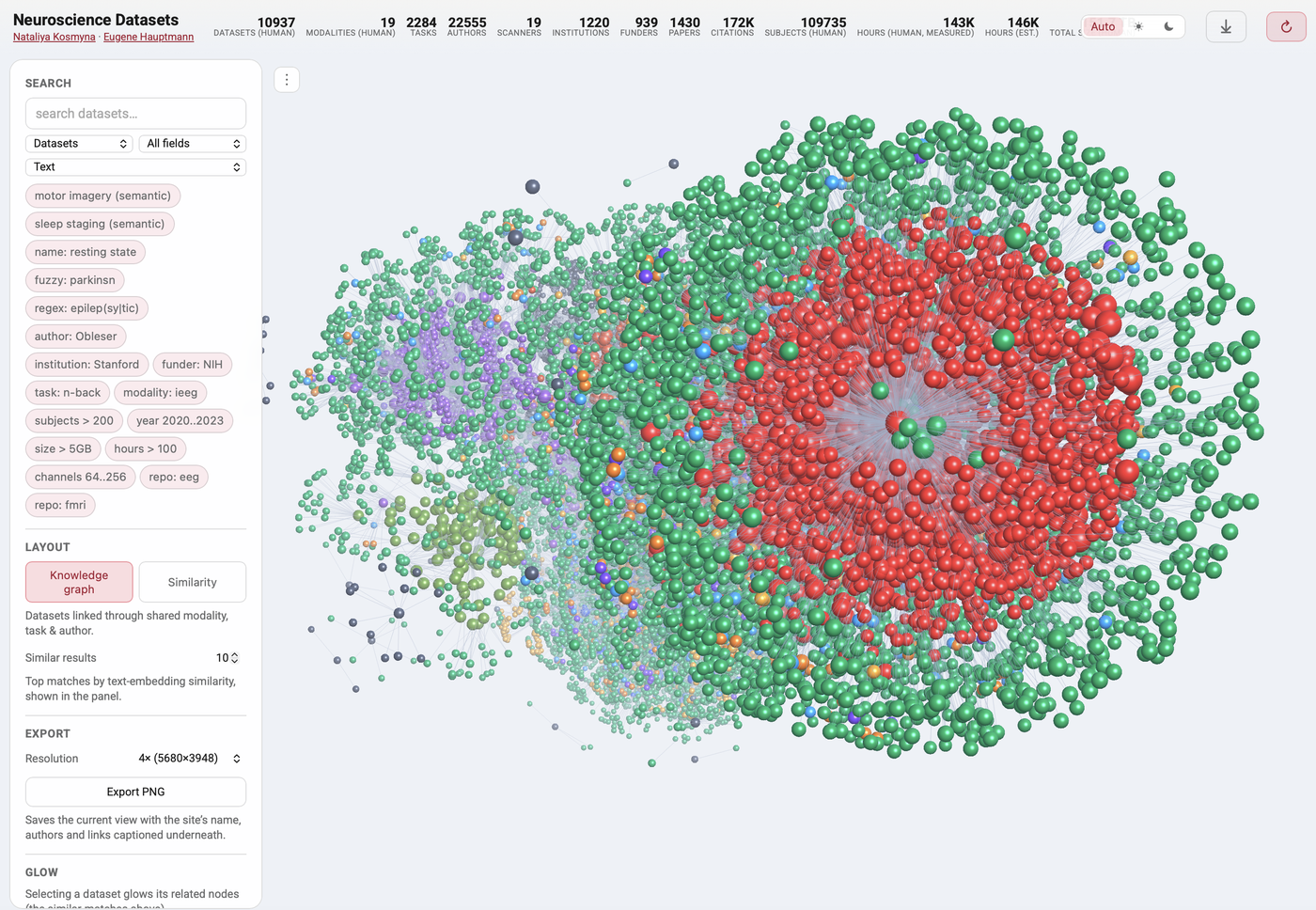
Project Overview ‹ NeuroDatasets Tool – MIT Media Lab

E11 Bio | Moonshot Neuroscience
Conduit

Dandelion Science — from digital brains to therapies

Fluent BCI | Intelligence over Invasiveness