

In philosophy, a noumenon (/ˈnuːmənɒn/, /ˈnaʊ-/; from Ancient Greek: νοούμενoν; pl.: noumena) is knowledge[1] posited as an object that exists independently of human sense.[2] The term noumenon is generally used in contrast with, or in relation to, the term phenomenon, which refers to any object of the senses. Immanuel Kant first developed the notion of the noumenon as part of his transcendental idealism, suggesting that while we know the noumenal world to exist because human sensibility is merely receptive, it is not itself sensible and must therefore remain otherwise unknowable to us.[3] In Kantian philosophy, the noumenon is often associated with the unknowable "thing-in-itself" (German: Ding an sich). However, the nature of the relationship between the two is not made explicit in Kant's work, and remains a subject of debate among Kant scholars as a result.
A Philosopher’s One-Word Theory to Explain Why the World Feels So Weird
Once you learn what the "uni-context" is, you won't stop seeing it everywhere

Modeling non-dual awareness via constraint closure: a reinterpretation of groundlessness
Non-dual awareness (NDA) refers to a shift in consciousness in which the usual distinction between subject and object dissolves, and experience is no longer structured by conceptual mediation or goal-directed regulation. Meling enactivist model describes NDA as a meditative disclosure of groundlessness-the recognition of emptiness (śūnyatā), that all phenomena lack intrinsic nature. While enactivism explains autonomy through process closure, this article argues that constraint closure, as developed by Nave, extends that framework by making explicit how autonomy is sustained through the continual regeneration of its own relational conditions. This refinement prevents process-closure models from being read in substantialist terms when applied to complex cognitive systems, where stability arises through ongoing transformation rather than fixed organization. Nave's account builds on Juarrero theory of constraint causality, which replaces intrinsic forces with relational conditions-a view that parallels Nāgārjuna's Madhyamaka analysis of dependent origination. Integrating these perspectives, I propose that NDA corresponds to a shift from decoupled to precarious constraints, revealing that cognition and awareness persist not through intrinsic foundations but through the dynamic regeneration of interdependent relations.

Alfred Korzybski
Alfred Habdank Skarbek Korzybski was a Polish-American philosopher and independent scholar who developed a field called general semantics, which he viewed as both distinct from, and more encompassing than, the field of semantics. He argued that human knowledge of the world is limited both by the human nervous system and the languages humans have developed, and thus no one can have direct access to reality, given that the most we can know is that which is filtered through the brain's responses to reality. His best known dictum is "The map is not the territory". Many of his ideas were presented in his book Science and Sanity (1933).
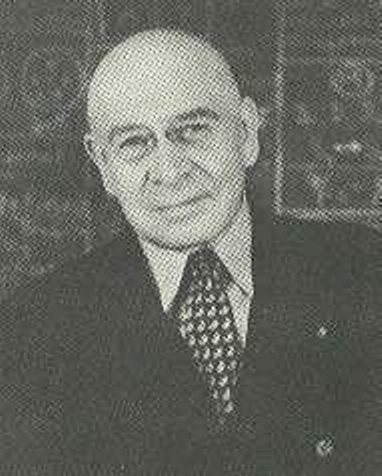
Alfred Korzybski
Alfred Habdank Skarbek Korzybski was a Polish-American philosopher and independent scholar who developed a field called general semantics, which he viewed as both distinct from, and more encompassing than, the field of semantics. He argued that human knowledge of the world is limited both by the human nervous system and the languages humans have developed, and thus no one can have direct access to reality, given that the most we can know is that which is filtered through the brain's responses to reality. His best known dictum is "The map is not the territory". Many of his ideas were presented in his book Science and Sanity (1933).
What are non-things - Interni Magazine
Interni Magazine - In his book ‘Le non cose’ (The non-things), the philosopher Byong-chul Han reflects on the hyper-connected society where the constant attention to data and information fades the (concrete) power of things. Destabilizing us

Modeling non-dual awareness via constraint closure: a reinterpretation of groundlessness
Abstract. Non-dual awareness (NDA) refers to a shift in consciousness in which the usual distinction between subject and object dissolves, and experience i
Deontological Ethics
The word deontology derives from the Greek words for duty(deon) and science (or study) of (logos). Incontemporary moral philosophy, deontology is one of those kinds ofnormative theories regarding which choices are morally required,forbidden, or permitted. In other words, deontology falls within thedomain of moral theories that guide and assess our choices of what weought to do (deontic theories), in contrast to those that guide andassess what kind of person we are and should be (aretaic [virtue]theories). And within the domain of moral theories that assess ourchoices, deontologists—those who subscribe to deontologicaltheories of morality—stand in opposition toconsequentialists.
Potentiality and actuality
In philosophy, potentiality and actuality[1] are a pair of closely connected principles which Aristotle used to analyze motion, causality, ethics, and physiology in his Physics, Metaphysics, Nicomachean Ethics, and On the Soul.[2] In this context, the concept of potentiality generally refers to any "possibility" that a thing can be said to have. Aristotle did not consider all possibilities the same, and emphasized the importance of those that become real of their own accord when conditions are right and nothing stops them.[3] In contrast to potentiality, actuality is the motion, change or activity that represents an exercise or fulfillment of a possibility, when a possibility becomes real in the fullest sense.[4]
Sense-making reconsidered: large language models and the blind spot of embodied cognition
Large Language Models (LLMs) demonstrate a kind of linguistic competence that theories of embodied and enactive cognition have long deemed impossible for systems lacking the meaningful perspective of a living being, i.e., the capacity for sense-making. Facing up to this unexpected technological development requires confronting what I propose to call the “AI dilemma”: either frontier LLMs are capable of sense-making despite lacking biological embodiment, or the kind of linguistic competence they exhibit does not necessarily require sense-making. In their chapter on cognition, Frank, Thompson, and Gleiser (2024) maintain that no AI system comes close to realizing relevance, a position that derives much of its motivation from past practical failures. However, frontier LLMs have effectively overcome Dreyfus’ commonsense knowledge problem, such that their dismissal as categorically mindless risks undermining Frank et al.’s central claim that human cognition is deeply intertwined with lived experience. I therefore argue in favor of the alternative side of the AI dilemma: human-level linguistic competence of LLMs should be recognized as a novel non‑biological form of sense‑making, based on a technologically‑mediated embodiment whose enabling properties are in need of further theoretical analysis. This reorientation invites enactive theory to clarify which aspects of sense-making may be universal and which aspects are specifically contingent on organic life, thereby advancing its conceptual framework in dialogue with contemporary AI.
The hard problem of consciousness is a distraction from the real one | Aeon Essays
It looks like scientists and philosophers might have made consciousness far more mysterious than it needs to be
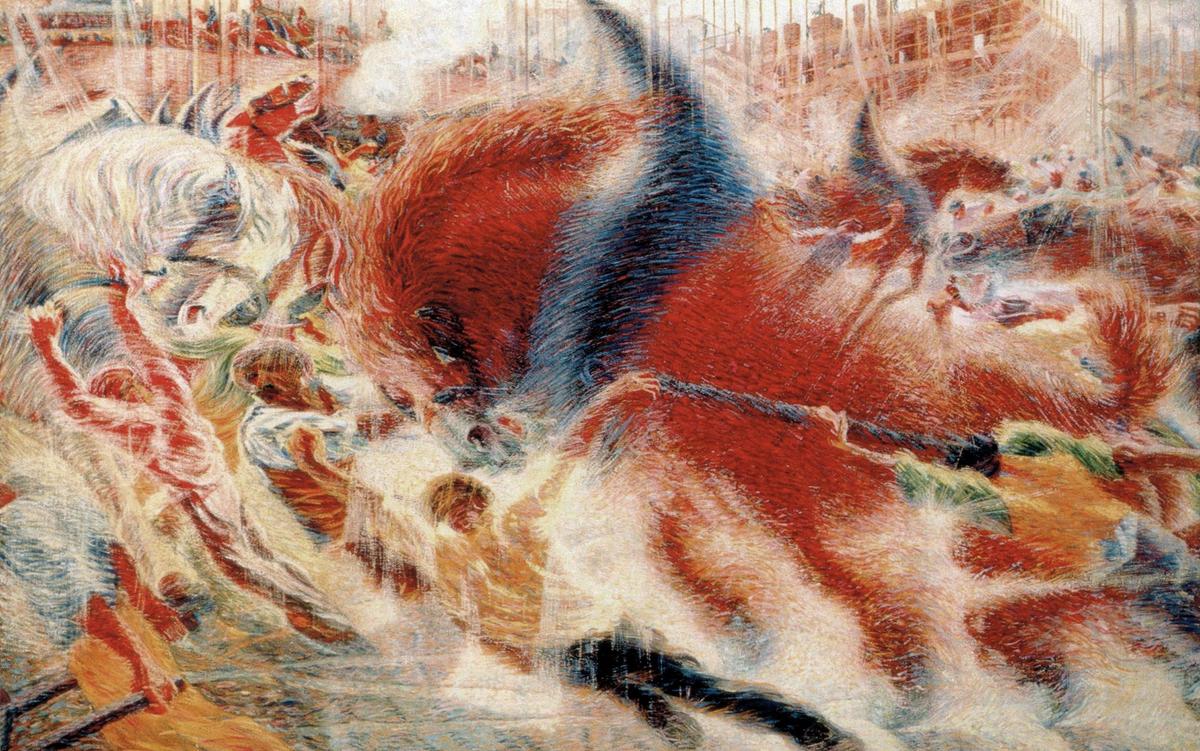
What Nihilism Is Not
In order to preserve nihilism as a meaningful concept, it's necessary to distinguish it from pessimism, cynicism, and apathy.

The Cloud of Unknowing
The Cloud of Unknowing is an anonymous work of Christian mysticism written in Middle English in the latter half of the 14th century. The text is written as guide from a teacher to a student, with the message that God cannot be understood via reason or intellect, but only through love: “By love may He be gotten and holden, but never through thought.” To achieve this goal, the text recommends cultivation of two mental states: “The cloud of forgetting”, and “the cloud of unknowing”.

Verbalizable Representations Form a Global Workspace in Language Models
If the mind is an ocean, we spend our lives floating at the surface. Beneath us, an enormous amount of processing takes place without our knowledge: our visual systems parsing the contours of a face, our motor circuits maintaining our posture. At any given moment, only a small fraction of this neural activity is accessible to us. Yet it is this privileged sliver of activity that we rely on to reason deliberately: to plan what ingredients to buy for a recipe, or to puzzle out why an engine won’t start. Such thoughts can be articulated out loud, deliberately held in mind, and brought to bear on whatever task the moment demands. This distinction, between our accessible thoughts and our unconscious processing, is perhaps the most striking feature of human cognition.
Verbalizable Representations Form a Global Workspace in Language Models
If the mind is an ocean, we spend our lives floating at the surface. Beneath us, an enormous amount of processing takes place without our knowledge: our visual systems parsing the contours of a face, our motor circuits maintaining our posture. At any given moment, only a small fraction of this neural activity is accessible to us. Yet it is this privileged sliver of activity that we rely on to reason deliberately: to plan what ingredients to buy for a recipe, or to puzzle out why an engine won’t start. Such thoughts can be articulated out loud, deliberately held in mind, and brought to bear on whatever task the moment demands. This distinction, between our accessible thoughts and our unconscious processing, is perhaps the most striking feature of human cognition.
