

The Platform for Privacy Preferences Project (P3P) is an obsolete protocol allowing websites to declare their intended use of information they collect about web browser users. Designed to give users more control of their personal information when browsing, P3P was developed by the World Wide Web Consortium (W3C) and officially recommended on April 16, 2002. Development ceased shortly thereafter and there have been very few implementations of P3P. Internet Explorer and Microsoft Edge Legacy were the only major browsers to support P3P. Microsoft has ended support from Windows 10 onwards. Internet Explorer and Edge [Legacy] on Windows 10 no longer support P3P as of 2016.[3] W3C officially obsoleted P3P on 2018-08-30.[4] The president of TRUSTe has stated that P3P has not been implemented widely due to the difficulty and lack of value.[5]
Understanding Web 3 — A User Controlled Internet
Coinbase breaks down the motivation and technology behind the development of Web 3
Some notes about HTTP/3
HTTP/3 is going to be standardized. As an old protocol guy, I thought I'd write up some comments. Google (pbuh) has both the most popular ...
The Web 3.0: The Web Transition Is Coming | HackerNoon
Transitioning from web 2.0 to the 3.0 version is going to likely go unnoticed by most people. The applications are going to look almost exactly like what you are currently using, but the change will be on the back-end. If you are a betting man you will want to consider Siacoin for Cloud, Steemit as a platform for social media, and even Augur as the way to check out future betting events.

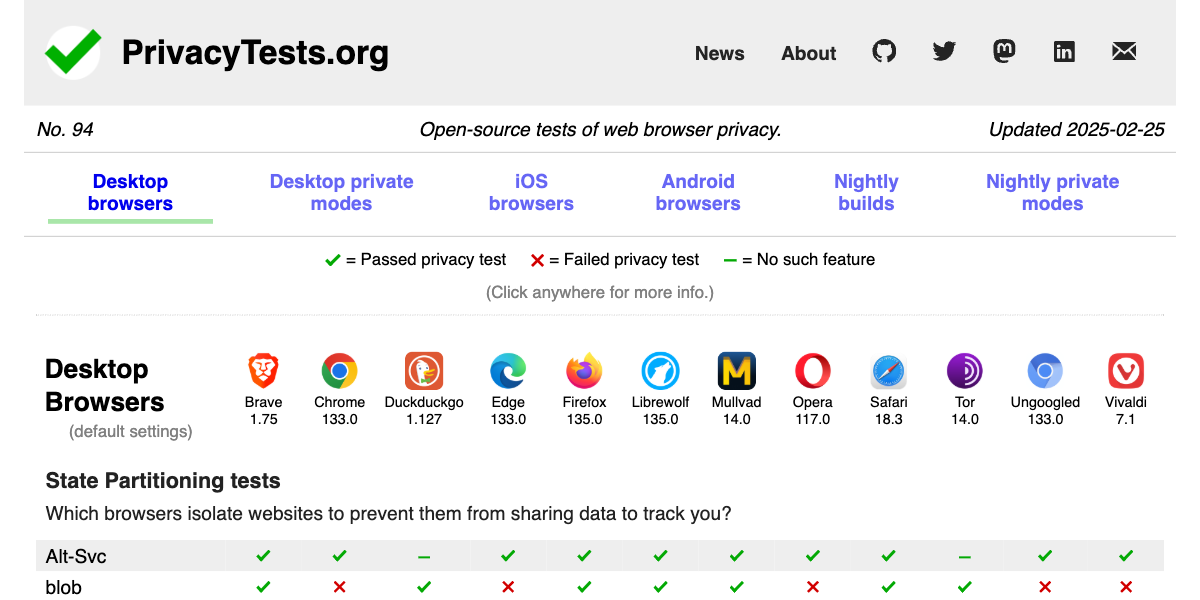
Which browsers are best for privacy?
An open-source privacy audit of popular web browsers.
This ‘Privacy Browser’ Has Dangerous Hidden Features
The Universe Browser is believed to have been downloaded millions of times. But researchers say it behaves like malware and has links to Asia’s booming cybercrime and illegal gambling networks.

12 November 2025 | Isolated Web Apps - Current state and future direction | Calendar
The World Wide Web Consortium (W3C) is an international community where Member organizations, a full-time staff, and the public work together to develop Web standards.

The Browser Choice Alliance
The Browser Choice Alliance is a coalition of browsers dedicated to the principle that consumers should have the right to use their browser of choice on Windows devices.
Chris Granger - "Is Web3... anything?"
The term “web3” seems pretty fluid and is being used as a label for a bunch of disparate ideas. Given that it’s a decentralized group describing a decentralized movement, that lack of focus isn’t exactly surprising. Almost by definition it’s going to end up being different things to different people.
About Browser Choice Allliance
The issue Microsoft’s deceptive tacticsimpede consumer choiceFor years, Microsoft has manipulated desktop browser choice, using deceptive tactics to push Edge onto users. Instead of competing on quality, it relies on forced resets, misleading prompts, and hidden settings to trap people into using its browser. Every time Microsoft forces, pushes or…
Browsers & Standards Work 2026: Call for Community Input
TL;DR: IPFS is planning the next phase of work to make browsers better for the decentralized web – not just IPFS, but any protocol that needs lightweight crypto, peer-to-peer connections, or native browser integration. We need your input on what features matters most. Background: What We’ve Accomplished Over the past 5 years, sustained collaboration with Igalia has delivered real improvements to all major browsers: Ed25519 in WebCrypto API - Shipped in Chrome 137 (May 2025), now available in...

Web Platform Design Principles
Copyright © 2026 World Wide Web Consortium. W3C® liability, trademark and permissive document license rules apply.
Web of the People — Open Indie
Whether you think of web3 as the advent of peer-to-peer protocols, coin-operated blockchains or autocomplete-AI synthesizers, change is c...

How to Fix the Web | Brave
The Web is always in trouble for some reason or other. I remember when Microsoft came after Netscape and threatened to lock Web standards into IE. Only the Web is so big, with such reach to billions of users, that no one owns it. This means it will always be contested ground.

Web3 is Self-Certifying
There’s been a lot of discussion lately about what Web3 is and isn’t. Here’s my definition: Web3 is user-generated authority, enabled by…

Who Shapes Web Standards? Uncovering the Main Topics of Interest in the W3C
