


The paradox of tolerance is a philosophical concept suggesting that if a society extends tolerance to those who are intolerant, it risks enabling the eventual dominance of intolerance, thereby undermining the very principle of tolerance. This paradox was articulated by philosopher Karl Popper in The Open Society and Its Enemies (1945), where he argued that a truly tolerant society must retain the right to deny tolerance to those who promote intolerance. Popper posited that if intolerant ideologies are allowed unchecked expression, they could exploit open society values to erode or destroy tolerance itself through authoritarian or oppressive practices.
Tolerance Norms Across Countries
Democratic theorists consider respect for pluralism, equality, and inclusion as cornerstones of good democratic citizenship. But what do ordinary citizens belie

Epistemic Courage and Open-Mindedness
Epistemic courage requires me to sometimes adopt a belief even in the face of doubts. Open-mindedness requires me to be able to reconsider my beliefs. It is generally assumed that we should have bo...

The thinking style that makes people vulnerable to extremism | Psyche Ideas
The people most drawn to ideological thinking and authoritarianism aren’t aware of what makes them so susceptible

Social Verification Theory: A New Way to Conceptualize Validation, Dissonance, and Belonging
Academic Abstract In the present review, we propose a theory that seeks to recontextualize various existing theories as functions of people’s perceptions of their consistency with those around them. This theory posits that people seek social consistency for both epistemic and relational needs and that social inconsistency is both negative and aversive, similar to the experience of cognitive dissonance. We further posit that the aversive nature of perceiving social inconsistency leads people to engage in various behaviors to mitigate or avoid these inconsistencies. When these behaviors fail, however, people experience chronic social inconsistency, which, much like chronic rejection, is associated with physical and mental health and well-being outcomes. Finally, we describe how mitigation and avoidance of social inconsistency underlie many seemingly unrelated theories, and we provide directions for how future research may expand on this theory. Public Abstract In the present review, we propose that people find inconsistency with those around them to be an unpleasant experience, as it threatens people’s core need to belong. Because the threat of reduced belongingness evokes negative feelings, people are motivated to avoid inconsistency with others and to mitigate the negative feelings that are produced when it inevitably does arise. We outline several types of behaviors that can be implemented to avoid or mitigate these inconsistencies (e.g., validation, affirmation, distancing, etc.). When these behaviors cannot be implemented successfully, people experience chronic invalidation, which is associated with reduced physical and mental health and well-being outcomes. We discuss how invalidation may disproportionately affect individuals with minoritized identities. Furthermore, we discuss how belongingness could play a key role in radicalization into extremist groups.

Anti-democratic attitudes are highly contagious, new psychology study finds
The rise of anti-democratic sentiments might be driven by social contagion. Researchers have discovered that citizens often adapt their personal support for authoritarian rule to align with the political views of those around them.
When Monsters Walk Among Us
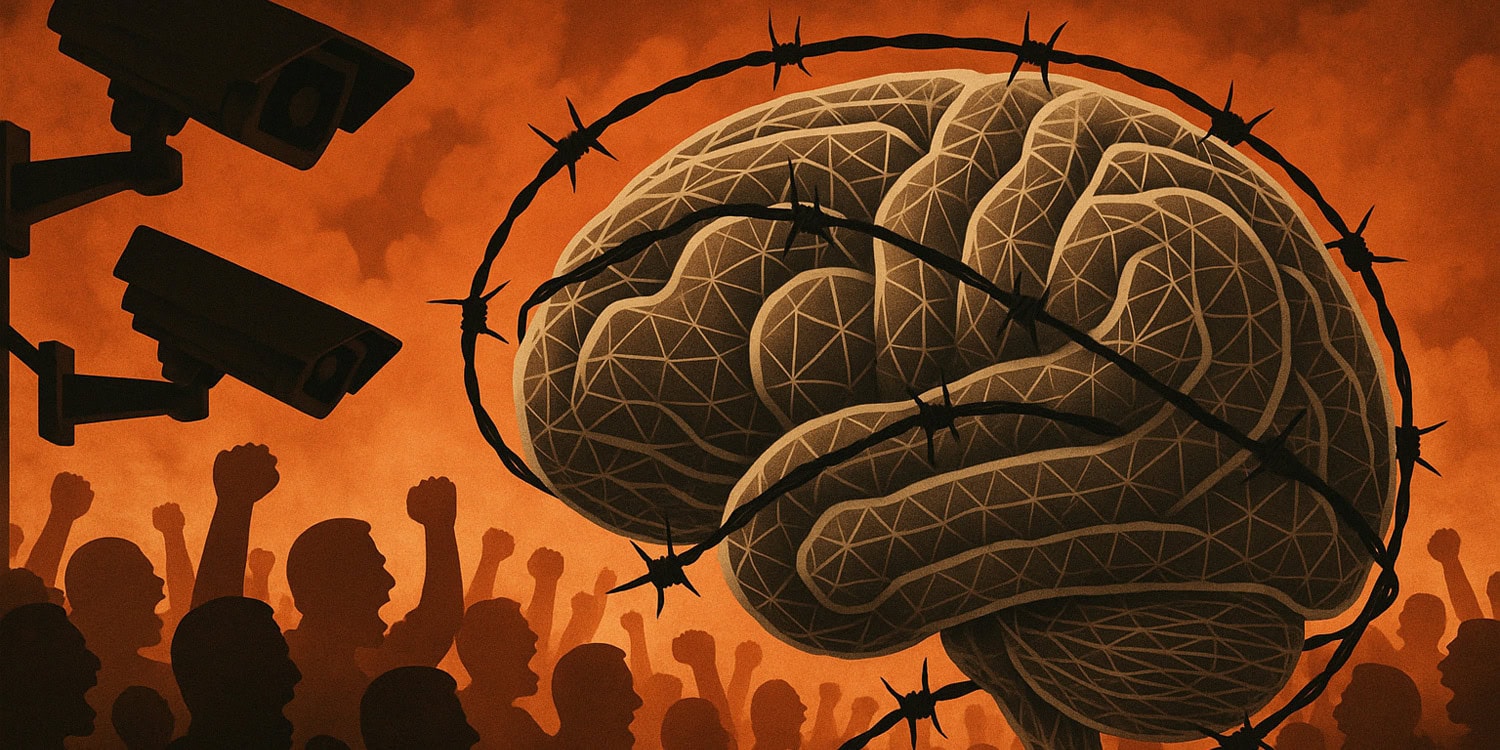
More than four decades ago, the Greek composer and public intellectual Manos Hadjidakis issued a warning that now reads less like a reflection on fascism than a prophecy of our own time. The greatest danger, he suggested, comes when we grow accustomed to the monster, when its presence no longer shocks the conscience and its violence begins to merge with the routines of everyday life. Tolerance does not diminish the monster; it multiplies the conditions that allow it to flourish, strengthening its presence in public life until monstrosity itself acquires the authority to govern. In this instance, the collapse of conscience is inseparable from the uncoupling of “belief from judgment, conviction from action.”

The '3.5% rule': How a small minority can change the world
Nonviolent protests are twice as likely to succeed as armed conflicts – and those engaging a threshold of 3.5% of the population have never failed to bring about change.

10 Principles of Disability Justice | Sins Invalid
INTERSECTIONALITY “We do not live single issue lives” –Audre Lorde. Ableism, coupled with white supremacy, supported by capitalism, underscored by heteropatriarchy, has rendered the vast majority of the world “invalid.”
Alienation, Idealization, and Modeling
Models allow us to expose, explore, and excavate our assumptions. This is especially true for the sorts of assumptions that concern scholars of marginalization and resistance, who aim to show how ...

Opinion | 9/11 took Islamophobia mainstream in America – and things have only gotten worse
Although I have always had kind and mostly tolerant neighbors, the effects of widespread Islamophobia have touched my life intimately.

Annoying Queer People Are Not Why We're Oppressed
An apology to the closeted, questioning, newly out, and cringe.

The Authoritarian Personality
This hugely influential study on the psychology of authoritarianism was written in answer to Hitler’s Germany—and now rings more relevant than ever as fascism and anti-Semitism sweep across America.What makes a fascist? Are there character traits that make someone more likely to vote for the far right? The Authoritarian Personality is not only one of the most significant works of social psychology ever written, it also marks a milestone in the development of Adorno’s thought, showing him grappling with the problem of fascism and the reasons for Europe’s turn to reaction. Over half a century later, and with the rise of right-wing populism and the reemergence of the far-right in recent years, this hugely influential study remains as insightful and relevant as ever.This new edition includes an introduction by Frankfurt School scholar Peter E. Gordon and contains the first-ever publication of Adorno’s subsequent critical notes on the project.“Adorno and his colleagues could easily have been describing Alex Jones’s paranoid InfoWars rants or the racist views expressed by many Trump supporters.” —New York Times
Tyranny of Permissionlessness
open source’s narrow focus further empowers those with other ways to exclude

Technorealists, the silent majority? · Openness Praxis
you might find yourself standing in the unremarkable center
Differences Between Tight and Loose Cultures: A 33-Nation Study
The differences across cultures in the enforcement of conformity may reflect their specific histories. , With data from 33 nations, we illustrate the differences between cultures that are tight (have many strong norms and a low tolerance of deviant behavior) versus loose (have weak social norms and a high tolerance of deviant behavior). Tightness-looseness is part of a complex, loosely integrated multilevel system that comprises distal ecological and historical threats (e.g., high population density, resource scarcity, a history of territorial conflict, and disease and environmental threats), broad versus narrow socialization in societal institutions (e.g., autocracy, media regulations), the strength of everyday recurring situations, and micro-level psychological affordances (e.g., prevention self-guides, high regulatory strength, need for structure). This research advances knowledge that can foster cross-cultural understanding in a world of increasing global interdependence and has implications for modeling cultural change.
Bankroll

Capital opportunities for Gen Z

Media Startup Fellowship: Startup funding & coaching
New advertiser incentive program | TikTok for Business

NVIDIA Inception Program for Startups

Startup Program for NVIDIA Inception Members

Koyeb for Startups: Accelerate with Credits for High-Performance Infrastructure - Koyeb

Rise: A Cloud Computing Program Built for Start-Ups | Akamai