


Pedagogy of the Oppressed is a book by Brazilian Marxist educator Paulo Freire, written in Portuguese between 1967 and 1968, but first published in Spanish in 1968. The book is considered one of the foundational texts of critical pedagogy, and proposes a pedagogy with a new relationship between teacher, student, and society.
Episode #210 ... The Pedagogy of the Oppressed (Paulo Freire, Education)
Theatre of the Oppressed
The Theatre of the Oppressed (TO) describes theatrical forms that the Brazilian theatre practitioner Augusto Boal first elaborated in the 1970s, initially in Brazil and later in Europe. Boal was influenced by the work of the educator and theorist Paulo Freire and his book Pedagogy of the Oppressed. Boal's techniques use theatre as means of promoting social and political change in alignment originally with radical-left politics and later with centre-left ideology. In the Theatre of the Oppressed, the audience becomes active, such that as "spect-actors" they explore, show, analyse and transform the reality in which they are living.

Toward a Theory of Culturally Relevant Pedagogy
In the midst of discussions about improving education, teacher education, equity, and diversity, little has been done to make pedagogy a central area of investigation. This article attempts to challenge notions about the intersection of culture and teaching that rely solely on microanalytic or macroanalytic perspectives. Rather, the article attempts to build on the work done in both of these areas and proposes a culturally relevant theory of education. By raising questions about the location of the researcher in pedagogical research, the article attempts to explicate the theoretical framework of the author in the nexus of collaborative and reflexive research. The pedagogical practices of eight exemplary teachers of African-American students serve as the investigative “site.” Their practices and reflections on those practices provide a way to define and recognize culturally relevant pedagogy.

Information Access of the Oppressed: Freirean Design for Emancipatory Information Access
Online information access (IA) platforms are targets of authoritarian capture. We explore the question of how to safeguard our platforms and ensure emancipatory outcomes through the lens of Paulo Freire's theories of emancipatory pedagogy. Freire's theories provide a radically different lens for exploring IA's sociotechnical concerns relative to the current dominating frames of fairness, accountability, and transparency. We make explicit, with the intention to challenge, the technologist-user dichotomy in IA platform development that mirrors the teacher-student relation in Freire's analysis. By extending Freire's analysis to IA, we critique the technologists-as-liberator frame where it is the burden of (altruistic) technologists to mitigate the risks of emerging technologies for marginalized communities. Instead, we advocate for Freirean Design whose goal is to structurally expose the platform for co-option and co-construction by community members in aid of their emancipatory struggles.

Paulo Freire’s Ideas Are Just as Powerful Today as Ever
Socialist educator Paulo Freire was born one hundred years ago today in the Brazilian city of Recife. A longtime comrade of Freire, leading Marxist pedagogue Peter McLaren writes about how his life and work remain deeply relevant today.

Social Reproduction Theory: Remapping Class, Recentering Oppression
This groundbreaking collection explores the profound power of Social Reproduction Theory to deepen our understanding of everyday life under capitalism. While many Marxists tend to focus on the productive economy, this book focuses on issues such as child care, health care, education, family life and the roles of gender, race and sexuality, all of which are central to understanding the relationship between economic exploitation and social oppression. In this book, leading writers such as Lise Vogel, Nancy Fraser, David McNally and Susan Ferguson reveal the ways in which daily and generational reproductive labour, found in households, schools, hospitals and prisons, also sustains the drive for accumulation. Presenting a more sophisticated alternative to intersectionality, these essays provide ideas which have important strategic implications for anti-capitalists, anti-racists and feminists attempting to find a path through the seemingly ever more complex world we live in.
Information Access of the Oppressed: A Problem-Posing Framework for Envisioning Emancipatory Information Access Platforms
Online information access (IA) platforms are targets of authoritarian capture. These concerns are particularly serious and urgent today in light of the rising levels of democratic erosion worldwide, the emerging capabilities of generative AI technologies such as AI persuasion, and the increasing concentration of economic and political power in the hands of Big Tech. This raises the question of what alternative IA infrastructure we must reimagine and build to mitigate the risks of authoritarian capture of our information ecosystems. We explore this question through the lens of Paulo Freire's theories of emancipatory pedagogy. Freire's theories provide a radically different lens for exploring IA's sociotechnical concerns relative to the current dominating frames of fairness, accountability, confidentiality, transparency, and safety. We make explicit, with the intention to challenge, the dichotomy of how we relate to technology as either technologists (who envision and build technology) and its users. We posit that this mirrors the teacher-student relationship in Freire's analysis. By extending Freire's analysis to IA, we challenge the notion that it is the burden of the (altruistic) technologists to come up with interventions to mitigate the risks that emerging technologies pose to marginalized communities. Instead, we advocate that the first task for the technologists is to pose these as problems to the marginalized communities, to encourage them to make and unmake the technology as part of their material struggle against oppression. Their second task is to redesign our online technology stacks to structurally expose spaces for community members to co-opt and co-construct the technology in aid of their emancipatory struggles. We operationalize Freire's theories to develop a problem-posing framework for envisioning emancipatory IA platforms of the future.
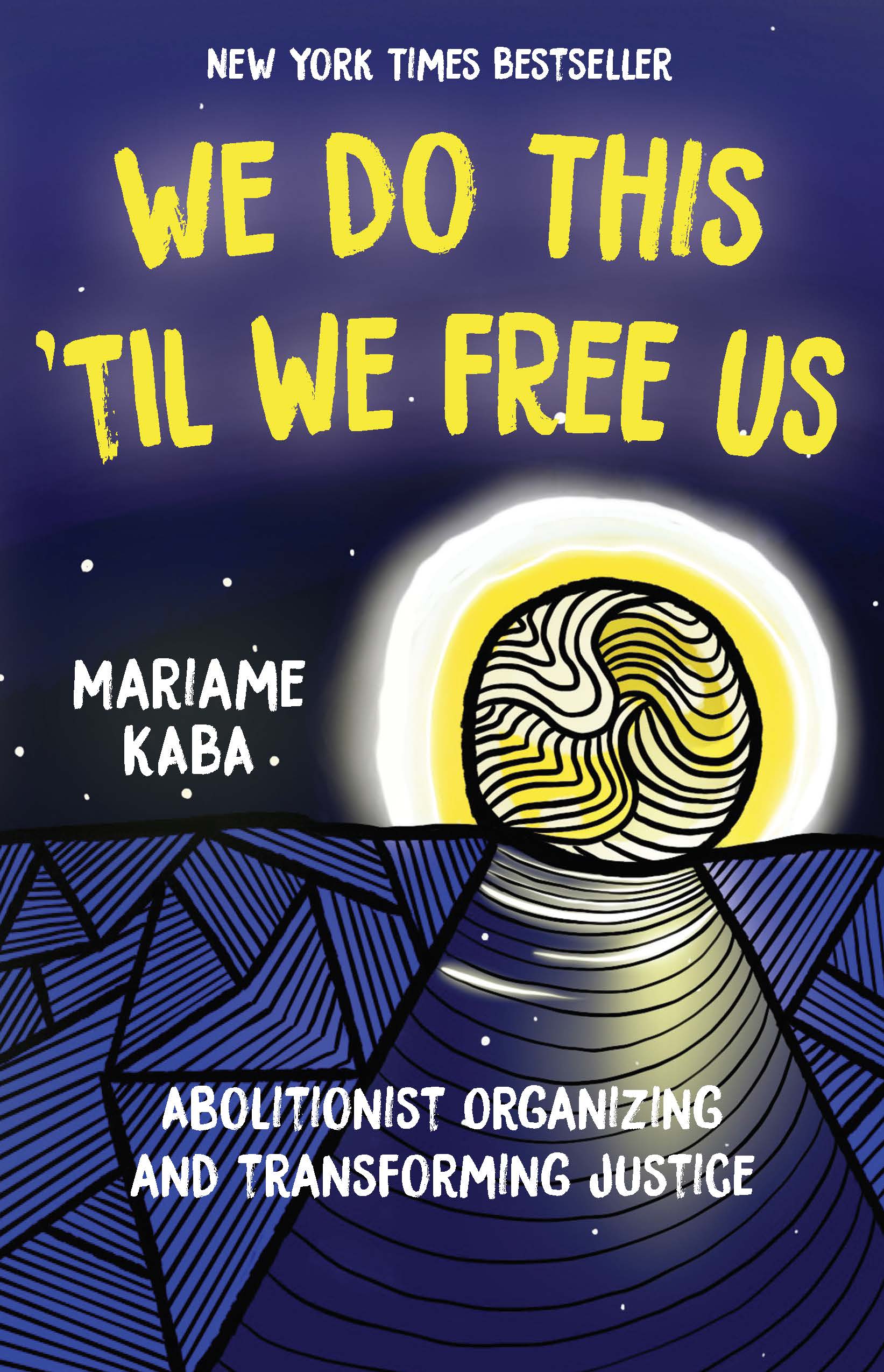
We Do This 'Til We Free Us
New York Times Bestseller “Organizing is both science and art. It is thinking through a vision, a strategy, and then figuring out who your targets are, always being concerned about power, always being concerned about how you’re going to actually build power in order to be able to push your issues, in order to be able to get the target to actually move in the way that you want to.” What if social transformation and liberation isn’t about waiting for someone else to come along and save us? What if ordinary people have the power to collectively free ourselves? In this timely collection of essays and interviews, Mariame Kaba reflects on the deep work of abolition and transformative political struggle. With a foreword by Naomi Murakawa and chapters on seeking justice beyond the punishment system, transforming how we deal with harm and accountability, and finding hope in collective struggle for abolition, Kaba’s work is deeply rooted in the relentless belief that we can fundamentally change the world. As Kaba writes, “Nothing that we do that is worthwhile is done alone.”
Sem autorização dos pais, Prefeitura de SP adota IA para gravar voz de crianças
Elefante Letrado passou a ser usado nas escolas públicas de São Paulo no mês passado, após gestão Nunes assinar convênio com governo estadual; responsáveis afirmam que não foram consultados e especialista aponta violações à LGPD

Profectus
The Paper Pilot's digital garden of thoughts on philosophy, politics, and sociology. Reading time: ~1 minute read | Published: Jun 2, 2024 | Updated: Nov 2, 2026

Papo aberto #4: quão importante é a privacidade digital para você?
Faça parte da conversa

Onde dá pra conversar
Perto de você tem gente que pode escolher o Lula no segundo turno. Veja onde dá pra conversar.

Senado Federal - Programa e-Cidadania - Consulta Pública
Opine sobre a matéria: "PEC 12/2026"


Standardized Education | The Paper Pilot
The Paper Pilot's digital garden of thoughts on philosophy, politics, and sociology
Decoloniality
The research collective on Decoloniality, organised by Walter Mignolo and Arturo Escobar, brings together scholars of Latin American / European origin working in universities in the United States and Latin America and interested in ideas of dependency theory, colonialism, gender, and critical theory